

Wire Mesh for Filtration: Micron Ratings Explained
How micron ratings work for wire mesh filters: aperture vs particle size, nominal vs absolute rating, why Dutch weave is used, and sintered mesh.
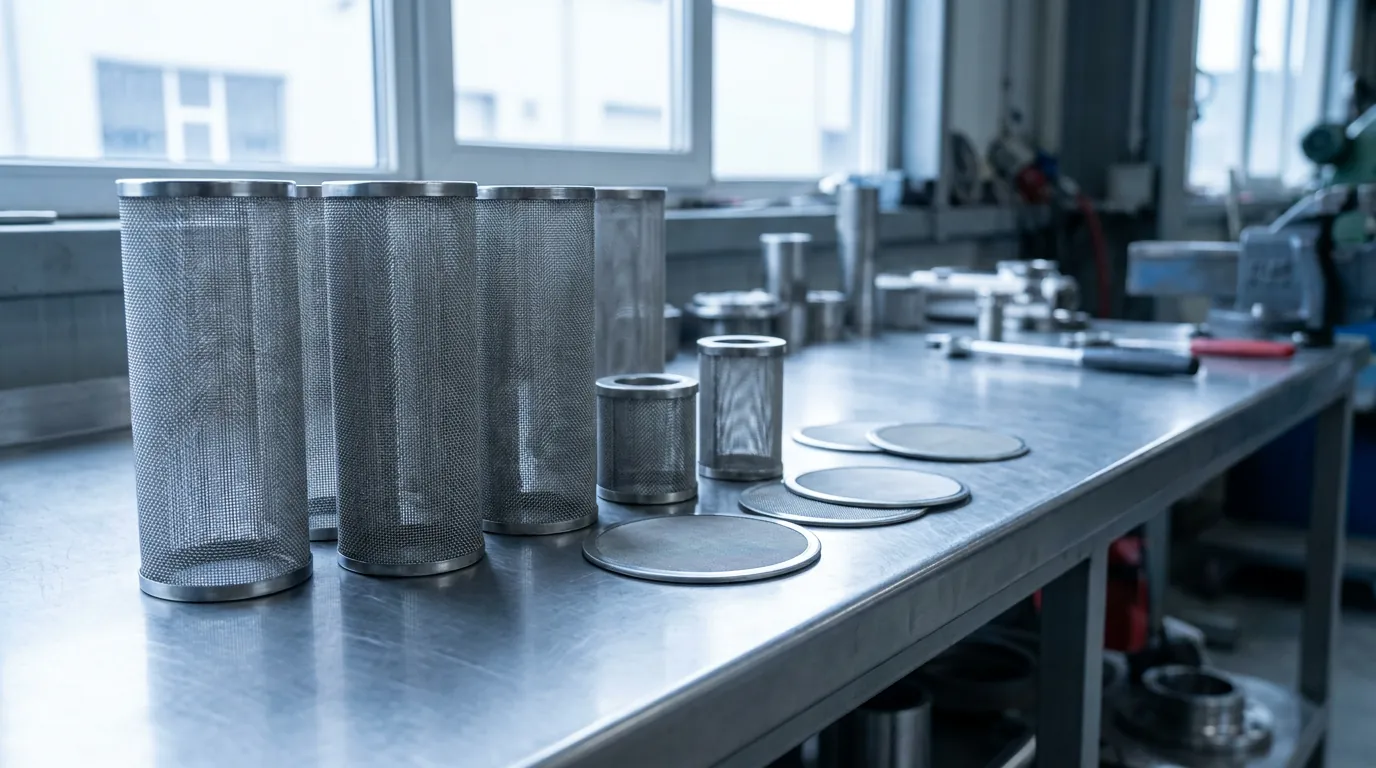
Filter mesh is bought on micron ratings, but a rating means different things depending on the weave and the test behind it. Before you compare two filters, check what the number actually describes.
Microns and aperture
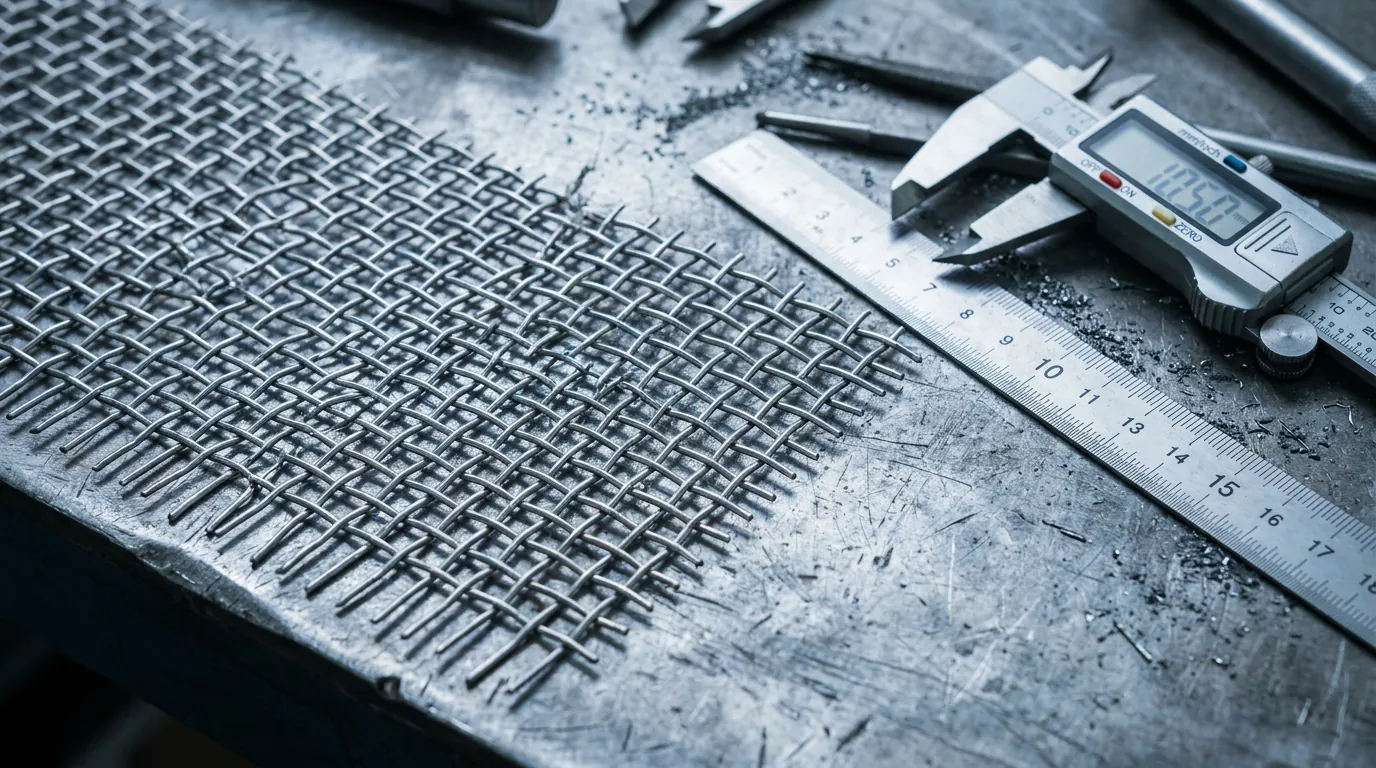
One micron is one thousandth of a millimetre, so 0.1 mm is 100 microns. For square mesh, the aperture follows from mesh count and wire diameter:
Aperture (microns) = ((25.4 / mesh count) - wire diameter in mm) × 1000
| Mesh | Wire dia (mm) | Aperture (microns, approx.) |
|---|---|---|
| 50 | 0.20 | 308 |
| 100 | 0.10 | 154 |
| 200 | 0.053 | 74 |
| 325 | 0.035 | 43 |
| 400 | 0.025 | 39 |
These are nominal calculated openings. Real cloth varies within the tolerance of the standard it is made to, and wire diameter choices differ between suppliers. See mesh count vs aperture for the working.
Aperture is not the same as particle cut size
A square opening is larger across its diagonal than across its sides, by a factor of about 1.41. Long or flat particles can pass diagonally or end-on even if they are bigger than the aperture in one dimension. Soft or deformable particles can squeeze through.
The reverse also happens. Once particles build up on the mesh, the cake they form traps particles much smaller than the aperture. A filter often performs finer after it has loaded a little, and the pressure drop rises at the same time. So the aperture is a starting point, not a guarantee of what the filter will stop.
Nominal and absolute ratings
- Nominal rating: the filter retains a stated percentage of particles at that size, often quoted as 90% or 98%. There is no single universal definition, so the percentage and test should be stated.
- Absolute rating: the largest hard spherical particle, usually a glass bead, that passes the filter under test. It gives a firmer upper limit, but it still depends on the test method.
Two filters both sold as "25 micron" can perform quite differently if one is nominal and the other absolute. Ask the supplier which it is and how it was tested. For fine Dutch weaves, bubble point testing is also used to find the largest pore.
Why Dutch weave for fine filtration
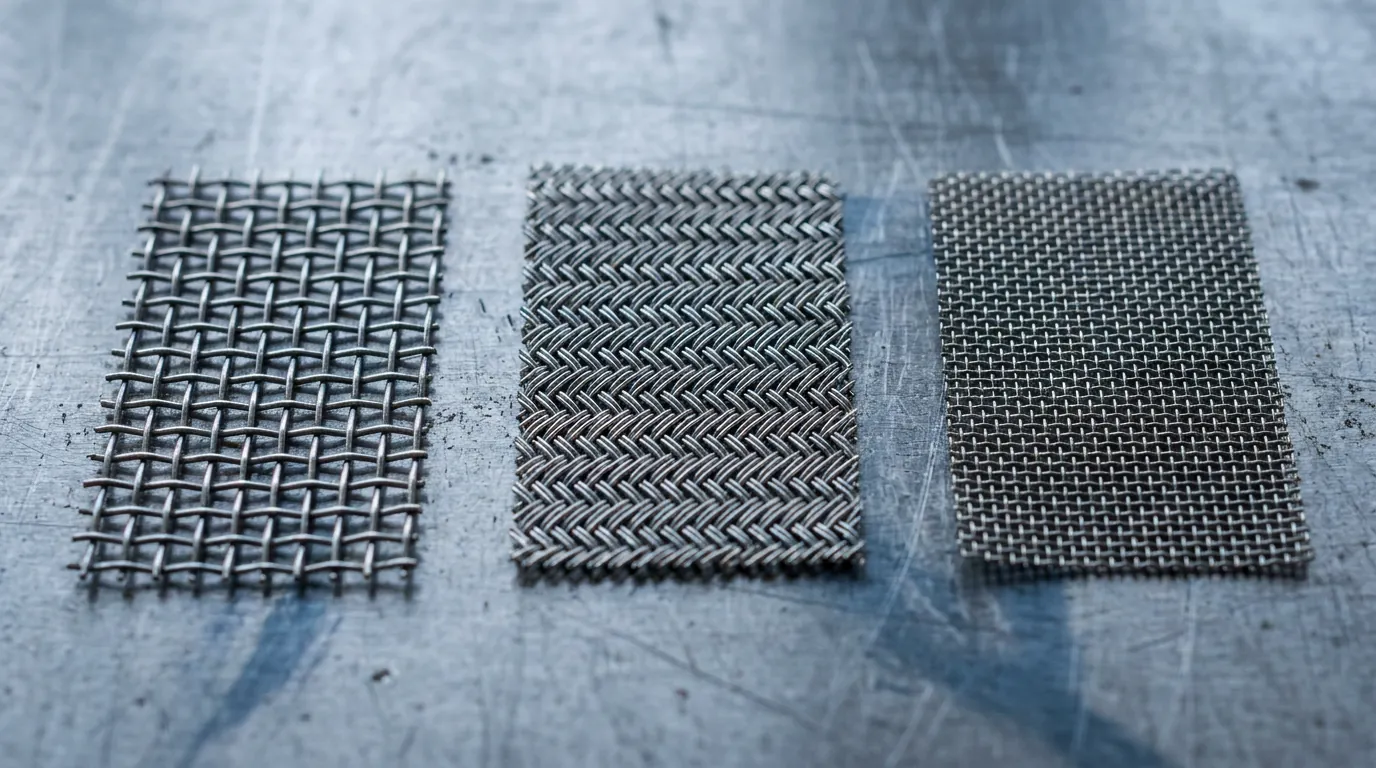
Square mesh gets weak as it gets fine. At 400 mesh the wire is only about 0.025 mm, which is fragile under pressure and in handling. Dutch weaves solve this by pairing coarse, strong wires in one direction with fine wires packed tight in the other. There is no straight-through opening, and liquid follows an angled path between wires. The result is a fine rating with a much stronger cloth.
Plain Dutch gives strength and reasonable flow. Twill Dutch reaches the finest ratings of a single woven layer. Reverse Dutch is used where very high strength along one direction is needed, such as extrusion screen packs. Ratings of Dutch weaves are determined by test, not calculated from the counts, and vary by manufacturer. See plain, twill and Dutch weave for how the patterns differ.
Layered and sintered mesh
For hard duties, several layers of mesh can be stacked and sintered, meaning bonded together by heat and pressure in a furnace so the wires fuse at their contact points. A typical build has a protective coarse layer, a fine filter layer and one or more support layers. Sintered mesh is rigid, keeps its pore size under pressure and can be backwashed and cleaned, which suits polymer, chemical and fluidising duties. It costs more than single layer cloth, so it is usually kept for duties where a single layer would not survive.
When you ask for filter mesh, send:
- The particle size you need to stop, and whether the rating should be nominal or absolute.
- Fluid, temperature, pressure drop limit and flow rate.
- Material grade, with chloride or chemical exposure noted.
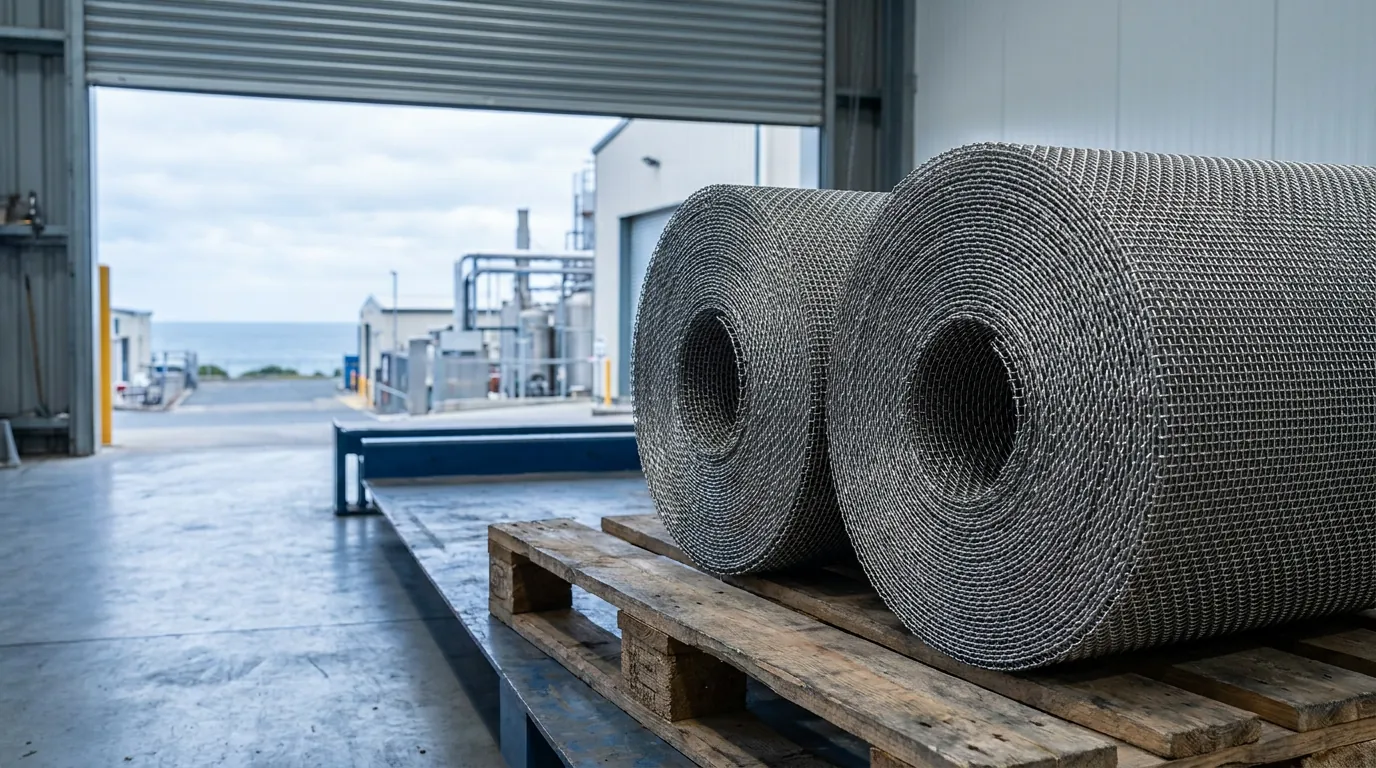
- Form: roll, discs, cut pieces or a drawing of the element.
Gujarat Wire Nettings supplies square and Dutch weave wire mesh for filtration, in rolls or cut pieces. Send the particle size, fluid and pressure details, and we will suggest a mesh and weave for you to check against your process.