

Plain, Twill and Dutch Weave Wire Mesh Compared
How plain, twill, plain Dutch, twill Dutch and reverse Dutch weaves differ in strength, fineness and filtration use, and which to specify for your duty.
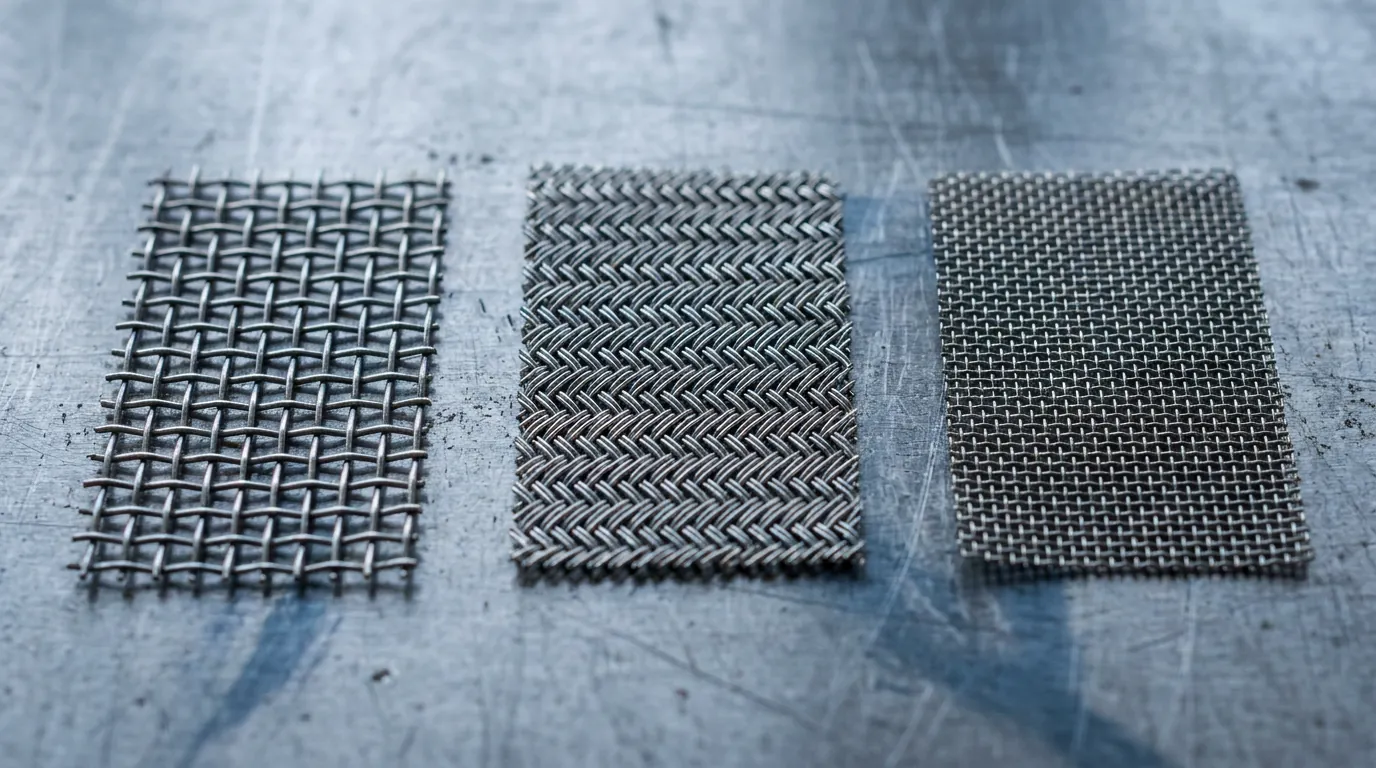
Weave is the pattern in which the warp wires (running along the roll) and the weft wires (running across it) pass over and under each other. Two cloths with the same material and similar wire can behave very differently because of the weave. It sets the shape of the opening, how stable the cloth is, how fine it can go and how much load it takes. For diagrams of each pattern, see weave types.
Plain weave
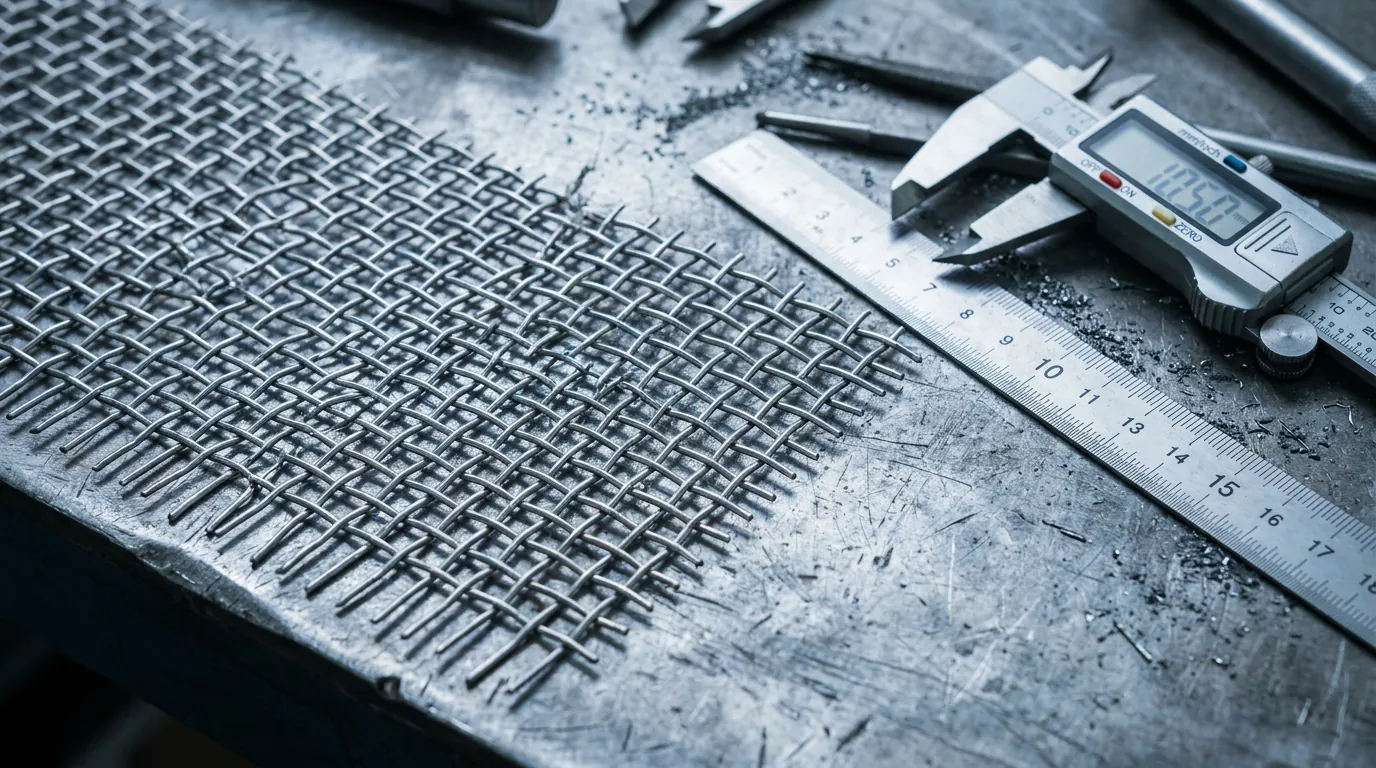
Each weft wire passes over one warp wire and under the next, alternating. It is the most common weave and the simplest to specify. Openings are square or rectangular, and the aperture follows directly from mesh count and wire diameter, as explained in mesh count vs aperture.
- Used for: general sieving, guards, insect and dust screens, coarse and medium screening, many process strainers.
- Strength: good, and the cloth holds its shape well because the wires lock at every crossing.
- Limit: at a given mesh count there is a maximum wire diameter that can be bent over and under every wire. Heavier wire than that needs a different weave or pre-crimped wire.
Twill weave
In twill square weave each wire passes over two and under two, with the pattern shifted by one wire on each pass. This gives a diagonal line on the surface. The openings are still square, but because each wire bends less often, a heavier wire can be used at the same mesh count.
- Used for: finer meshes where plain weave cannot carry the wire diameter needed, and duties with higher load or abrasion at a given opening.
- Strength: higher load capacity than plain weave with the same mesh, because thicker wire is possible.
- Trade off: the cloth is a little more flexible and less dimensionally stable than plain weave at the same specification.
Dutch weaves for filtration
Dutch weaves use two different wire sizes and two different counts. One set of wires is coarse and widely spaced, the other is fine and packed so tightly that the wires touch. There is no straight-through square opening. Liquid has to follow a small angled path between wires, which lets the cloth retain particles much finer than a square mesh of similar strength. Dutch weaves are written as warp count × weft count, for example 24 × 110.
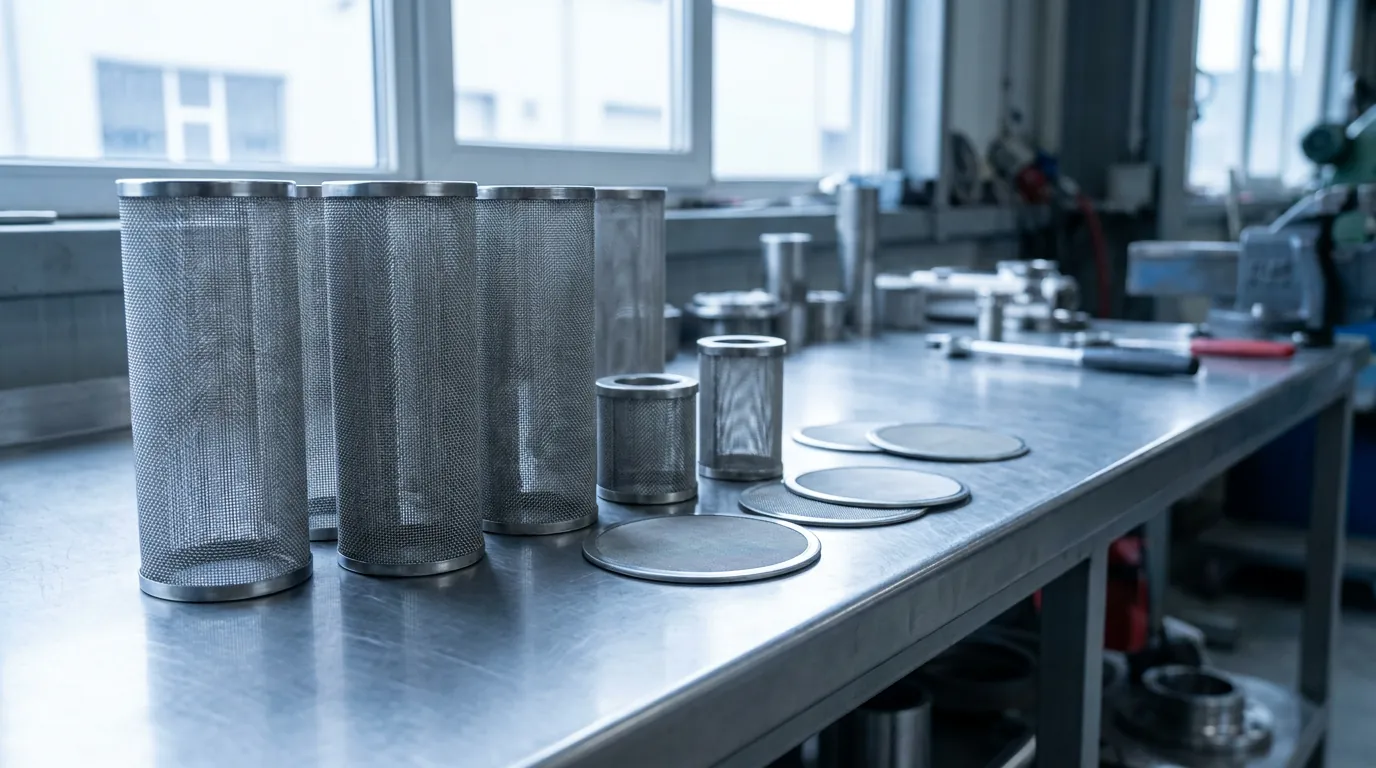
- Plain Dutch: heavier warp wires, finer weft wires woven over one and under one and driven close together. Stiff and strong, with moderate flow. Common in liquid and gas filtration, strainers and filter elements.
- Twill Dutch: weft wires pass over two and under two, so even more of them can be packed in. This allows the finest ratings of any single woven layer, with a smooth surface and high strength, but lower flow.
- Reverse Dutch (reverse plain Dutch): the arrangement is turned around, with fine warp wires packed close and coarse weft wires. It gives very high tensile strength along the roll and good throughput, and is used in polymer extrusion filters, screen changer belts and other high pressure filtration.
The pore size of a Dutch weave cannot be calculated from the counts the way a square mesh aperture can. It is rated by test, such as glass bead or bubble point testing, and ratings vary by manufacturer. Ask for the tested rating and the test method, and see wire mesh filtration and micron ratings for what those numbers mean.
Choosing a weave
- Separating or sizing solids by an exact opening: plain weave, or twill if the wire needs to be heavier.
- Fine filtration where strength and pressure matter: plain Dutch or twill Dutch.
- High pressure with load mainly along one direction, such as extruder screen packs: reverse Dutch.
- Very coarse heavy screening on vibrating screens: usually crimped weaves rather than these, see crimped wire mesh types.
Whichever weave you pick, state it on the order along with mesh count (or warp × weft count), wire diameters and material. A Dutch weave quoted without both wire sizes is not a complete specification.
Gujarat Wire Nettings weaves wire mesh in plain, twill and Dutch patterns. Send the material, counts, wire diameters and the duty, and we will confirm the weave before quoting.