

Mesh Count vs Aperture: How to Work Out the Real Opening
Mesh count tells you openings per inch, not opening size. How to calculate aperture from mesh count and wire diameter, with worked examples.
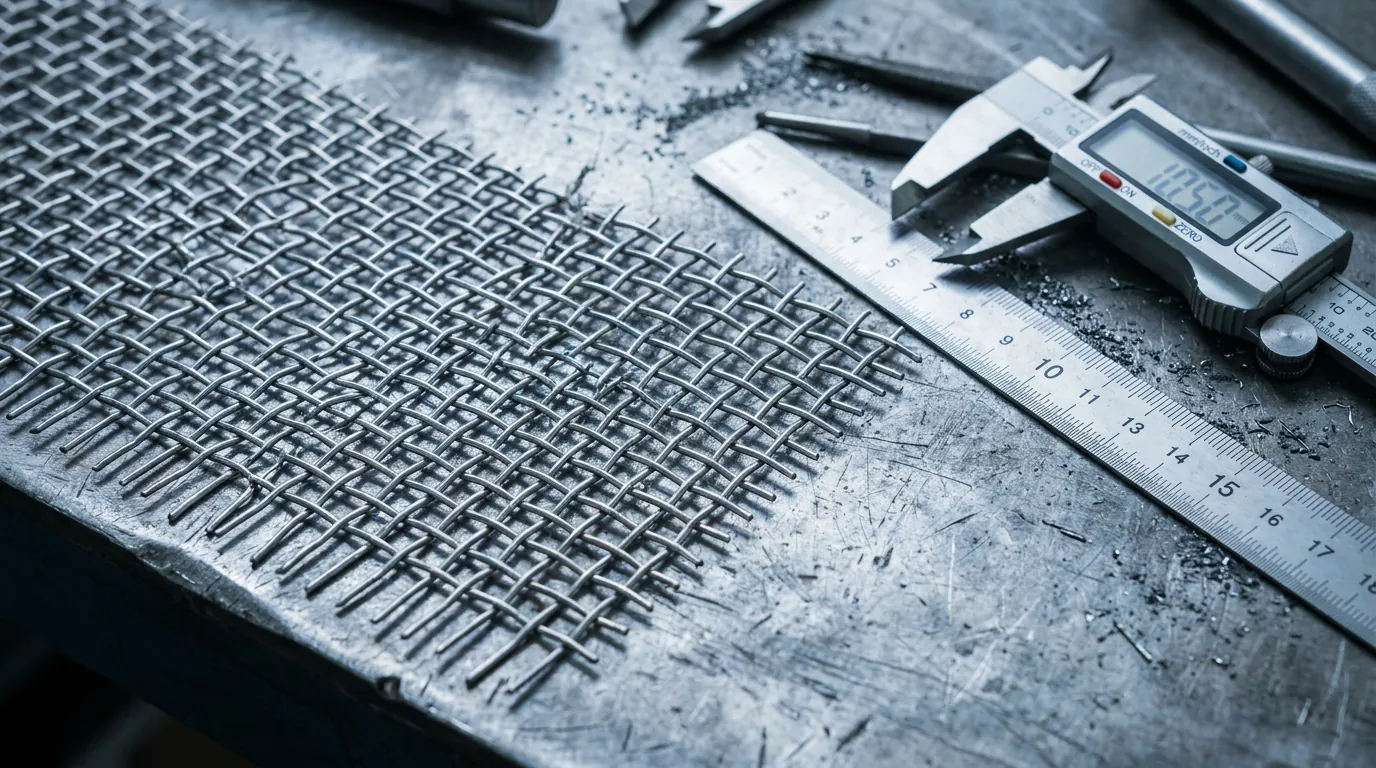
Two suppliers quote "40 mesh" and send you two different screens. Both can be right. Mesh count only tells you how many openings sit in a set length. The size of each opening depends on the wire that fills the rest of that length. If your process cares about what passes and what is retained, the number you need is the aperture.
What mesh count means
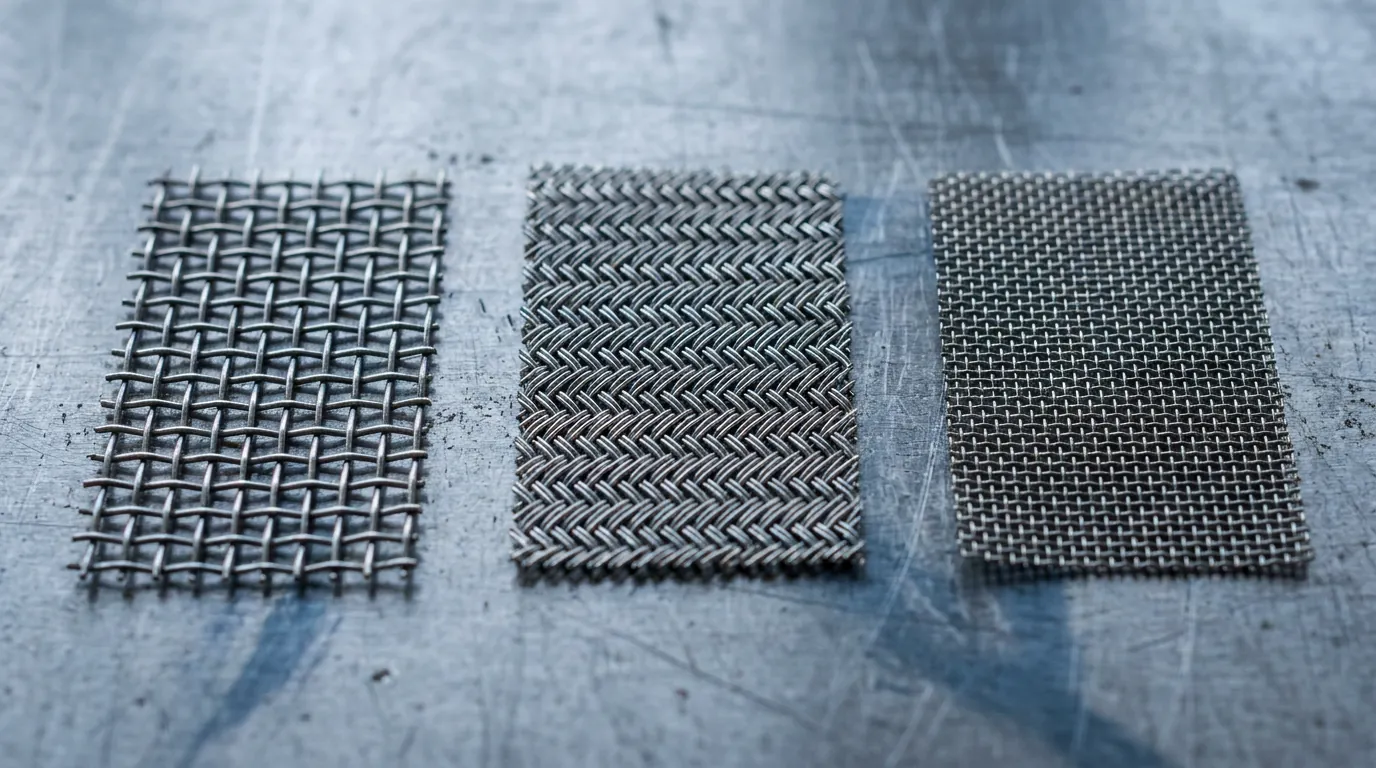
Mesh count is the number of openings per linear inch, which is 25.4 mm, counted from the centre of one wire to the same point 25.4 mm along. A 40 mesh cloth has 40 openings and 40 wires in every 25.4 mm. The count is taken in both directions. Square mesh has the same count in warp and weft. Rectangular mesh has different counts, written as two numbers, for example 40 × 36.
Some drawings use openings per centimetre instead. Check the unit, because 10 openings per cm is about 25 mesh, not 10 mesh.
Calculating aperture from mesh and wire
The distance from one wire centre to the next is the pitch. Pitch is 25.4 divided by the mesh count. The aperture, or clear opening, is the pitch minus one wire diameter.
Aperture (mm) = (25.4 / mesh count) - wire diameter (mm)
For a 40 mesh cloth woven with 0.25 mm wire: pitch = 25.4 / 40 = 0.635 mm. Aperture = 0.635 - 0.25 = 0.385 mm.
For a 10 mesh cloth with 0.5 mm wire: pitch = 25.4 / 10 = 2.54 mm. Aperture = 2.54 - 0.5 = 2.04 mm.
You can run it backwards when you know the opening you need. If the process needs a 2.0 mm aperture and the duty calls for 0.8 mm wire, pitch = 2.8 mm and mesh = 25.4 / 2.8, which is about 9.1. A fractional mesh count is awkward to order, so for coarse cloth like this you would specify the aperture and wire diameter directly.
Same mesh count, different aperture
Because the wire takes up part of the pitch, changing the wire diameter at a fixed mesh count changes the opening. The table shows a 40 mesh cloth (pitch 0.635 mm) with three wire sizes.
| Mesh | Wire dia (mm) | Aperture (mm) | Open area (approx.) |
|---|---|---|---|
| 40 | 0.20 | 0.435 | 47% |
| 40 | 0.25 | 0.385 | 37% |
| 40 | 0.30 | 0.335 | 28% |
Open area is the share of the surface that is open. For square mesh it is worked out as below.
Open area (%) = (aperture / pitch)² × 100
Thicker wire gives a smaller opening, less open area and lower throughput, but more strength and wear life. Thinner wire does the reverse. This is why a quote for "40 mesh" with no wire diameter cannot be compared with another quote for "40 mesh".
Which numbers to put on the order
- For sizing and separation, specify the aperture in mm (or microns for fine cloth) and the wire diameter. The mesh count then follows.
- For fine cloth where the mesh count is the usual trade description, such as 100 or 200 mesh, give the mesh count and the wire diameter together.
- Give the wire diameter in mm. If older drawings use SWG, convert first using the SWG to mm table.
- Ask which tolerance standard applies. Woven cloth has an allowed variation on average and maximum opening, set by standards such as IS 1568, ISO 9044 or ASTM E2016.
- For rectangular mesh, state which direction the long opening runs relative to the roll length or the material flow.
The formula assumes square or rectangular openings in plain or twill weave. It does not apply to Dutch weaves, where the weft wires are packed tight and there is no straight-through opening. Those are rated by tested pore size, covered in wire mesh filtration and micron ratings. For how mesh count, wire and weave appear together on a purchase order, see how to read a wire mesh specification.
Gujarat Wire Nettings weaves wire mesh to the mesh count, wire diameter and aperture on your drawing. Send the opening you need and the duty, and we will confirm the wire and mesh combination before quoting.