

How to Read a Wire Mesh Specification
A line-by-line guide to a wire mesh spec: grade, mesh count, wire diameter, roll size and weave, plus the common ambiguities to confirm before ordering.
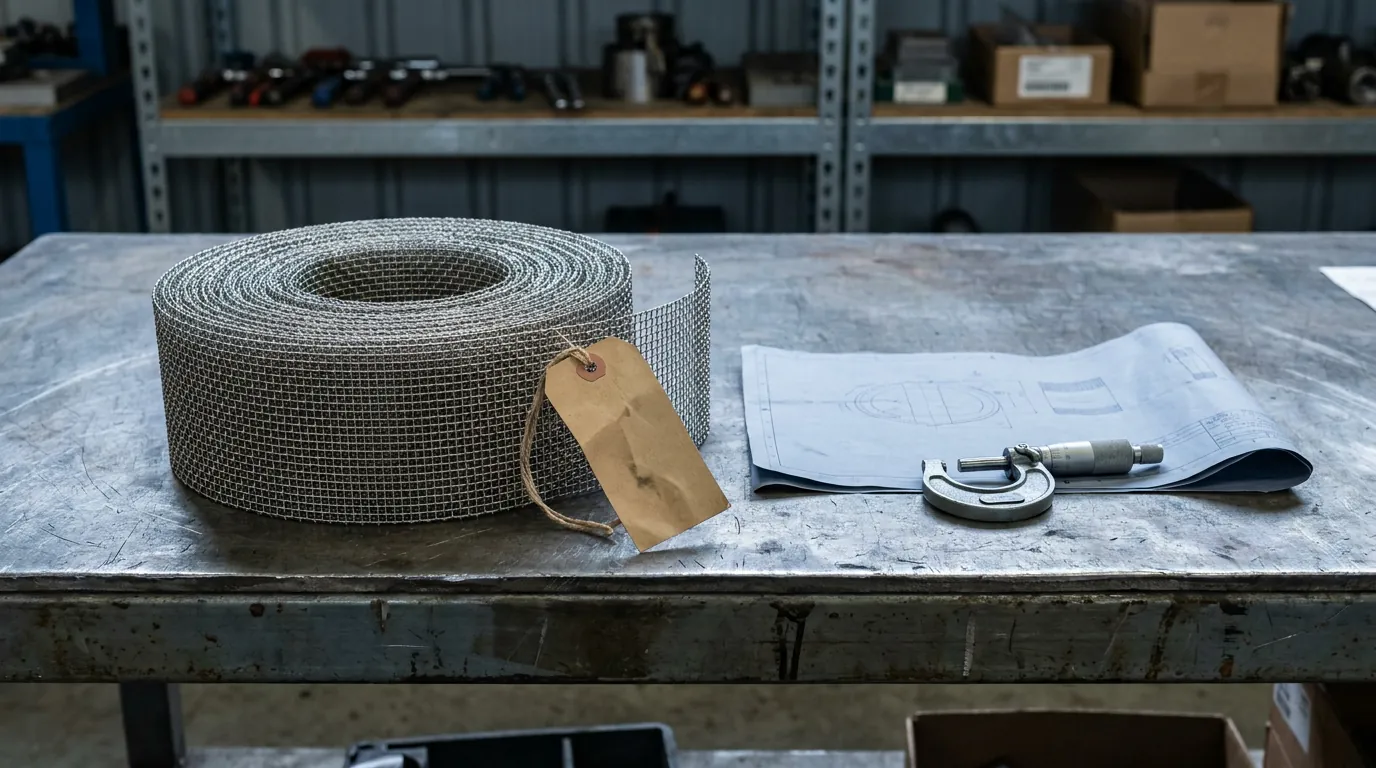
A wire mesh specification packs a lot into one line. Take a typical example:
SS 304, 40 mesh × 0.25 mm wire, 1220 mm wide × 30 m roll, plain weave.
Every part of that line affects price, performance or fit. Most disputes with mesh orders come from a part that was left out or read two ways. Here is what each part means and what to confirm.
Material grade
"SS 304" names the alloy. It should match a standard, for example the IS or ASTM grade on your drawing, and you should ask for a mill test certificate if the grade matters to the duty. Other common materials are galvanised steel, plain carbon steel, high carbon or spring steel for screening, SS 316 and aluminium. If chlorides are involved, read SS 304 vs SS 316 wire mesh before you finalise.
Mesh count and wire diameter
"40 mesh" means 40 openings per 25.4 mm. "0.25 mm wire" is the wire diameter. Together they fix the aperture:
Aperture = 25.4 / 40 - 0.25 = 0.635 - 0.25 = 0.385 mm
Neither number alone tells you the opening. A 40 mesh with 0.30 mm wire has a 0.335 mm aperture. See mesh count vs aperture for more examples.
- Confirm the count is per inch (25.4 mm) and not per cm.
- Confirm the count applies in both directions. If not, it should read as two numbers, such as 40 × 36, and state which is warp and which is weft.
- If your process depends on the opening, put the required aperture and its tolerance on the order as well, not just mesh and wire.
- Wire diameter should be in mm. A gauge number such as 24 SWG should be converted, see SWG to mm.
Width, length and form
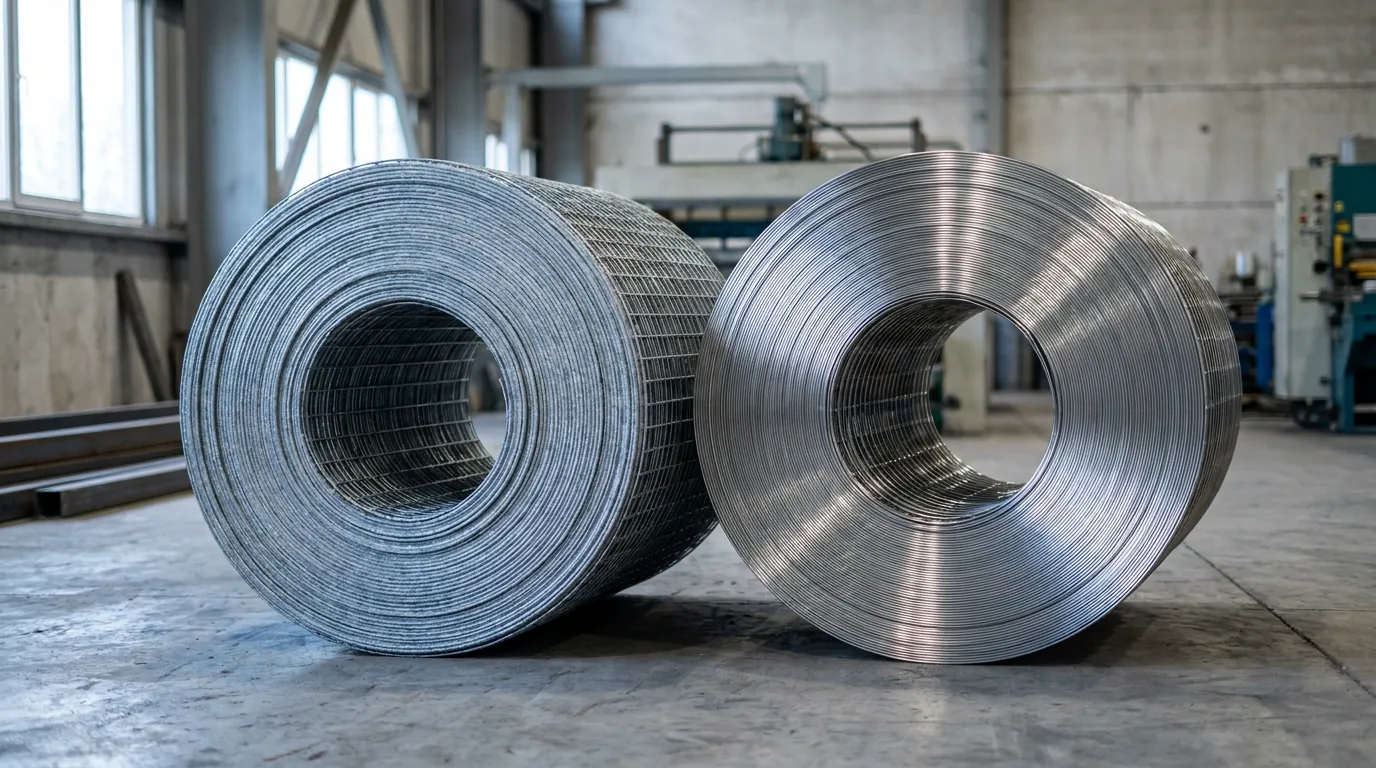
"1220 mm wide × 30 m roll" gives the roll size, here 36.6 m² per roll. Points that are often unclear:
- Is 1220 mm the overall width or the usable width? Rolls can have selvedge edges or cut edges, and the edge finish affects how the mesh is fixed.
- Width and length tolerances. Ask what the supplier holds and state your own limit if the mesh goes into a fixed frame.
- Quantity unit. Say whether you are ordering rolls, square metres or cut pieces, and the number of each. "100 metres" of a 1220 mm roll and "100 m²" are very different orders.
- Cut pieces need exact dimensions and, for screens, the edge treatment such as hooks, bent edges or framed edges.
Weave
"Plain weave" means each wire passes over one and under one. Other options are twill, Dutch weaves for filtration and crimped weaves for heavy screening. Weave changes strength and opening behaviour, so it belongs on every order. See plain, twill and Dutch weave.
What a complete specification also states
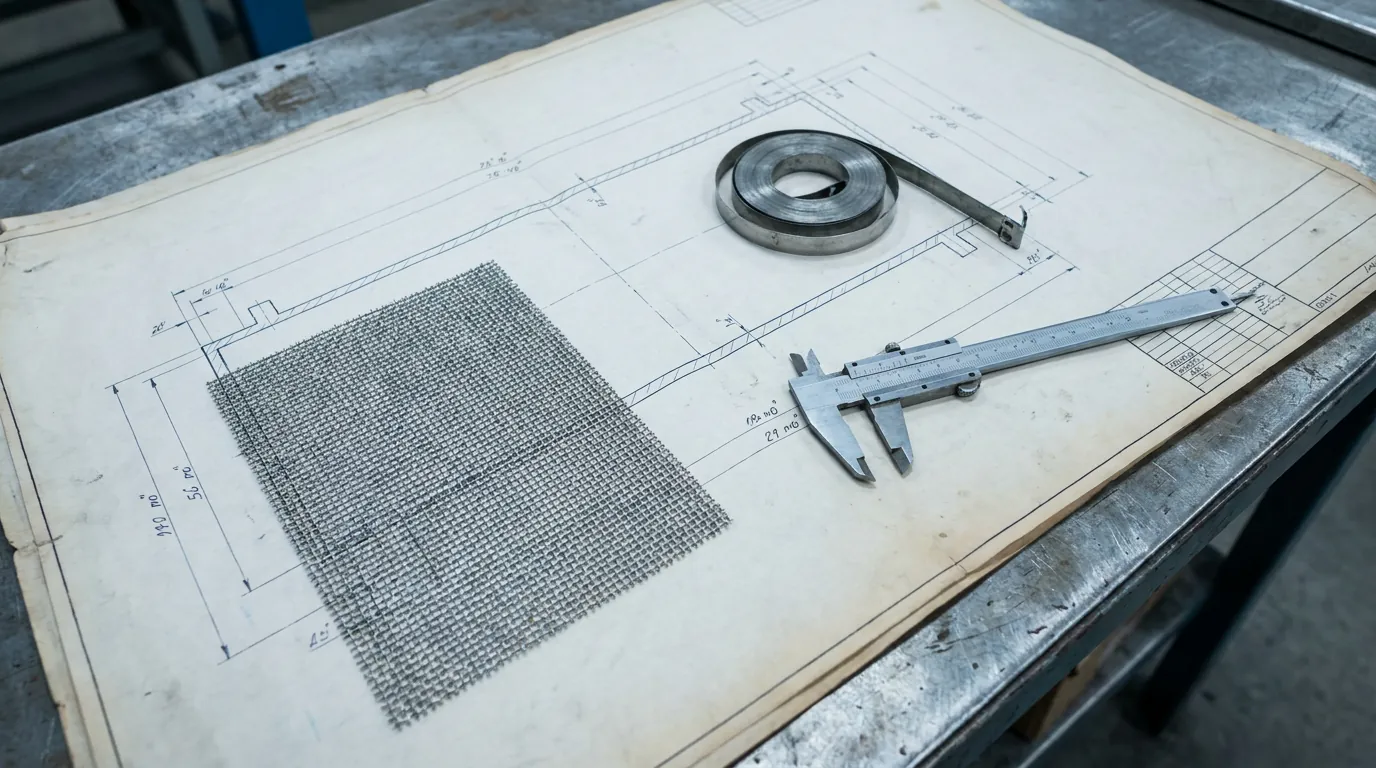
- The standard for tolerances, such as IS 1568, ISO 9044 or ASTM E2016, or the tolerance you need.
- For rectangular openings, the direction of the long opening relative to the roll length.
- Surface condition, for example cleaned or degreased if the mesh goes into food or pharma service.
- Documents needed: mill test certificate, dimensional report, or third party inspection.
- Packing, such as rolls wrapped and crated, or pieces stacked flat.
To estimate weight and freight before ordering, use the wire mesh weight calculator. A fuller list of what to send with an enquiry is in the wire mesh quote checklist.
Gujarat Wire Nettings makes wire mesh in rolls and cut pieces to specification. Send your specification line, or the drawing, and we will check it with you and point out anything that needs confirming before quoting. You can reach us through the contact page.