

Galvanised vs Stainless Steel Mesh: How to Choose
Hot-dip vs electro galvanising, how zinc protects steel, where GI mesh is enough, where stainless pays off, and how to compare cost over service life.
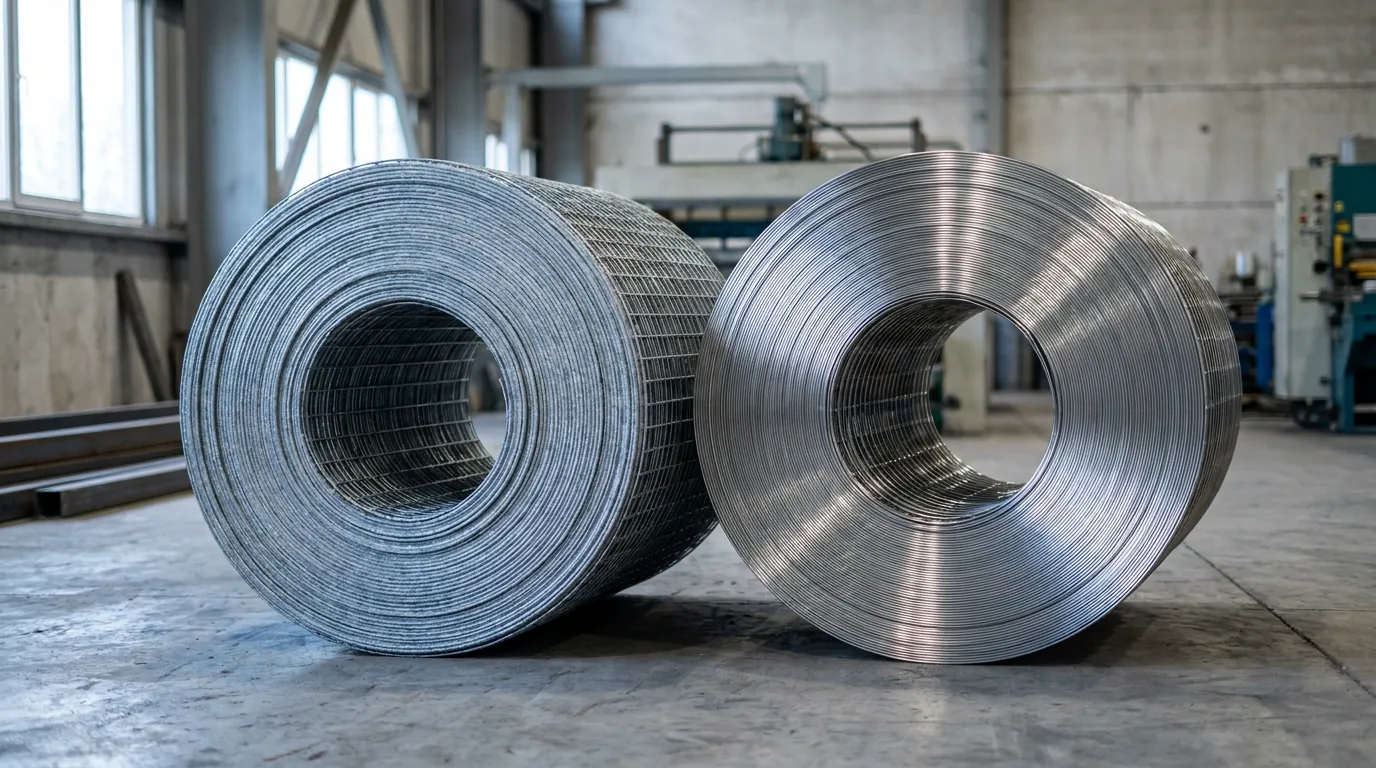
Most mesh, fencing and perforated sheet enquiries reach the same material question early on: will galvanised steel (GI) do the job, or is stainless steel needed? Stainless costs a lot more per kg, so the answer matters. It depends on what the mesh is exposed to and how long it has to last.
How galvanising protects steel
Galvanising coats mild steel with zinc. Zinc corrodes more slowly than steel in most atmospheres, and it is anodic to steel, so it protects the steel sacrificially. If the coating is scratched or cut, the zinc around the damage corrodes first and the exposed steel stays protected for a while. Once the zinc is used up, the steel underneath rusts like plain mild steel.
Coating life is roughly proportional to coating thickness in a given environment. That is why the galvanising method matters.
Hot-dip vs electro galvanising
- Hot-dip galvanising: the steel is dipped in molten zinc at around 450 °C. The zinc reacts with the steel to form zinc-iron alloy layers under an outer layer of zinc. The coating is thicker and tougher, with a dull grey or spangled finish.
- Electro galvanising: zinc is plated onto the steel in an electrolytic bath. The coating is thin, even and bright, but it carries much less zinc, so it lasts far less time outdoors.
For wire, coating mass is stated in g/m² of surface. IS 4826 sets minimum coating mass for hot-dip galvanised wire by wire diameter and coating class, so ask for the class or the g/m² figure instead of just "GI".
For welded mesh and fabricated panels, hot-dip galvanising after welding covers the weld points. Mesh welded from pre-galvanised wire has burnt or thin zinc at each joint, and that is where rust starts. Woven mesh can be woven from galvanised wire or galvanised after weaving. Galvanising after weaving locks the crossings but can partly fill small apertures, so it suits coarser meshes.
Where GI is enough
- Fencing, boundary walls and site enclosures in normal inland atmospheres.
- Machine guards, partitions and storage cages indoors.
- Plaster mesh, reinforcement mesh and general construction use.
- Poultry, agricultural and garden mesh.
In these uses a good hot-dip coating can give many years of service before the zinc is consumed. Life drops in industrial atmospheres with sulphur compounds, and near the coast.
Where stainless is worth paying for
- Chlorides. Coastal sites, salt spray, brine and seawater attack zinc quickly. Grade 316, which contains molybdenum, resists chloride pitting better than 304. Hot or concentrated chloride duty may need a higher grade.
- Food, pharma and drinking water. Stainless is the usual choice for food contact and hygiene. Zinc can leach into the product and is not accepted for most food contact uses.
- Acids and strong alkalis. Zinc dissolves in acidic conditions and in strongly alkaline ones. Stainless resists many dilute acids and process liquids, but check each chemical and temperature against a corrosion table.
- Filtration and fine meshes. Fine apertures cannot carry a thick zinc coating without blocking, and rust would contaminate the filtered product.
- High temperature. Zinc coatings are not meant for sustained high temperatures. Stainless grades keep their strength and resist scaling better.
For grade choice, see SS 304 vs 316 wire mesh and the SS chemical composition table.
Cost over the life of the job
Compare cost per year of service, not price per kg. A simple way to set it up:
Cost per year = (material + fabrication + installation + cost of each shutdown for replacement) / expected service life in years
If GI fencing on an inland site will not need replacing for many years, stainless will rarely pay back. If GI mesh in a chloride or acid environment has to be replaced often, with a shutdown and labour each time, stainless can work out cheaper within a few replacement cycles.
Weight is not the deciding factor. The densities of carbon steel and austenitic stainless steel are close, so the same mesh weighs about the same in either, and the price per kg is the real gap. Estimate weight with the wire mesh weight calculator.
Gujarat Wire Nettings supplies wire mesh, welded mesh, perforated sheets and fencing in galvanised and stainless steel. Tell us the application, the environment and the sizes through the contact page, and we will suggest a material and quote.