

Crimped Wire Mesh Types: Double, Intermediate, Lock, Flat Top
The four main pre-crimp styles for woven wire mesh, why crimping holds the aperture, and how to choose a crimp for screens, guards, grills and facades.
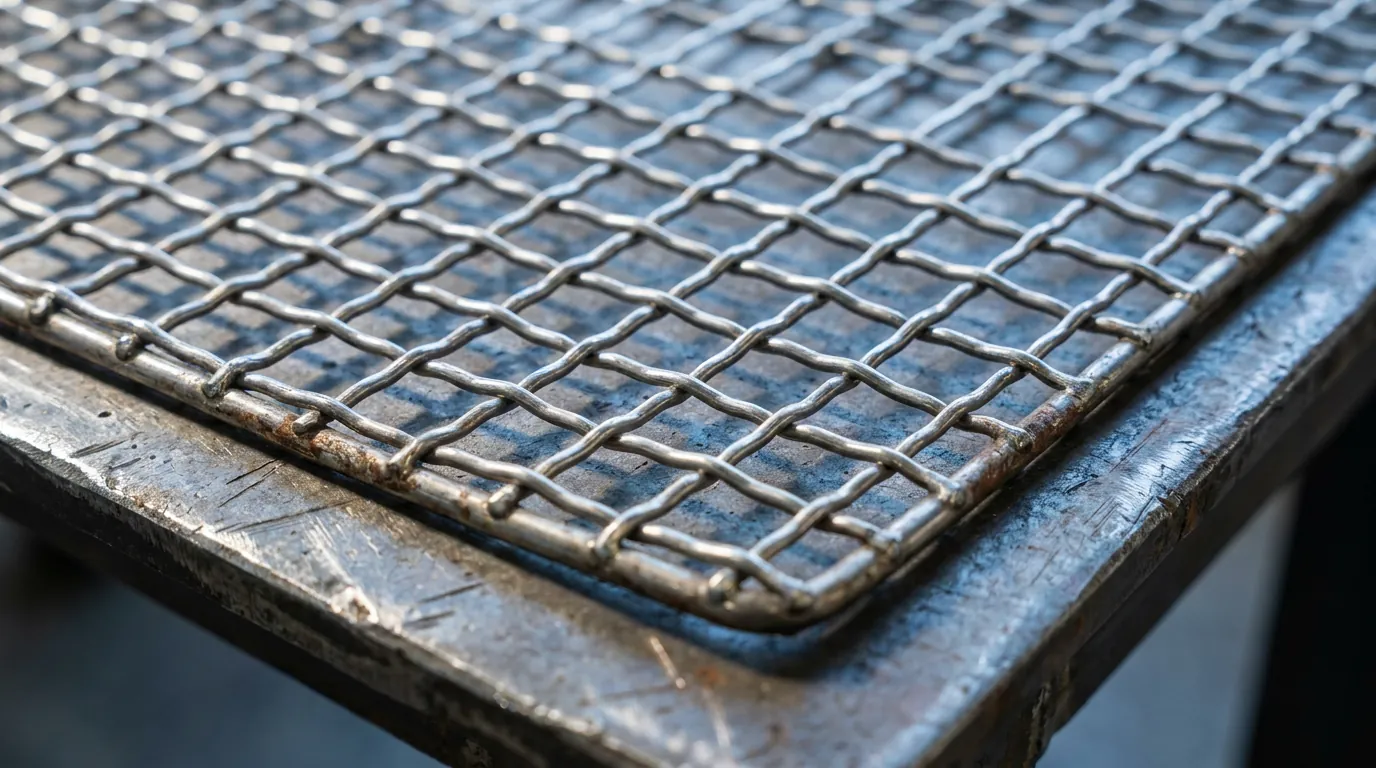
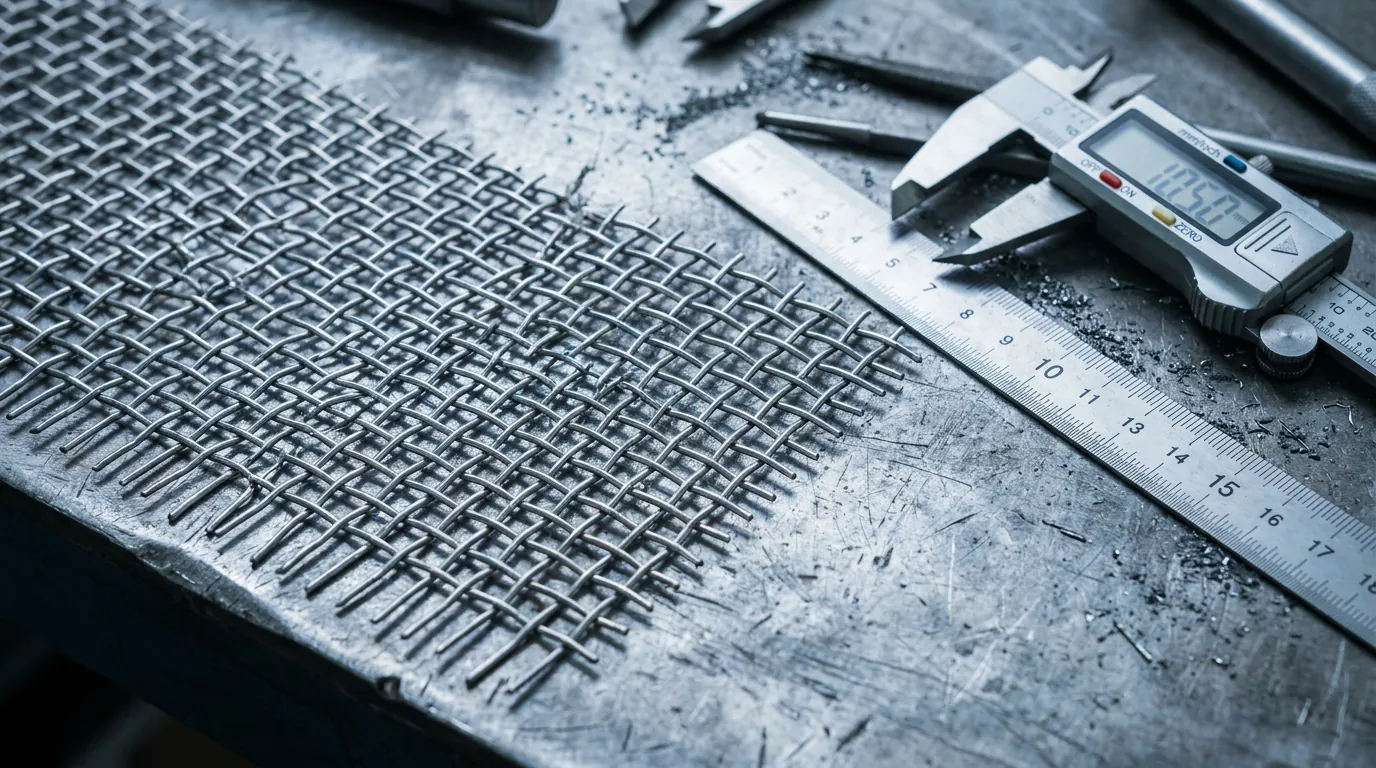
Crimped wire mesh is woven from wire that has been bent into a wave pattern before weaving. The crimps let each wire sit neatly over and under the crossing wires and lock the weave in place. Pre-crimping is used mainly for medium and heavy wire, where the wire is too stiff to bend around its neighbours during weaving alone. The crimp style changes how the mesh holds its opening, how it wears and how it looks.
Why crimping holds the aperture
In a plain woven mesh made from thick wire, the crossing wires can slide along each other under load or vibration. The openings then become uneven: some close up, others open out, and the screen starts passing oversize material. Pre-crimping puts a defined bend at each crossing point, so the wires seat into each other and cannot easily slide. The aperture stays where it was set, even on a vibrating deck or when a guard is knocked.
The four main crimp styles
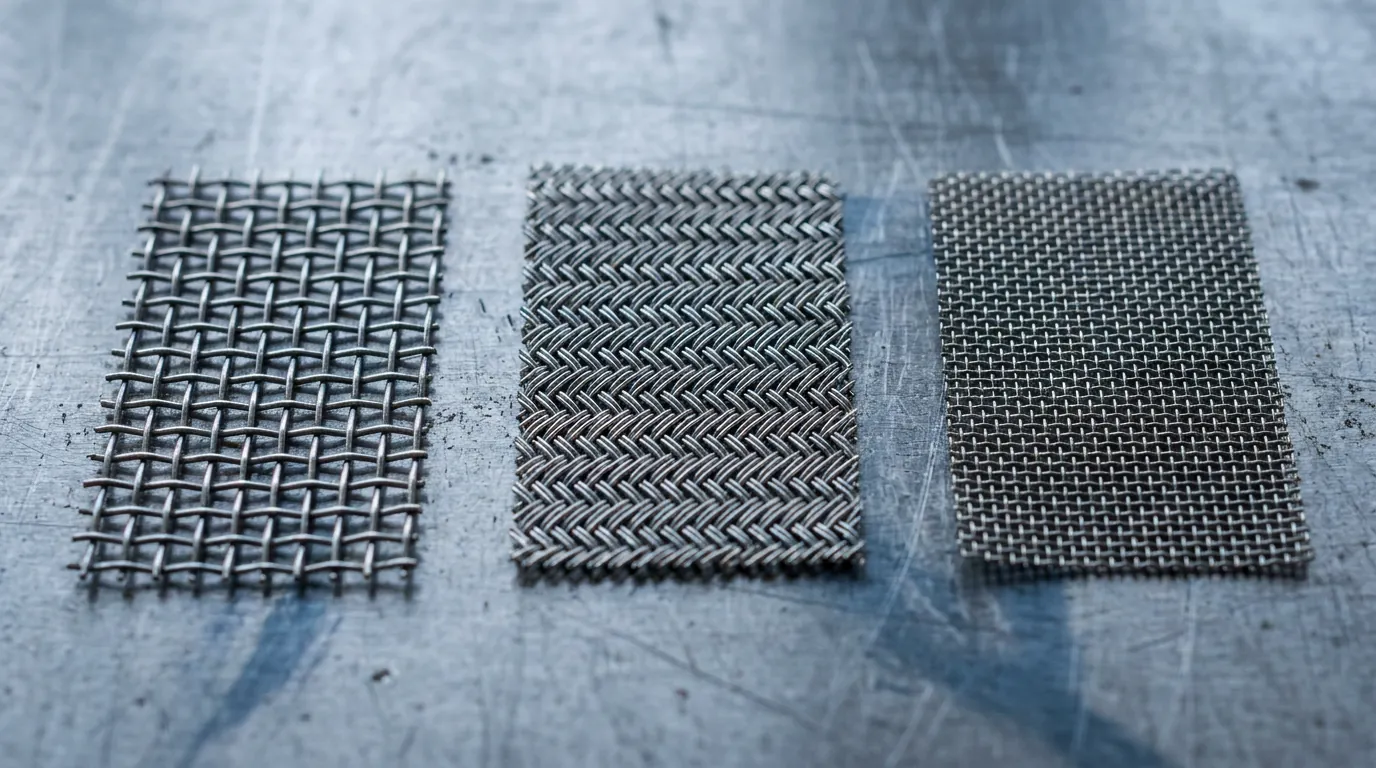
- Double crimp: both warp and weft are crimped at every intersection, and the wires pass over one and under the next. It is the general purpose style for small to medium openings relative to wire diameter. Used for screens, sieves, guards and infill.
- Intermediate crimp: extra crimps are added between the intersections. It is used when the opening is large compared with the wire diameter, where plain double crimp would leave long, loose spans. The extra crimps stiffen the mesh and keep the wires straight in the opening.
- Lock crimp: each wire has a pronounced bump on either side of the intersection, so the crossing wire is held in a pocket. It gives a very stable opening and is common for heavy screening, aggregate and quarry decks, and architectural mesh with large openings.
- Flat top: the crimps are formed so that all the bends sit on the underside and the top surface is flat. Material slides across the top without hitting raised knuckles, so wear is spread evenly and flow is better. Used on vibrating screens with abrasive material and in architectural work where a flat face is wanted.
Choosing a crimp
| Application | Common crimp | Reason |
|---|---|---|
| General screening, small to medium openings | Double crimp | Simple, economical, stable |
| Large openings with thin wire | Intermediate crimp | Stops loose wire spans |
| Heavy aggregate and quarry screens | Lock crimp or flat top | Holds aperture under impact |
| Abrasive material, long screen life | Flat top | Even wear, no exposed knuckles |
| Barbecue and grill mesh | Double or lock crimp, usually stainless | Rigid, food contact grade material |
| Facades, balustrades, partitions | Lock crimp or flat top | Stable, neat appearance |
These are starting points. The final choice also depends on wire diameter, opening, deck design and how the mesh is fixed. For screen decks, see vibrating screen mesh types and choosing wire diameter for vibrating screens.
Materials and finishes
Crimped mesh is made in high carbon spring steel for screening, mild steel, galvanised steel and stainless steel. High carbon steel gives good wear life on abrasive material. Stainless is used where corrosion or food contact matters, and for grills. Galvanised or stainless is preferred for outdoor architectural use.
What to specify
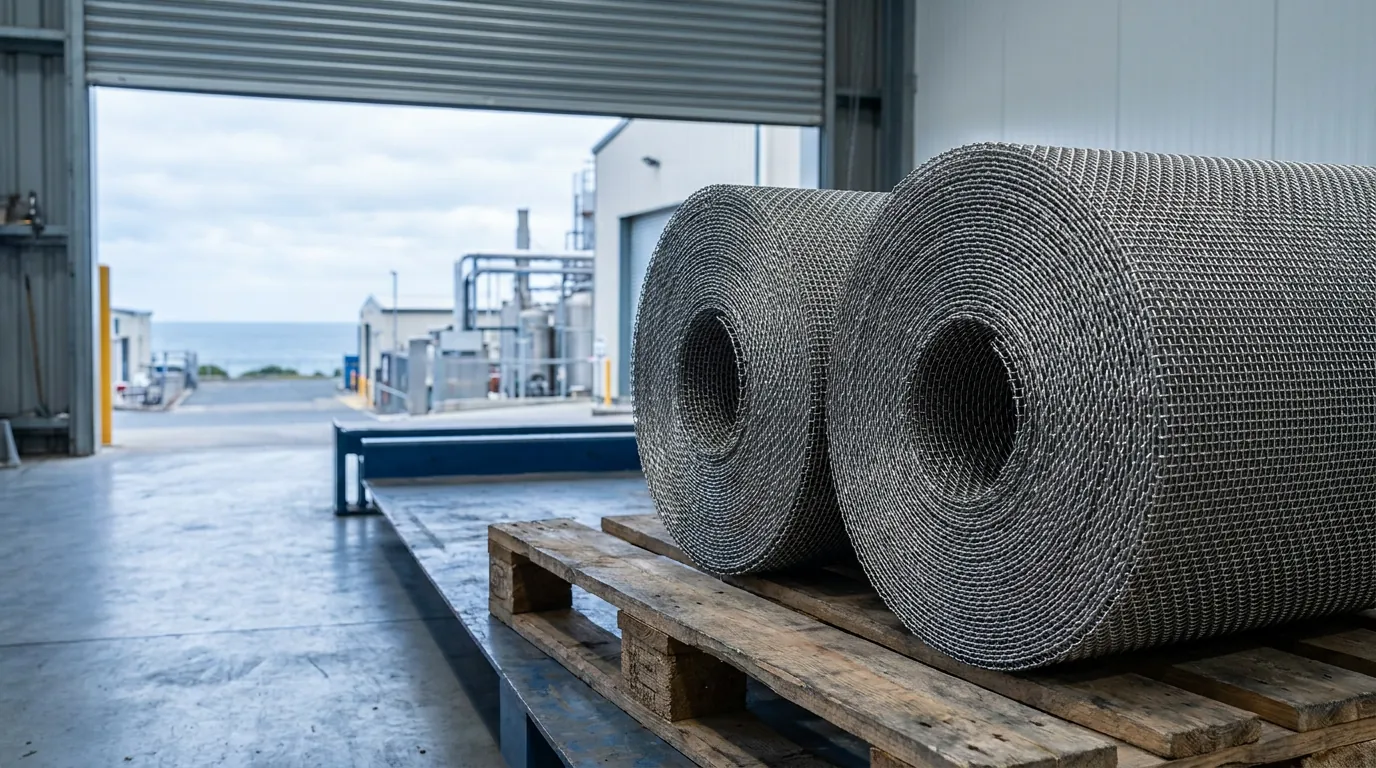
State the opening in mm, wire diameter in mm, crimp style, material, and the panel size or roll width and length. For screen panels, add the hook or edge type and the direction of the crimp relative to the flow of material. Writing these in one line on the order avoids most supply problems. See how to read a wire mesh specification for the usual format.
Gujarat Wire Nettings makes crimped wire mesh in double, intermediate, lock and flat top styles. Send your opening, wire diameter, material and size through the contact page, and we will confirm the crimp and quote.