

Vibrating Screen Mesh Types and Where Each One Fits
Woven square, slotted, harp, welded mesh, perforated plate and PU or rubber panels for vibrating screens, compared with practical pros and cons.
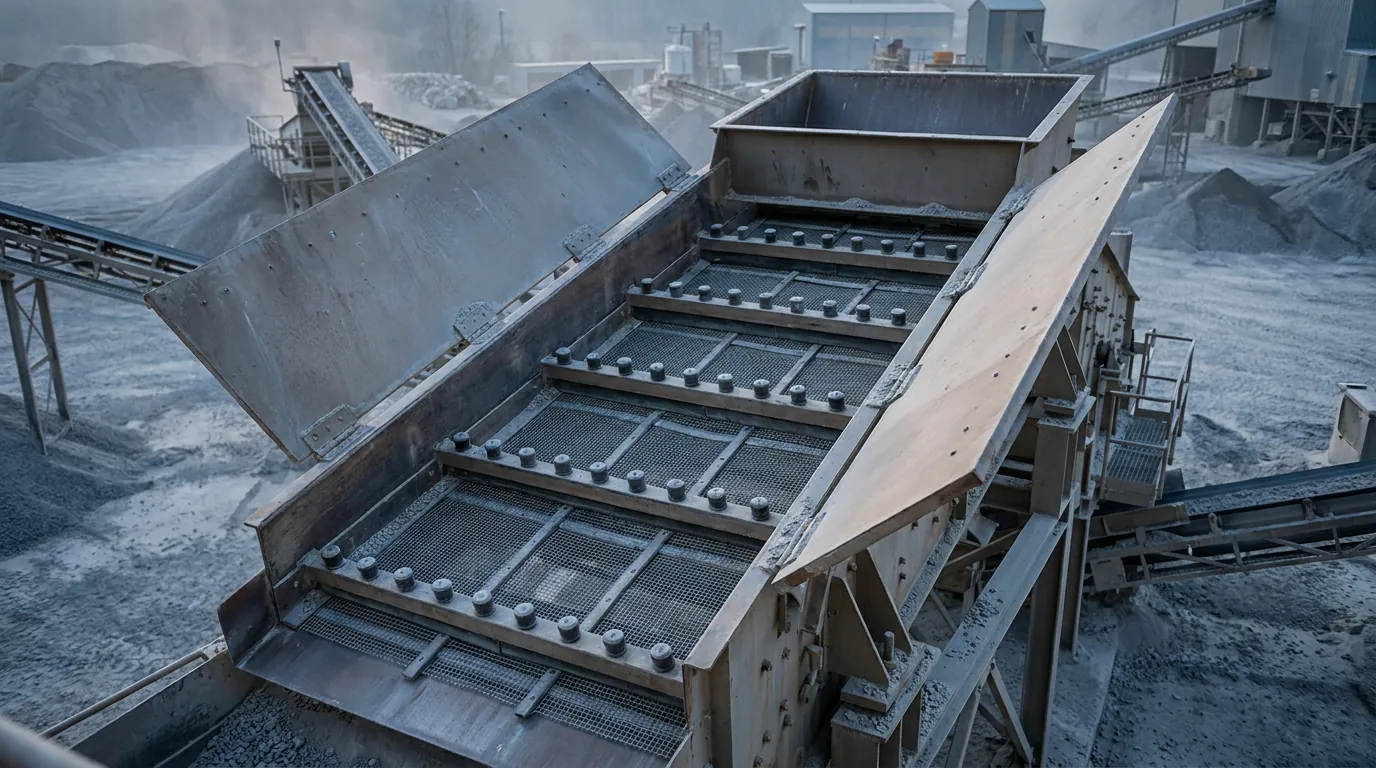
A vibrating screen deck can carry several kinds of screening media. The right choice depends on the material you are sizing, its moisture, abrasion, impact on the deck and the open area you need to reach your tonnage.
Woven wire with square openings
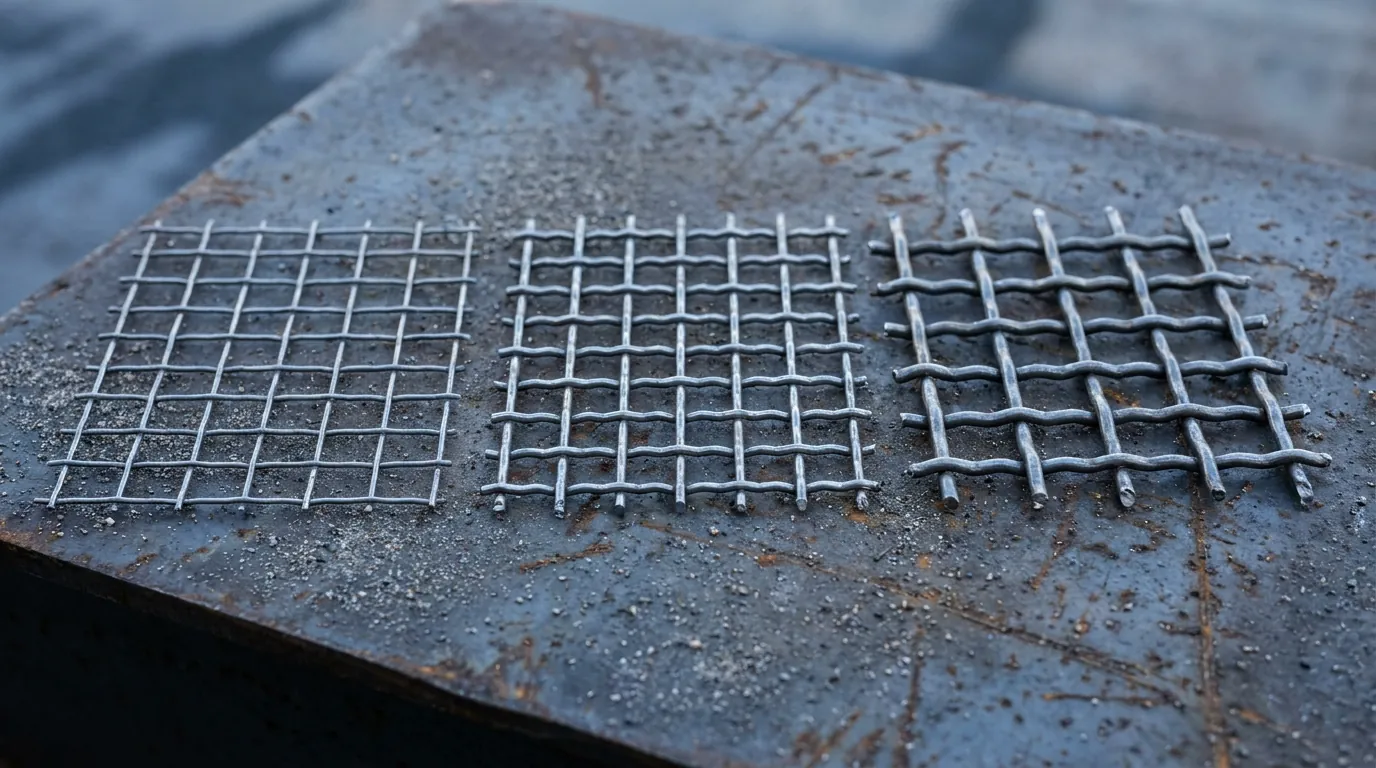
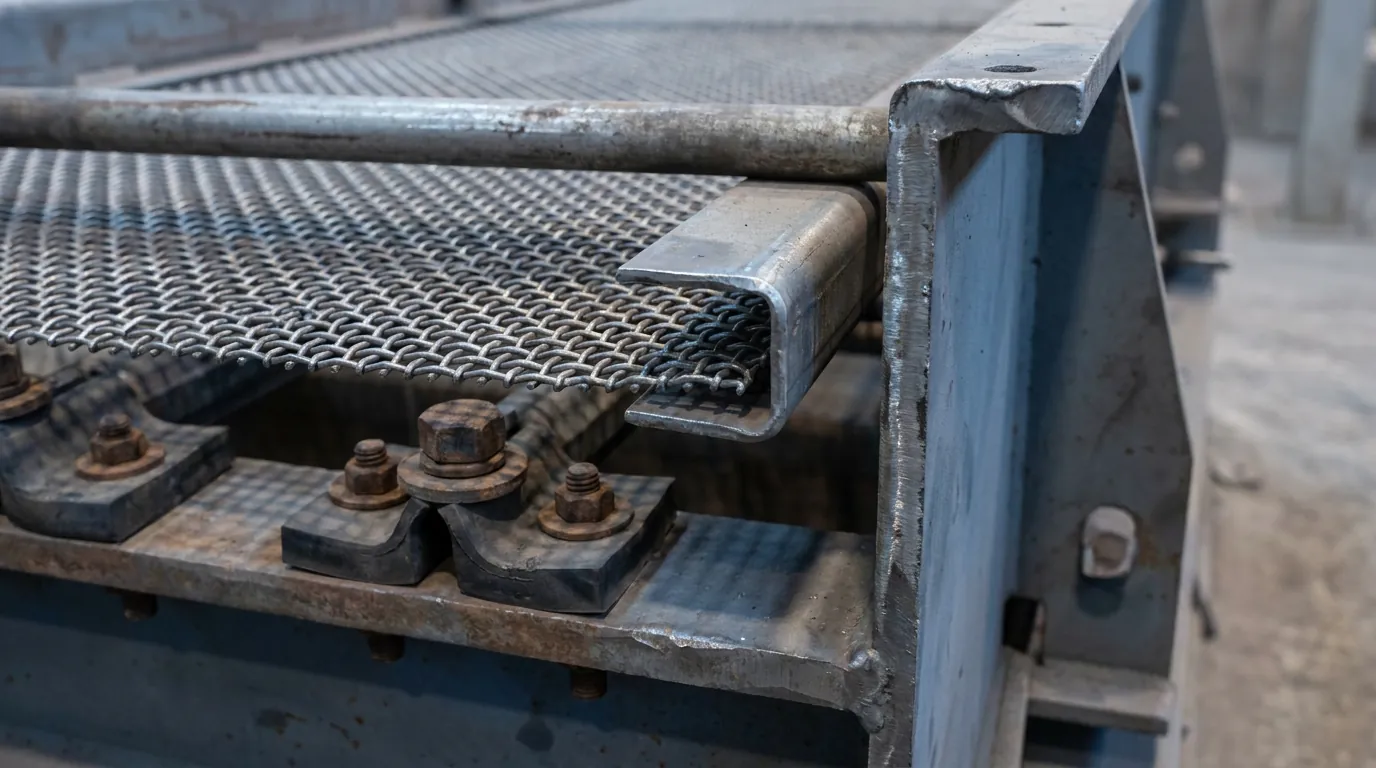
Square-opening woven mesh is the default for dry sizing of aggregate, coal, ore, clinker and sinter. The wires are pre-crimped and woven so the opening is the same in both directions, which gives a predictable cut size. Open area is high compared with plate or polymer media, so capacity per square metre of deck is good.
- Pros: accurate cut, high open area, low cost per panel, quick to replace.
- Cons: shorter life than polyurethane in very abrasive wet duty, can blind with damp fines, wires can break over crown bars if tension is poor.
The crimp style matters too. Lock crimp holds wires in position on larger apertures, and flat top crimp keeps the upper surface smooth so material slides and wears the wire more evenly. See crimped wire mesh types for the differences.
Slotted and rectangular openings
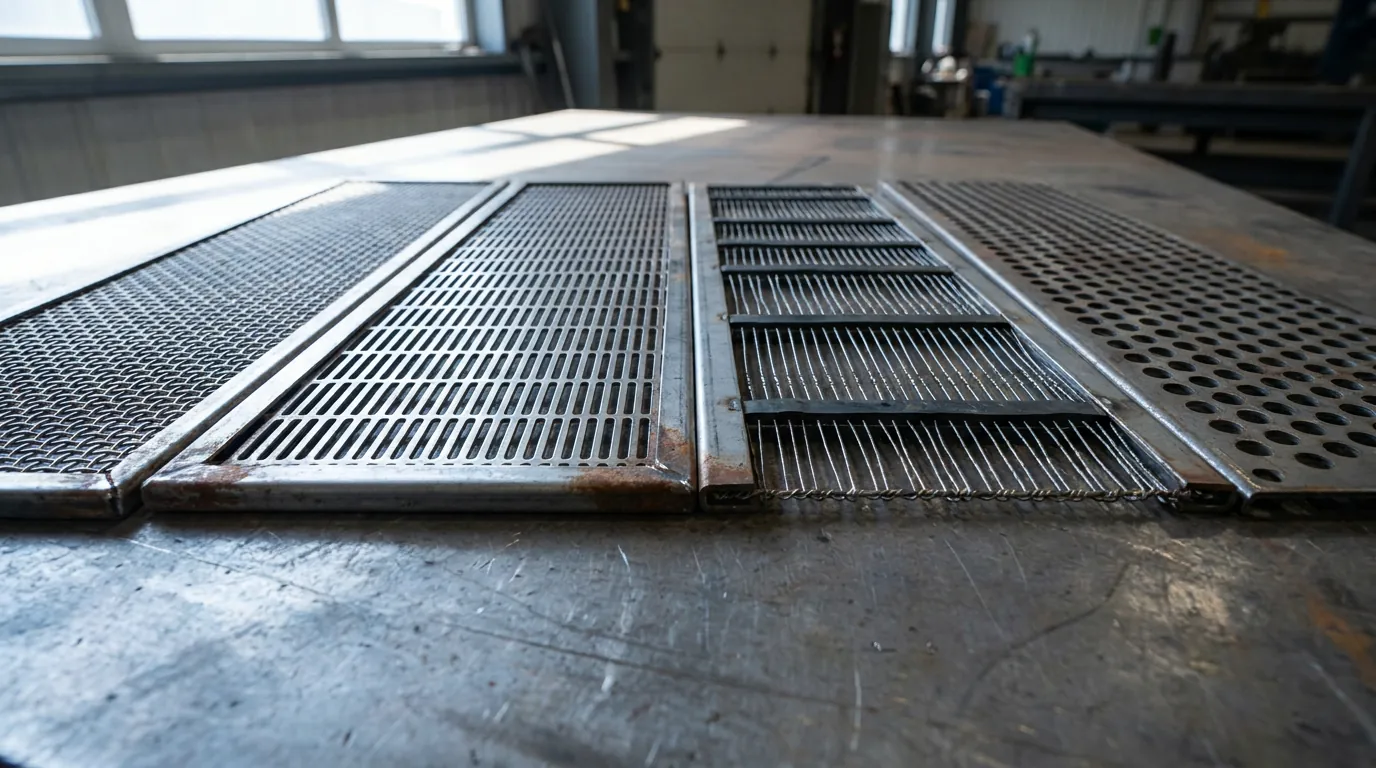
Slotted mesh has openings longer in one direction, with the slot usually running along the flow of material. For the same wire size it gives more open area than square mesh, and the longer wire spans flex more under vibration, which helps shed sticky fines and near-size particles.
The trade-off is cut accuracy. Flaky or elongated particles can pass lengthwise through a slot, so the undersize can contain slivers larger than the slot width. Slotted mesh suits sand, damp fines and duties where particle shape in the product is not tightly specified.
Harp or piano-wire screens
Harp screens, also called self-cleaning or piano-wire screens, use individual longitudinal wires held apart by polyurethane or rubber strips, or by crimped cross wires at intervals. Each wire can vibrate on its own, which throws off material that would otherwise blind or peg a woven opening. Common patterns are straight wire (long slots), wave or zigzag wire and diamond openings.
- Pros: very high open area, strong resistance to blinding and pegging, useful on wet or clayey feed.
- Cons: less precise cut than square mesh, higher cost per panel, flaky material passes more easily, a single broken wire opens a long gap.
Welded mesh and perforated plate
Welded mesh has fixed joints at every intersection, so the openings do not shift. It is rigid and suits scalping, coarse separation and support or backing duty under finer media. It does not flex, so it does little to clear pegged stones.
Perforated plate is steel plate with punched round, square or slotted holes. It takes heavy impact well and is often used at the feed end, on scalping decks and in high-wear zones. Open area is lower than woven wire, so throughput per square metre drops. Hole pattern and pitch decide how much, as explained in perforated sheet open area.
Polyurethane and rubber panels
Modular polyurethane panels pin or bolt onto a frame deck, and rubber is supplied as panels or tensioned sheets. Both give long wear life in abrasive wet screening, run quieter than steel and usually have openings that taper wider towards the underside, which reduces pegging. Rubber handles impact better, polyurethane handles fine abrasive wet duty better.
The downsides are lower open area than wire, higher first cost and the need for a compatible deck. A tensioned wire deck cannot take modular panels without changing the support frame. Many plants mix media: rubber or plate where the feed lands, woven wire further down the deck where accuracy matters.
Quick comparison
| Media | Open area | Wear life | Anti-blinding | Typical use |
|---|---|---|---|---|
| Woven square | High | Medium | Low to medium | Dry sizing, accurate cut |
| Slotted | Higher | Medium | Medium | Sand, damp fines |
| Harp / piano wire | Highest | Medium | High | Wet, sticky or clayey feed |
| Welded mesh | Medium | Medium | Low | Scalping, support decks |
| Perforated plate | Low to medium | High under impact | Low | Feed end, scalping |
| PU / rubber panels | Low to medium | High | Medium to high | Abrasive wet screening |
Ratings are relative. Actual figures depend on aperture, thickness, material and how the deck is run.
Gujarat Wire Nettings makes woven, slotted and harp-type vibrating screens to your deck size, along with perforated sheets and rubber and PU beading. Send the deck dimensions, aperture, hook type and the material being screened through the contact page and we will suggest suitable media and quote.