

How to Extend Vibrating Screen Mesh Life
Practical steps to make vibrating screen mesh last longer: correct tension, crown bar rubber, even feed, impact plates, inspections and the right wire.
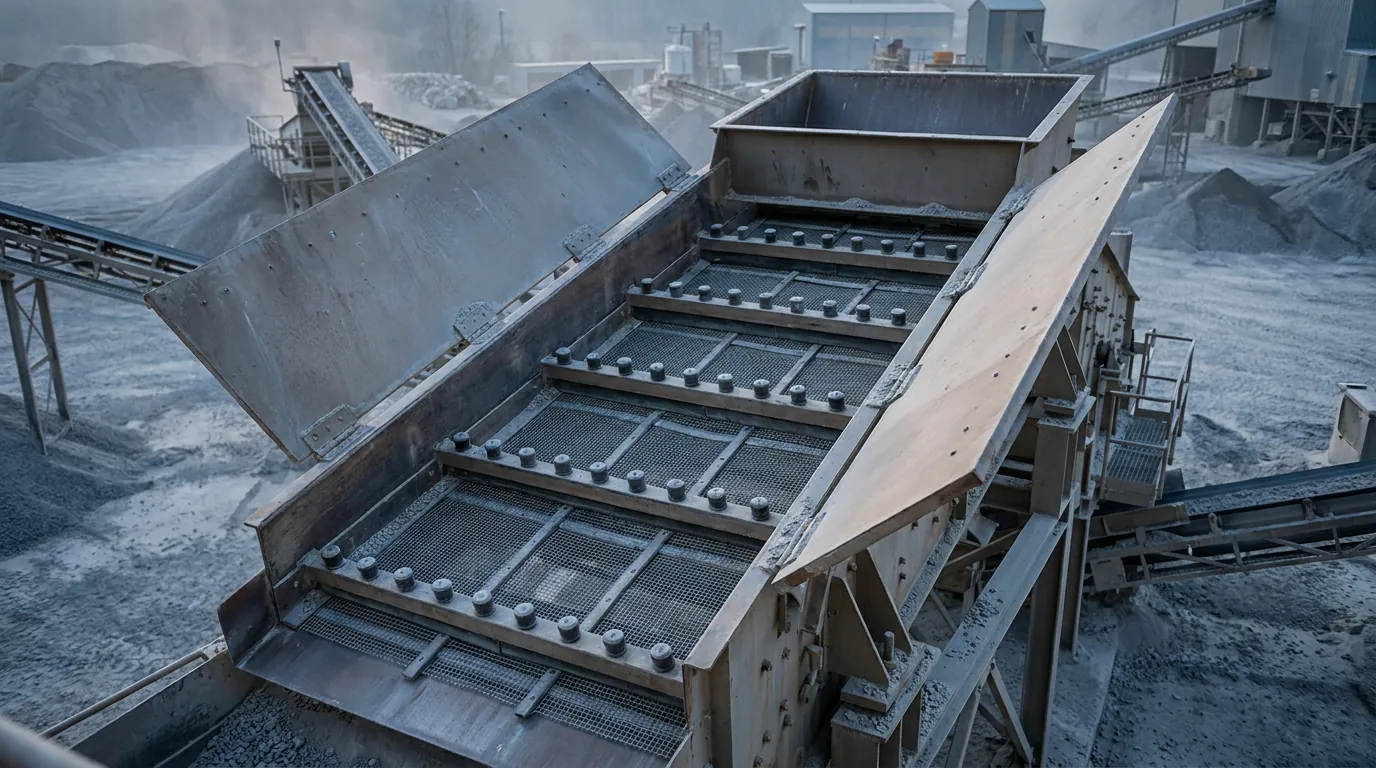
Screen mesh is a wear part, but the gap between a panel that lasts a week and one that lasts a month is often in how it is fitted and run rather than in the mesh itself. The steps below are general practice for side-tensioned woven and harp decks. Check them against your screen manufacturer's manual.
Get tension right and keep it right
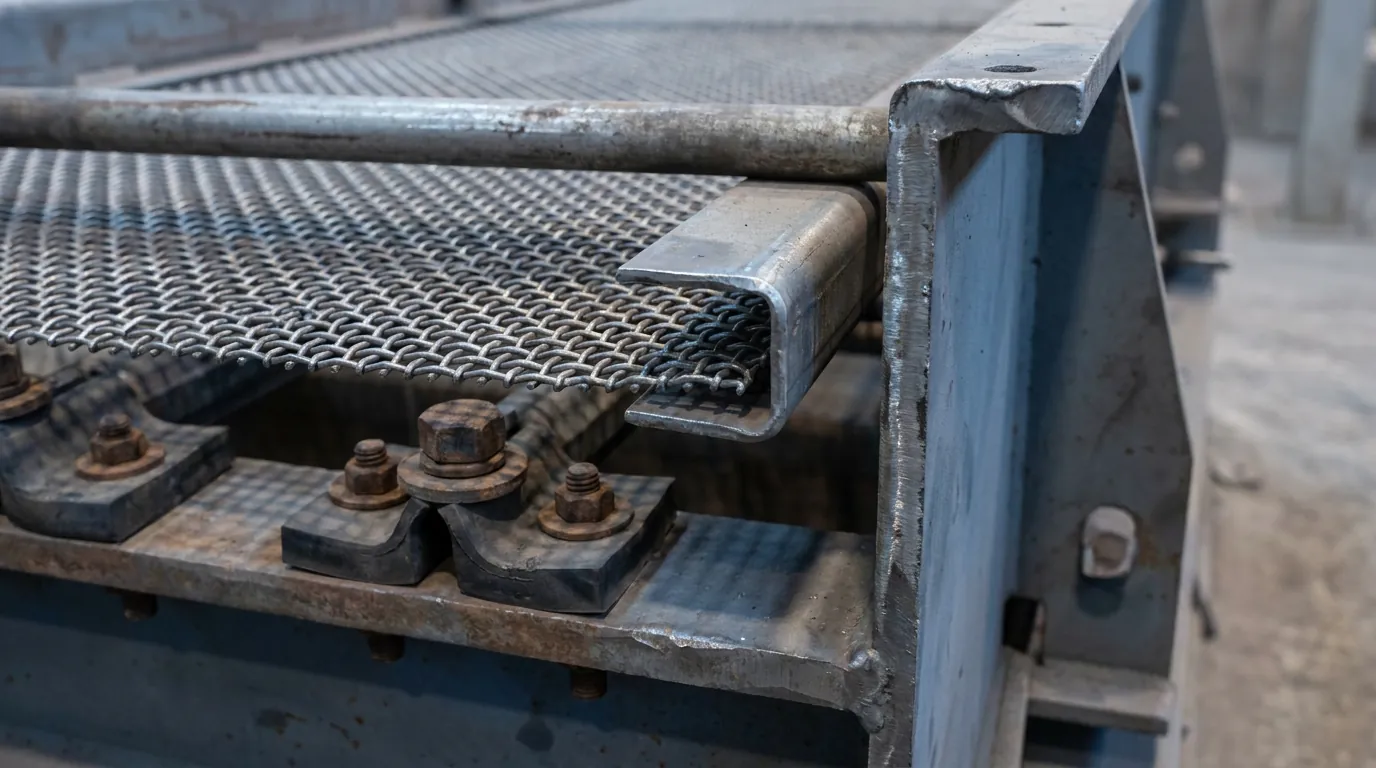
Low or uneven tension is the most common cause of early failure. The mesh lifts off the support bars and slaps back each stroke, and the wires fatigue along the crown lines. Tighten tension bolts evenly from the centre outwards to the torque in the manual, re-tension after the first few hours of running, and check again at planned stops. More on this in vibrating screen hooks and tensioning.
Look after the crown bar rubber
The rubber or PU capping on crown bars and stringers, often called beading or channel rubber, cushions the mesh and lets it seat without steel-on-steel contact. When it wears through, cracks or goes missing, the wire rides on bare steel and breaks in a straight line over that bar. Inspect the beading at every panel change and replace it when worn. Fitting new mesh onto worn rubber throws away part of the new panel's life.
Spread the feed and break the drop
Feed that lands in one narrow strip wears a channel in the mesh while the rest of the deck is underused. It also overloads that strip, so undersize is carried off the end. Use a feed box, spreader or chute liner so material arrives across the full width of the deck.
Where material drops from height, fit an impact plate, rubber feed panel or perforated plate section at the feed end so the first contact is not on the wire. Lowering the drop height where the chute allows also helps. The rest of the deck can then carry lighter mesh with more open area.
Inspect on a routine
A short, regular check finds problems while they are cheap to fix. A typical routine with the screen stopped and isolated:
- Walk the deck and look for broken wires, holes and worn patches, and note where they are.
- Check tension bolts and clamp bars, and listen for drumming when running.
- Check crown bar rubber and side liners for wear and missing sections.
- Look for pegging and blinding, and how much of the deck is affected.
- Check the undersize for oversize particles, which can mean a hole has opened.
- Record panel fit date and removal date so life can be compared between suppliers or specifications.
The location of failures tells you the cause. Breaks over support bars point to tension or rubber. Wear at the feed point points to impact or feed distribution. Breaks at the hook point to hook fit or over-tightening. Even wear across the whole deck usually means the panel has simply reached its life.
Choose the right wire for the duty
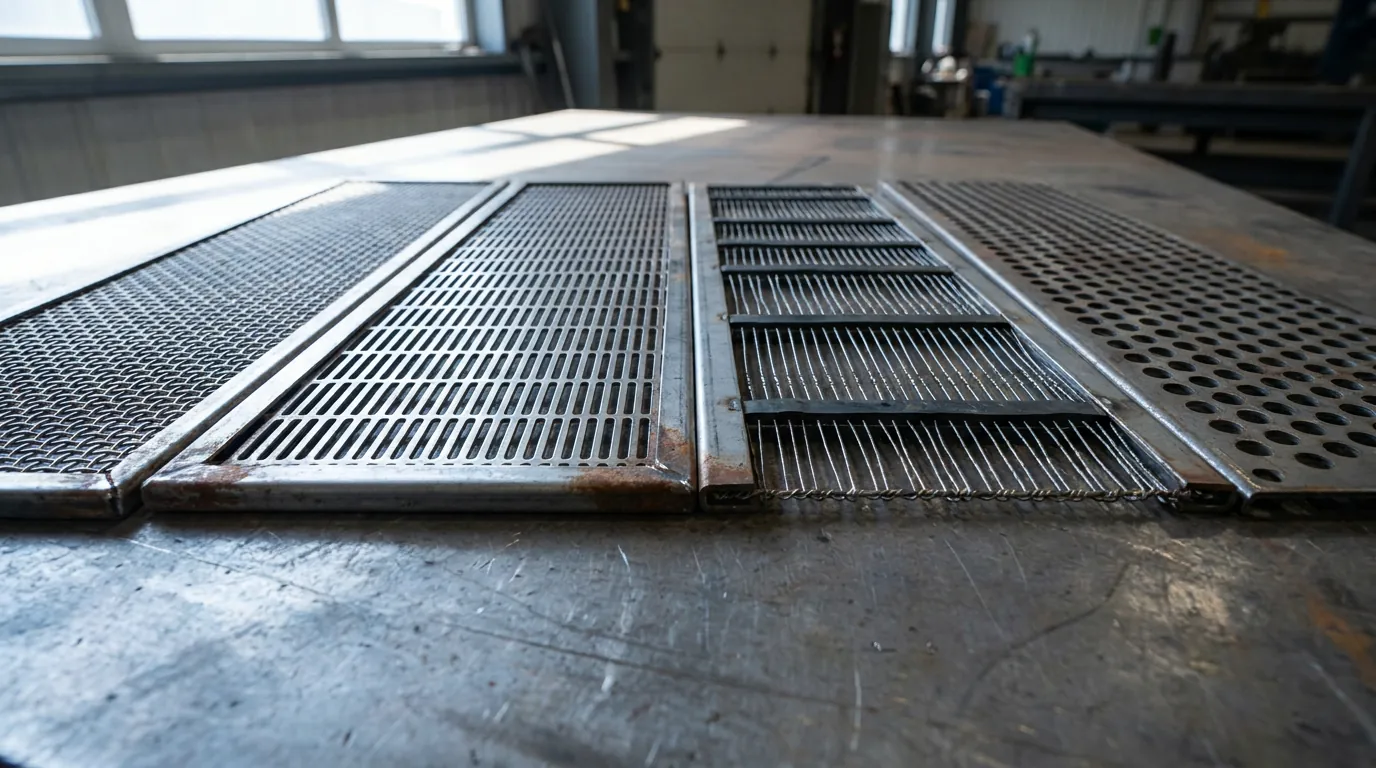
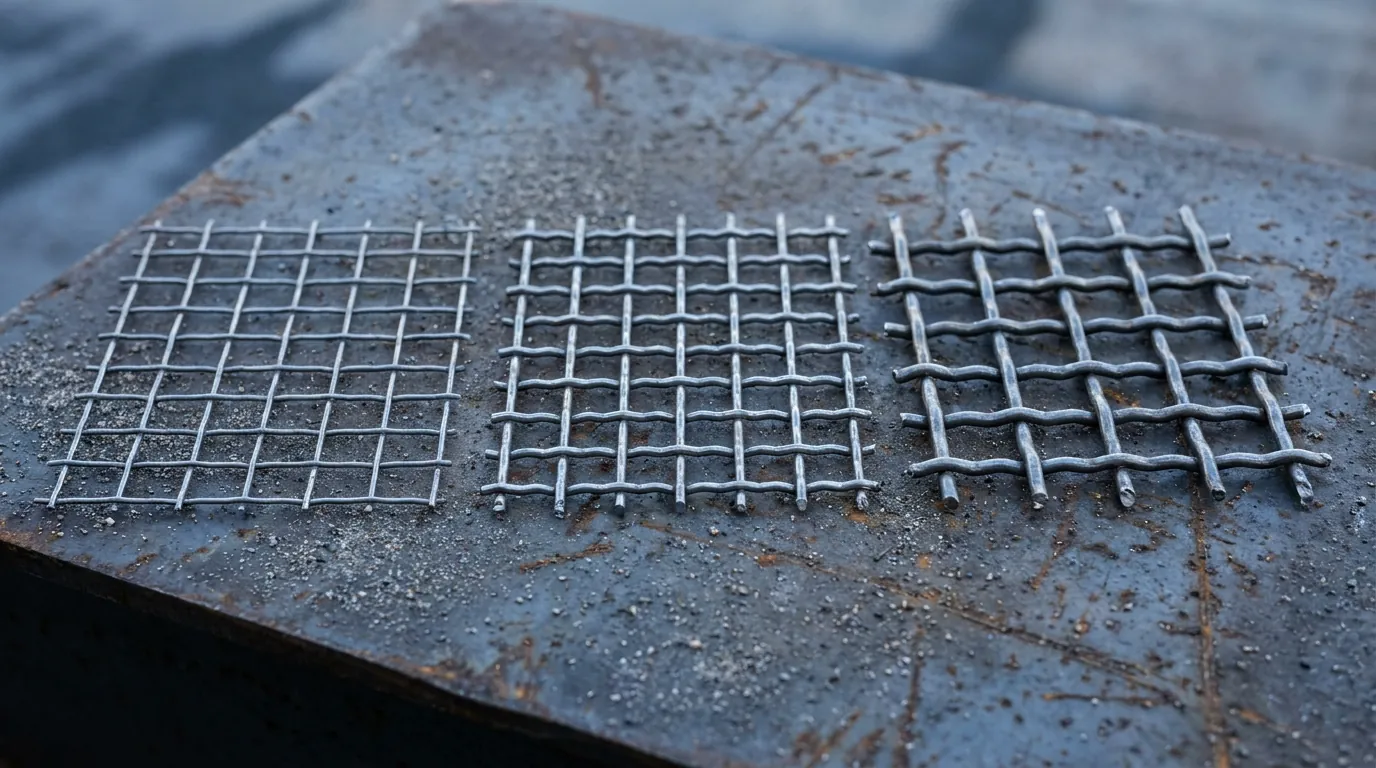
Once fitting and feed are under control, the specification is the next lever. Heavier wire lasts longer under impact but reduces open area. High-carbon steel suits most dry abrasive duty, stainless suits wet and corrosive duty, and manganese steel suits heavy impact. Flat top crimp gives a smoother surface that wears more evenly. See choosing wire diameter for the trade-off.
Change one thing at a time and record the result. If you switch wire, rubber and tension practice in the same week, you will not know which change helped.
Run the screen inside its design
Overloading the deck, running beyond the designed speed or stroke, and feeding much larger lumps than the deck was meant for all shorten mesh life. So does washing water that carries grit across a dry-duty panel. If one deck wears much faster than the others, check whether it is doing more of the work than intended.
Gujarat Wire Nettings makes vibrating screen mesh and rubber and PU beading for crown bars. Send your deck size, current mesh specification and where panels are failing through the contact page, and we will suggest mesh and beading to match.