

Choosing Wire Diameter for Vibrating Screen Mesh
How wire diameter affects open area, throughput and wear life on vibrating screens, with heavy, medium and light duty guidance and material choices.
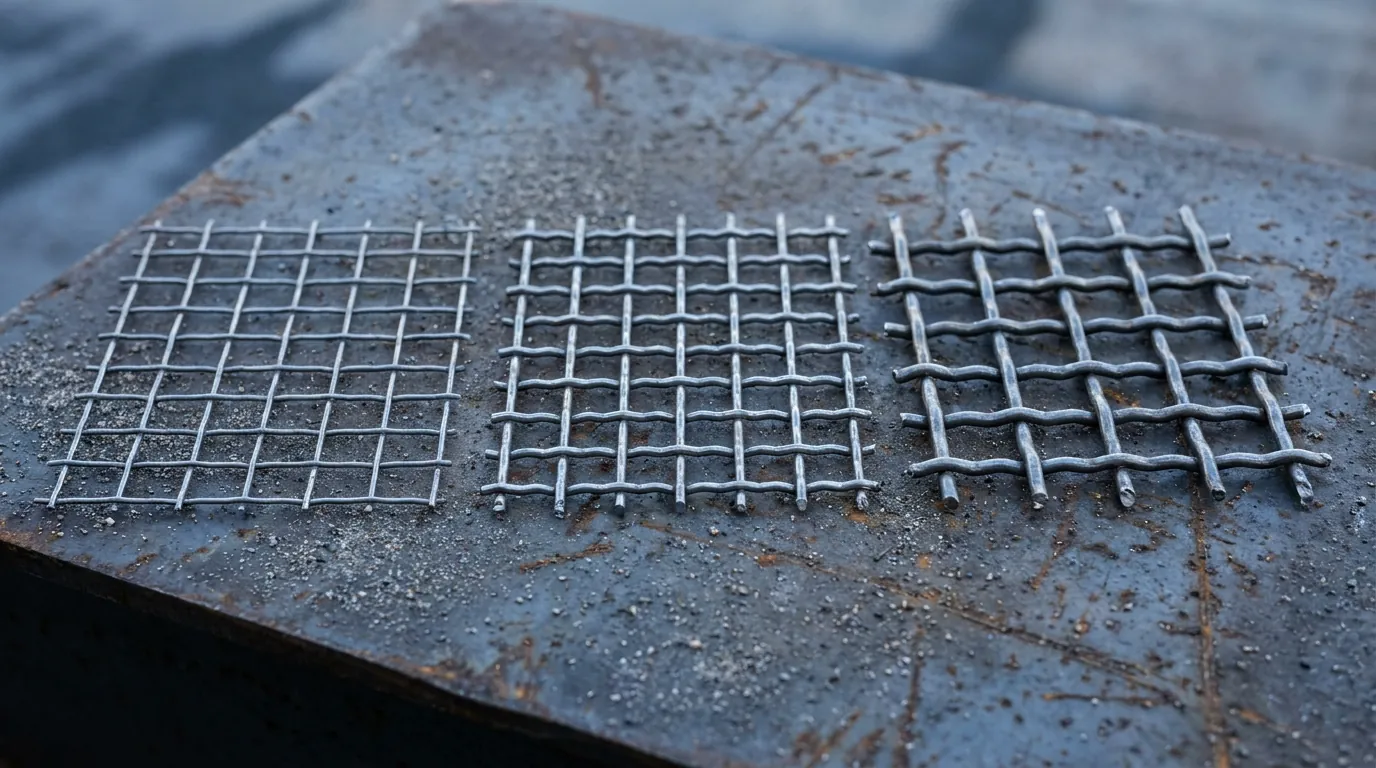
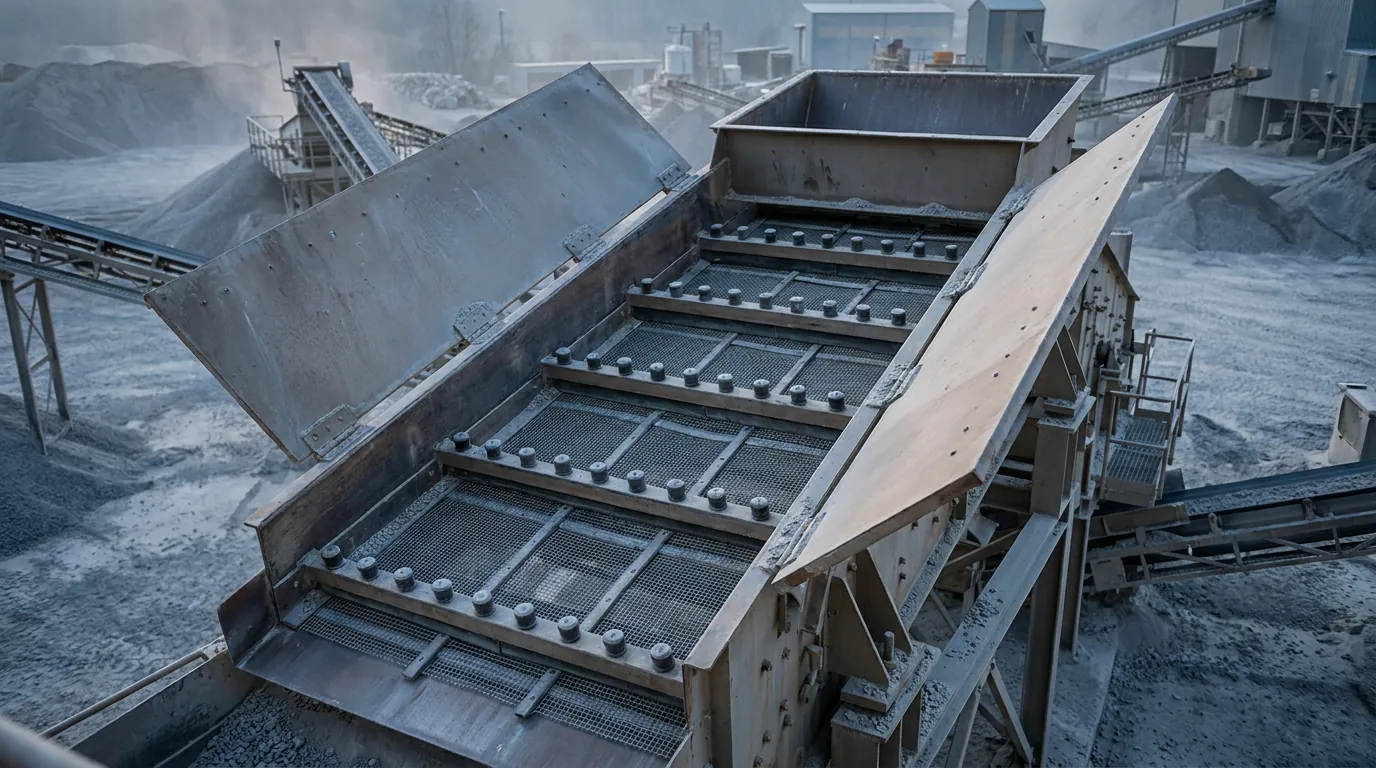
Two screen panels can have the same aperture and behave very differently on the deck. The difference is usually wire diameter. Thicker wire lasts longer but cuts open area and capacity. Thinner wire screens more tonnage but wears through sooner. Picking the diameter is a balance between those two, set by the feed size, impact and abrasion on your deck.
How wire diameter changes open area
For square-opening woven mesh, open area is the share of the screen surface that is hole. It depends only on aperture and wire diameter:
Open area (%) = [ a / (a + d) ]² × 100, where a = clear aperture in mm and d = wire diameter in mm
Keeping a 10 mm aperture and changing only the wire shows how much capacity the wire choice costs or gains:
| Aperture (mm) | Wire diameter (mm) | Open area (%) |
|---|---|---|
| 10 | 3 | 59.2 |
| 10 | 4 | 51.0 |
| 10 | 5 | 44.4 |
| 10 | 6 | 39.1 |
Going from 3 mm to 6 mm wire on the same aperture drops open area by about a third. Throughput does not fall in exact proportion, because bed depth, stroke, speed and particle shape also matter, but less open area always means less chance for undersize to pass. If you are working from gauge numbers, the SWG to mm table gives the diameter.
Heavy, medium and light duty
Suppliers group wire diameters into duty classes for each aperture. The exact figures vary by supplier and by standard, so check against IS or ASTM tables and your OEM drawing, but the logic is the same:
- Heavy duty: the thickest wire for that aperture. Used on scalping and top decks, at the feed end, and where large lumps drop onto the mesh. Lowest open area, longest life under impact.
- Medium duty: the general choice for intermediate decks on aggregate, coal and ore. A balance of capacity and life.
- Light duty: thinner wire for fine and lower decks, where the feed is small and impact is low. Highest open area, but wears quickly if used on coarse feed.
A common mistake is to fit light duty mesh on a top deck to gain capacity. The extra tonnage is real for a few days, then wires start breaking at the crown bars and the deck is down for a change. The reverse also happens: heavy wire on a fine bottom deck that carries little load, where the lost open area limits the whole plant for no gain in life.
Other factors that should move your choice
- Feed top size relative to aperture: large lumps on a small aperture call for heavier wire.
- Abrasion: hard, sharp material such as granite or iron ore wears wire faster than limestone.
- Moisture and blinding: thinner wire flexes more and blinds less, which may be worth some loss of life.
- Deck position: top and feed-end sections take most of the impact, so they can carry heavier wire than the discharge end.
- Panel span between supports: longer unsupported spans need enough stiffness to hold tension.
High-carbon steel, stainless or manganese
High-carbon spring steel wire is the standard for most dry mineral screening. It is hard, resists abrasion well and costs less than alloy options. It rusts, so it suits dry plants or applications where some surface corrosion does not matter.
Stainless steel, usually grade 304 or 316, is used where corrosion is the main problem: wet screening, sea water, fertiliser, chemical and food duty. It is softer than spring steel, so in heavy abrasive work it may wear faster. Smooth stainless wire can also help reduce build-up of sticky fines. See SS 304 vs 316 wire mesh for the grade choice.
Manganese steel wire is chosen for heavy impact and abrasion, such as scalping run-of-mine material or hard rock. It costs more, and its benefit shows mainly where wire failure on spring steel is driven by impact rather than corrosion.
When in doubt, start from the wire your current panels use, record how long they last and how they fail, then step up or down one duty class and compare. Failure at the hooks points to tension, not wire size, so fix that first.
Gujarat Wire Nettings makes vibrating screen mesh in high-carbon steel, stainless steel and manganese steel across a range of wire diameters. Send the aperture, deck position, feed size and current wire through the contact page and we will recommend a wire diameter and quote.