

How to Calculate Open Area of a Perforated Sheet
Open area formulas for round holes on 60° staggered and straight pitch and square holes, with a worked example and why open area matters.
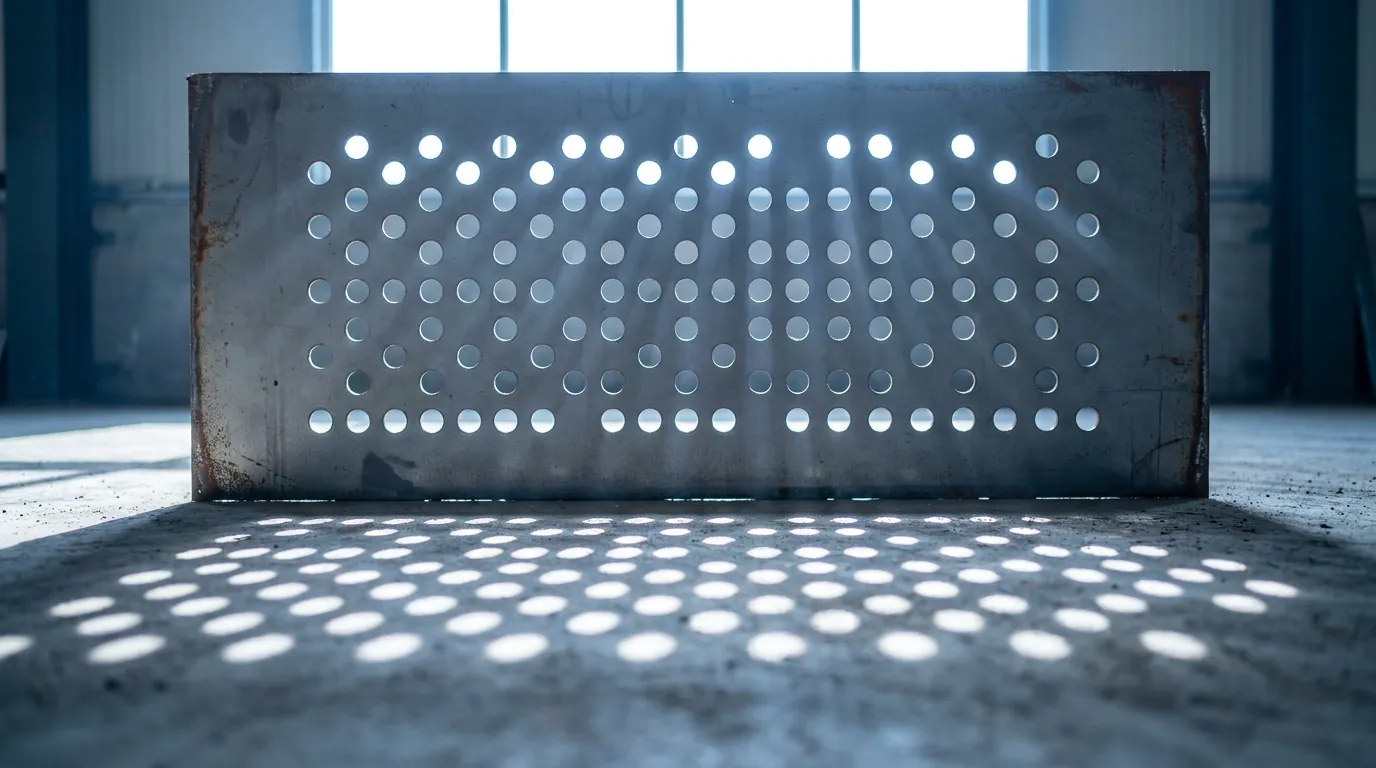
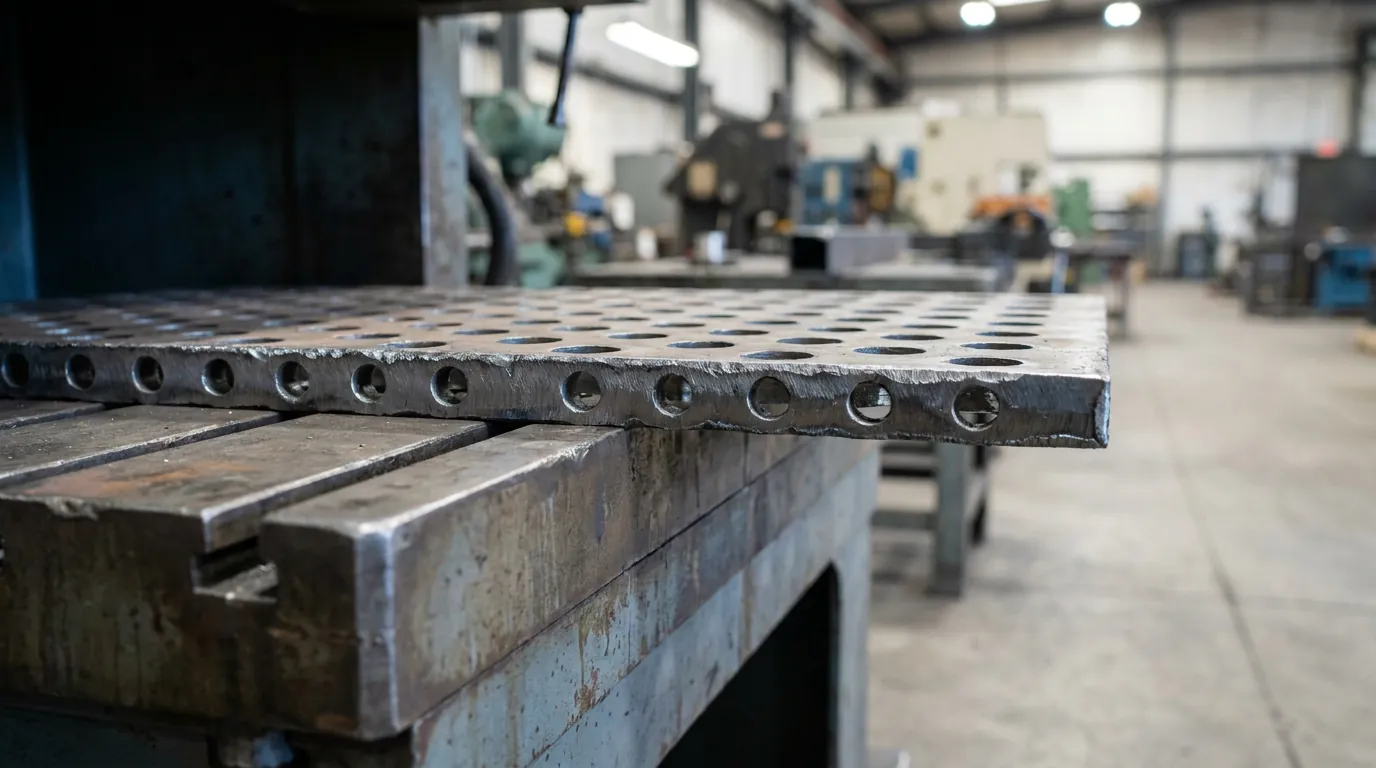
Open area is the share of a perforated sheet's surface that is hole, given as a percentage. It is the single number that tells you most about how the sheet will behave: how much air, liquid or material passes, how strong and stiff the sheet is, and how much it weighs. It depends only on hole size, pitch and layout, so you can calculate it before you order.
The formulas
In these formulas d is the round hole diameter, a is the side of a square hole, and p is the pitch, the centre to centre distance between neighbouring holes. Use the same unit, usually mm, for all of them. The result is open area in percent.
Round holes, 60° staggered: Open area (%) = 90.69 × d² / p²
Round holes, straight (square) pitch: Open area (%) = 78.54 × d² / p²
Square holes, straight pitch: Open area (%) = 100 × a² / p²
The constants come from geometry. In a square grid, each round hole sits in a p by p square, and a circle of diameter d covers π/4 of a square of side d, which is 78.54%. In a 60° staggered layout, each hole sits in a smaller cell of area about 0.866 p², so the same hole gives a higher percentage, hence 90.69.
Worked example
Take a sheet with 3 mm round holes on a 5 mm pitch.
- 60° staggered: 90.69 × 3² / 5² = 90.69 × 9 / 25 = 32.6%
- Straight pitch: 78.54 × 9 / 25 = 28.3%
- Bridge width (pitch minus hole) in both cases: 5 - 3 = 2 mm
Same holes, same pitch, about four points more open area in the staggered layout. That is one reason 60° staggered is the default for round holes.
For square holes, take 10 mm square holes on a 12 mm straight pitch: 100 × 10² / 12² = 100 × 100 / 144 = 69.4%. The bridge is 2 mm, and the high open area shows why square holes are used where maximum throughput is wanted.
Working backwards is also useful. If you need 40% open area with 4 mm round holes on 60° staggered, rearrange: p = d × √(90.69 / 40) = 4 × 1.506 = 6.0 mm pitch.
Why open area matters
Flow. Higher open area means more air or liquid through the sheet for a given pressure drop, and more passing capacity on a screen. For ventilation, filter supports and dryer floors, open area is usually the first number to check.
Strength and stiffness. Every percent of open area is metal removed. A sheet at 50% open area is much weaker and more flexible than the same sheet at 25%, and thin bridges can tear or wear through under abrasive load. If the sheet spans between supports or carries load, reduce open area or increase thickness.
Weight. A perforated sheet weighs roughly the plain sheet weight multiplied by (1 - open area / 100). Mild steel at about 7.85 kg/m² per mm of thickness gives 15.7 kg/m² for a plain 2 mm sheet, so the same sheet at 32.6% open area weighs about 15.7 × 0.674 = 10.6 kg/m². Margins left unperforated add back weight, so treat this as an estimate for the perforated area only.
Practical notes
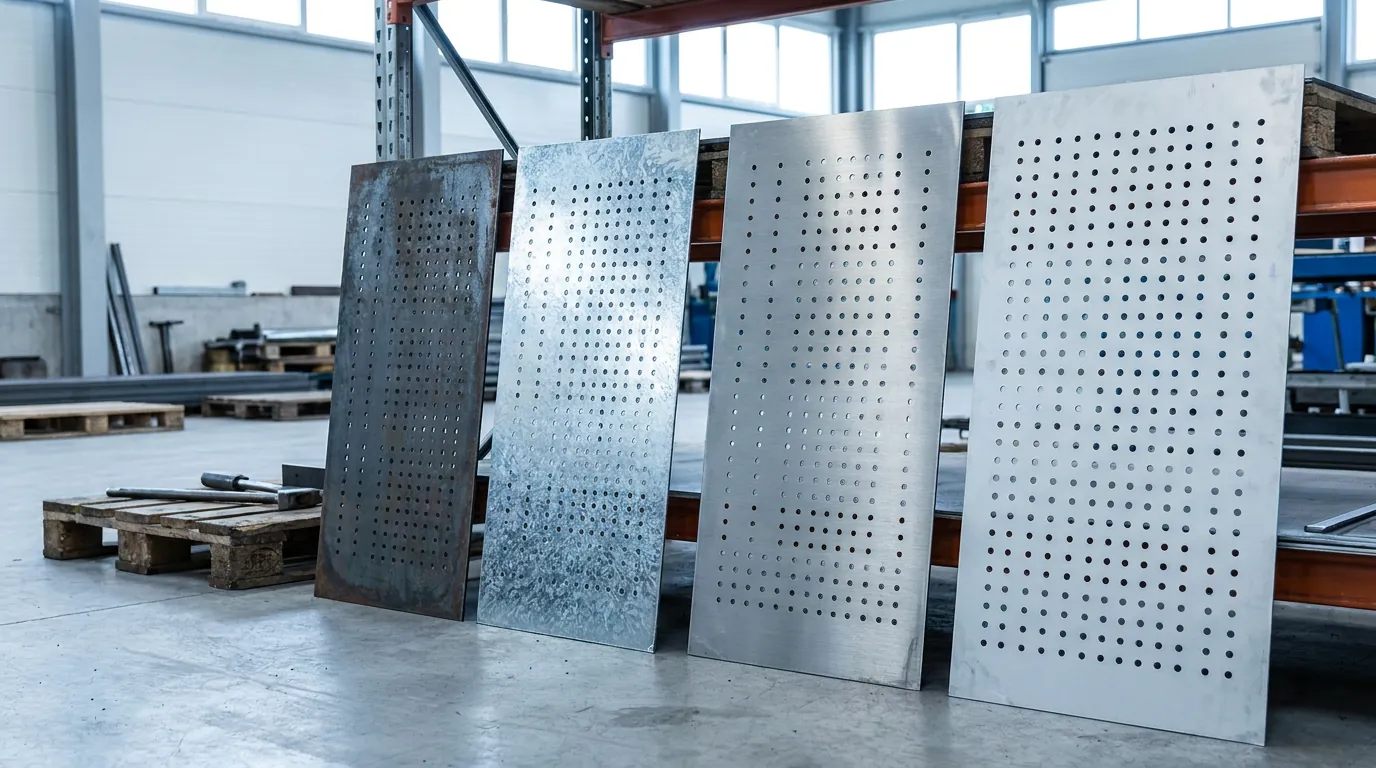
- Open area is nominal. Punch wear, burrs and coatings reduce the actual opening slightly. Powder coating or galvanising after perforation can close small holes noticeably.
- The formulas assume a uniform pattern across the sheet. Margins and blank areas lower the open area of the whole sheet.
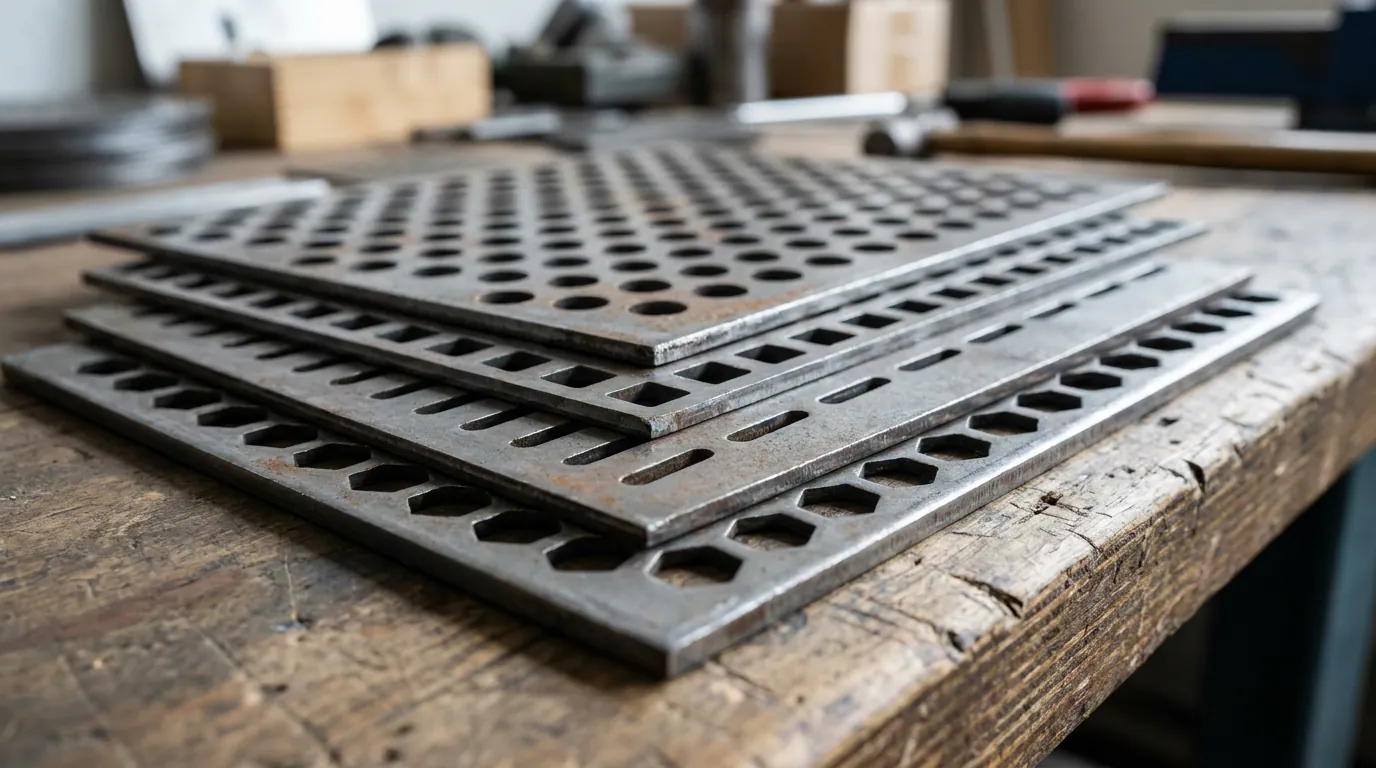
- Slotted and hexagonal patterns have their own formulas that depend on slot end shape and arrangement. Ask the supplier for the open area of the exact pattern.
- For hole layout options, see perforated sheet hole patterns.
Gujarat Wire Nettings makes perforated sheets to your hole size, pitch and layout. Send the open area you need, the material and thickness through the contact page and we will suggest a pattern that fits.