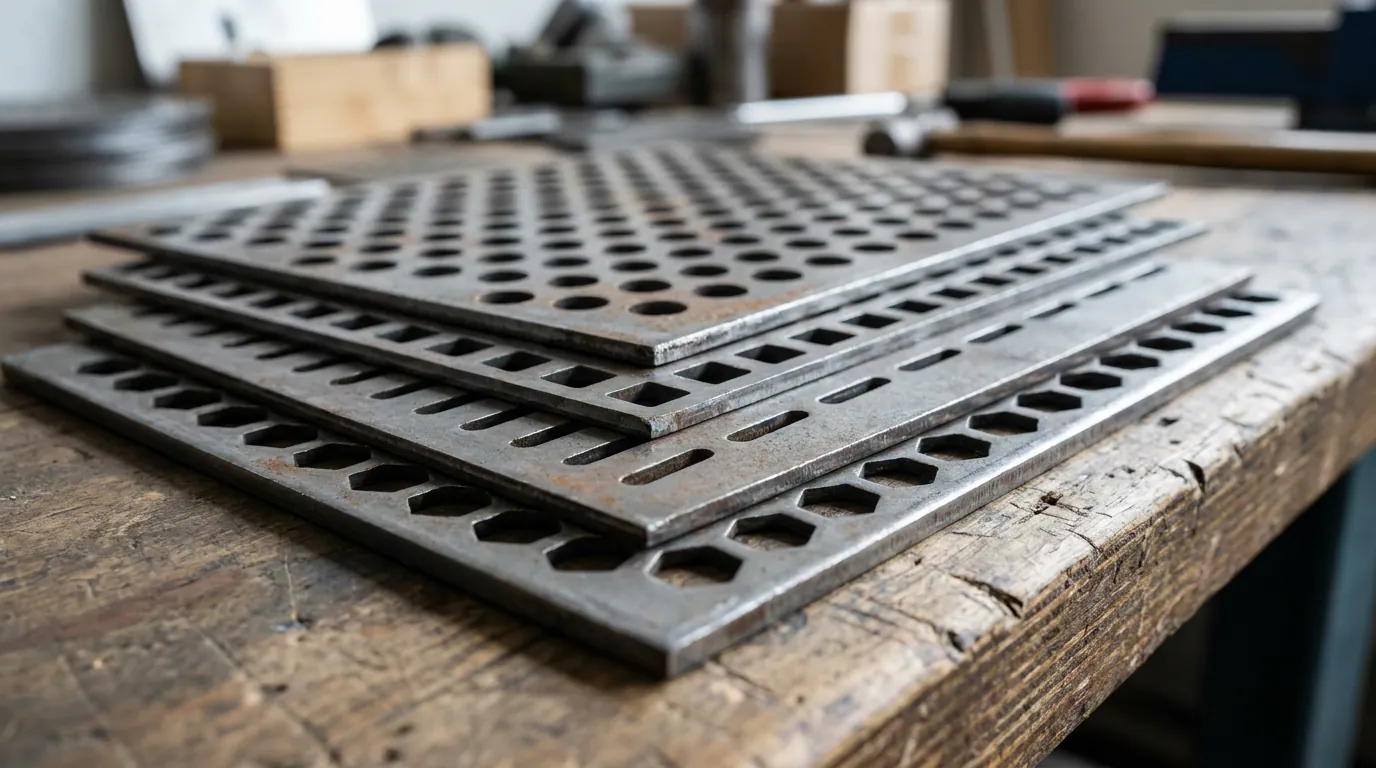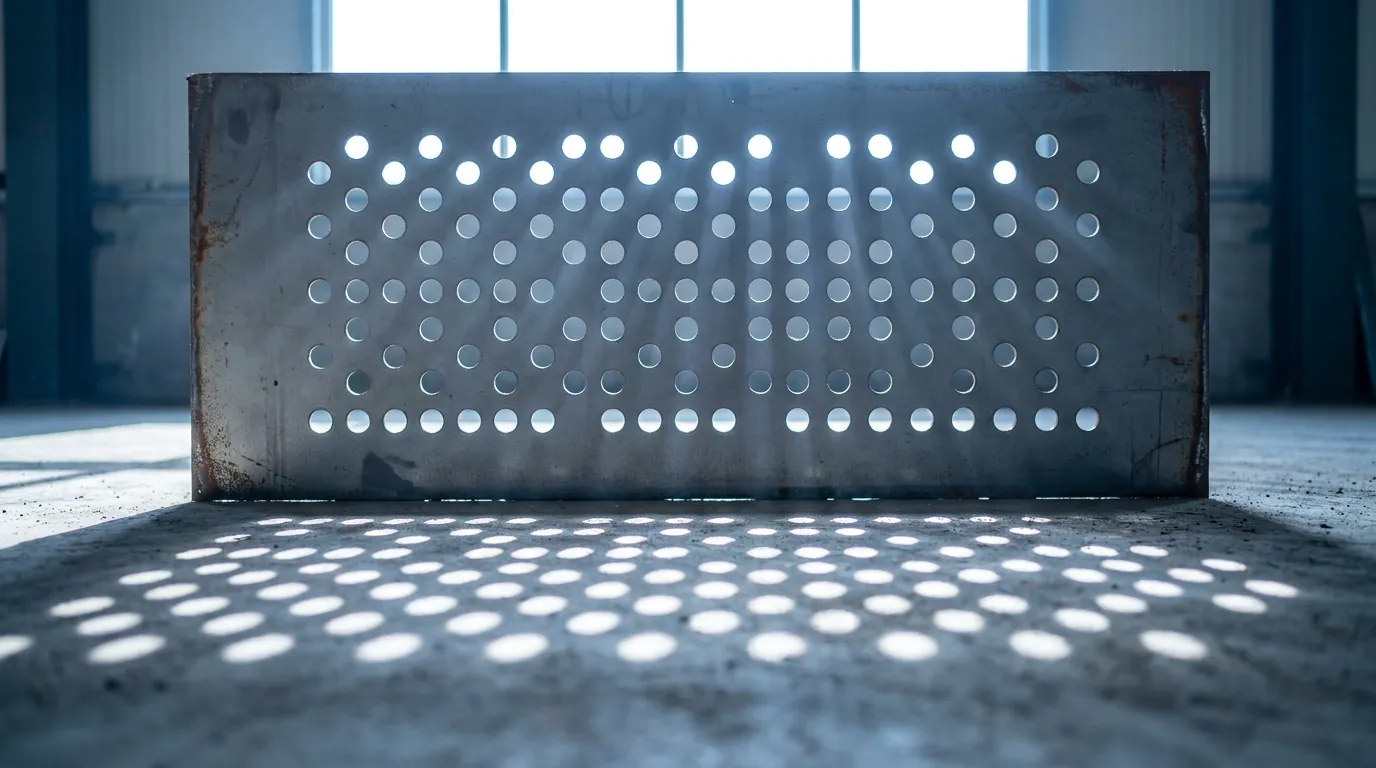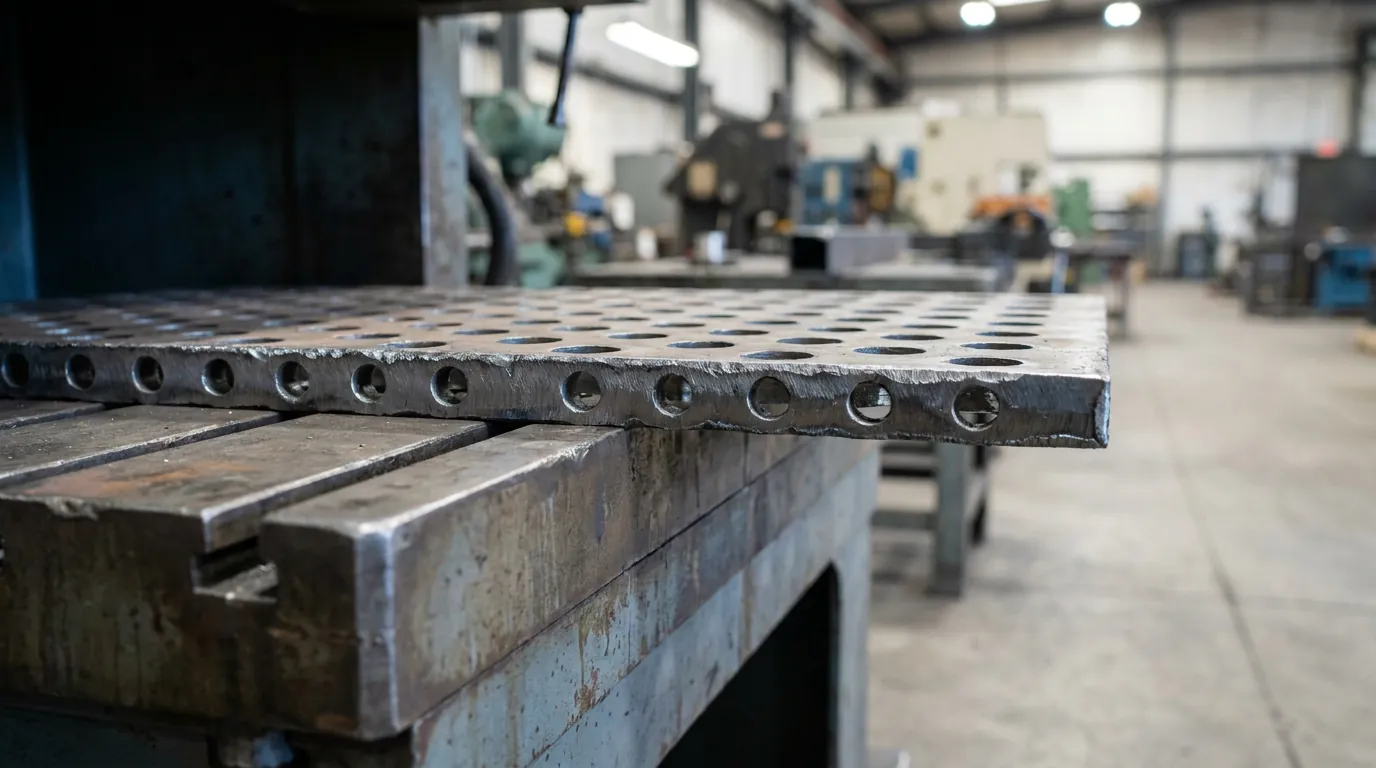


Perforated Sheet Materials: Mild Steel, GI, Stainless and Aluminium
How mild steel, galvanised, stainless 304 and 316, and aluminium perforated sheets compare on corrosion, cost and weight, and where each fits.
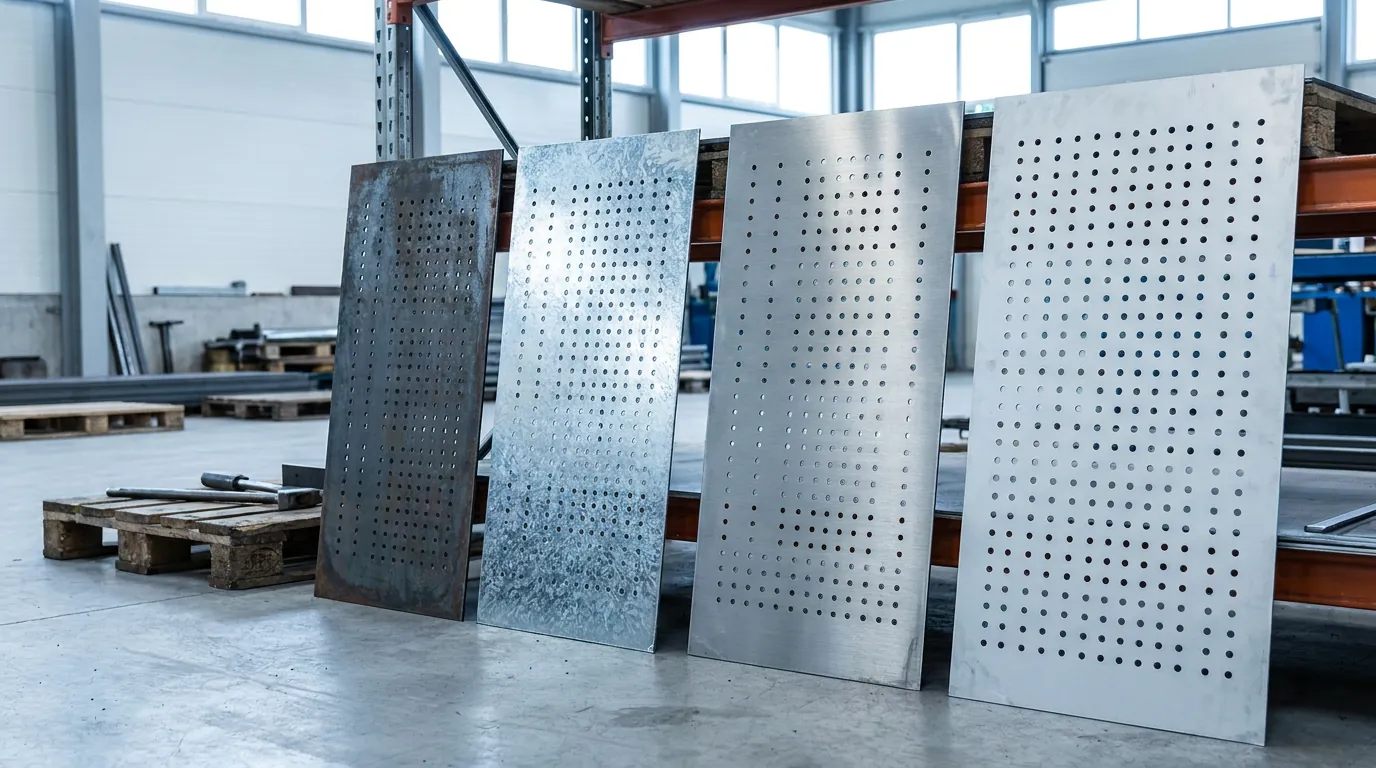
The same hole pattern can be punched in several metals, and the choice of metal often decides the sheet's life more than the pattern does. The four materials most often used for perforated sheet in Indian industry are mild steel, galvanised steel, stainless steel (304 and 316) and aluminium. Each has a clear place.
Mild steel
Mild (low carbon) steel is the cheapest and easiest to punch, weld and fabricate. It is strong and stiff for its cost and is available in a wide range of thicknesses. Its weakness is corrosion: bare mild steel rusts quickly outdoors or in wet process areas.
Use it indoors, in dry conditions, or where the sheet will be painted or powder coated after perforation. Typical uses are machine guards, dryer trays, heavy screening plates in dry service, and parts that are fabricated and painted as an assembly. Weight is about 7.85 kg/m² per mm of thickness before perforation.
Galvanised steel
Galvanised steel is mild steel with a zinc coating. There are two routes. Pre-galvanised (GI) sheet is coated at the mill and then perforated, which leaves the hole edges bare. Those edges are partly protected by the surrounding zinc but may show rust staining in wet conditions. Hot-dip galvanising after perforation coats the hole edges too and gives a thicker layer, but it can reduce small hole sizes and may distort thin sheet.
Galvanised sheet suits outdoor guards, fencing infill, walkway and ventilation panels, and cable tray, where it gives much better life than bare steel at a modest extra cost. It is not suited to strong acids, alkalis or constant immersion. For a fuller comparison see galvanised vs stainless steel.
Stainless steel 304 and 316
Stainless steel resists corrosion through its chromium content and needs no coating. Grade 304 is the general purpose choice: food processing, pharmaceutical equipment, water treatment, kitchen and dairy equipment, and indoor or mild outdoor architecture. Grade 316 adds molybdenum, which improves resistance to chlorides, so it is preferred near the sea, in chemical plants, in swimming pool areas and wherever salt or chloride bearing water is present.
Stainless costs several times more than mild steel and is harder to punch. It work hardens, so the minimum hole size relative to thickness is larger and punch wear is higher. Its density is close to steel at roughly 7.9 to 8.0 kg/m² per mm. For grade details see SS chemical composition and SS 304 vs 316.
Aluminium
Aluminium weighs about a third of steel, roughly 2.7 kg/m² per mm, and forms a protective oxide layer that resists normal atmospheric corrosion well. It takes powder coating and anodising, which makes it the common choice for facades, ceilings, sun screens and other architectural work where weight on the structure matters.
It is softer and less stiff than steel, so it needs thicker sheet or closer supports for the same span, and it wears quickly under abrasive material. Avoid direct contact with steel or copper in wet conditions to prevent galvanic corrosion, and avoid strong alkalis such as wet cement.
Quick comparison
| Material | Corrosion resistance | Relative cost | Weight per mm (kg/m², unperforated) | Typical fit |
|---|---|---|---|---|
| Mild steel | Low unless coated | Lowest | about 7.85 | Indoor, dry, painted parts |
| Galvanised steel | Moderate | Low | about 7.85 plus zinc | Outdoor guards, panels |
| Stainless 304 | Good | High | about 7.9 | Food, water, general process |
| Stainless 316 | Very good in chlorides | Higher | about 8.0 | Coastal, chemical, pools |
| Aluminium | Good in air | Medium | about 2.7 | Facades, ceilings, light panels |
Relative costs move with metal prices, so treat the order above as a guide and get current quotes. Perforated weight is lower by the open area, as explained in how to calculate open area.
Choosing
- Start from the environment: dry indoor, outdoor, wet, chemical, food contact or coastal.
- Then check load and wear: abrasive or impact service favours steel over aluminium.
- Then weigh weight and finish: architectural and suspended work often favours aluminium.
- Confirm the grade against the relevant IS or ASTM standard and your drawing.
Gujarat Wire Nettings makes perforated sheets in mild steel, galvanised, stainless and aluminium. Send your service conditions, thickness and hole pattern through the contact page and we will advise on the material.