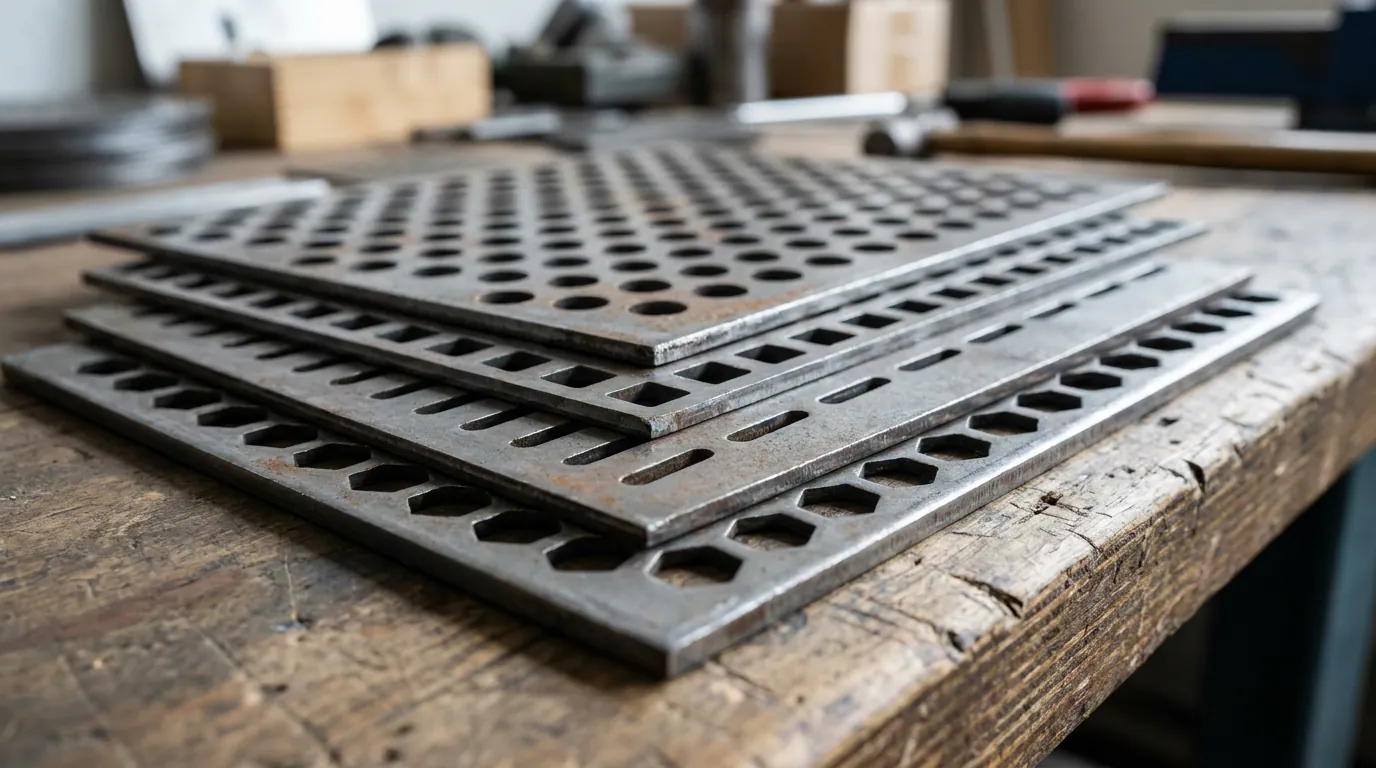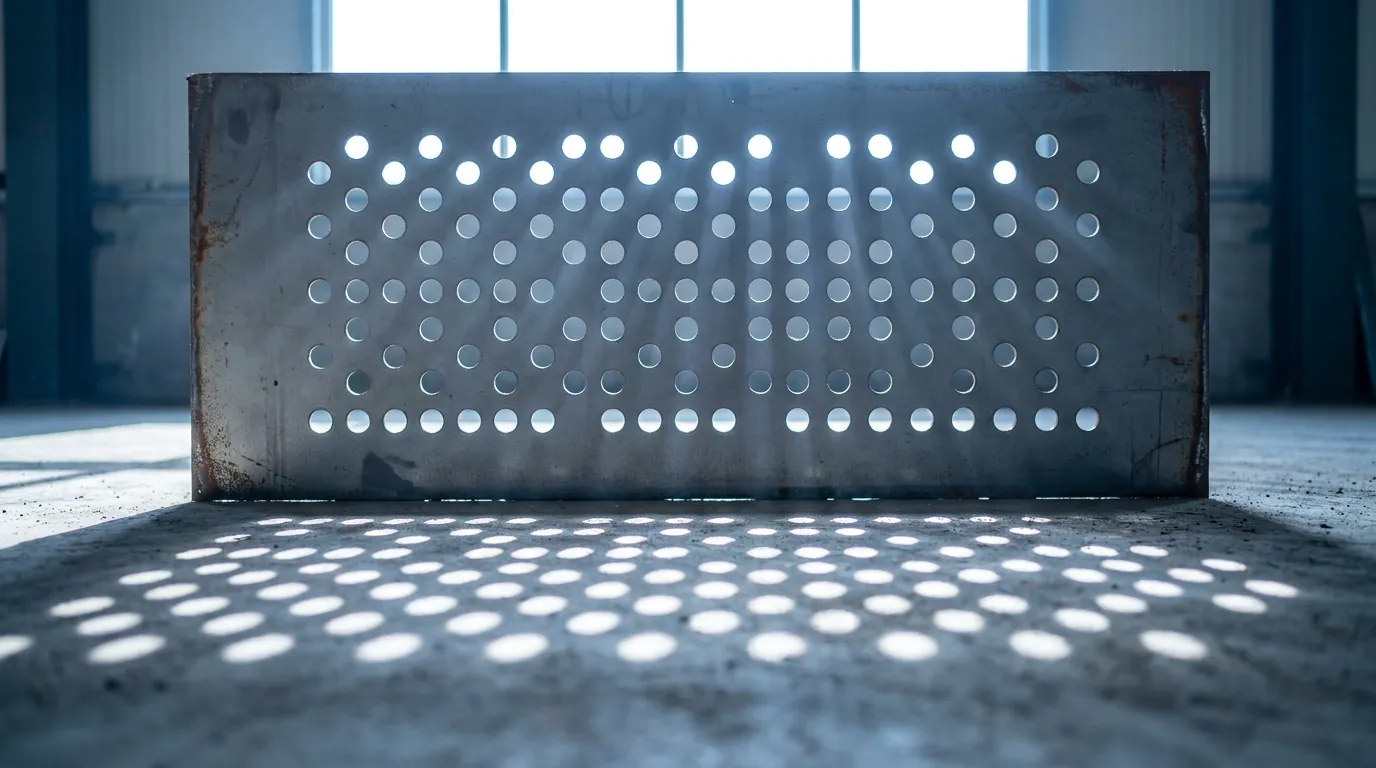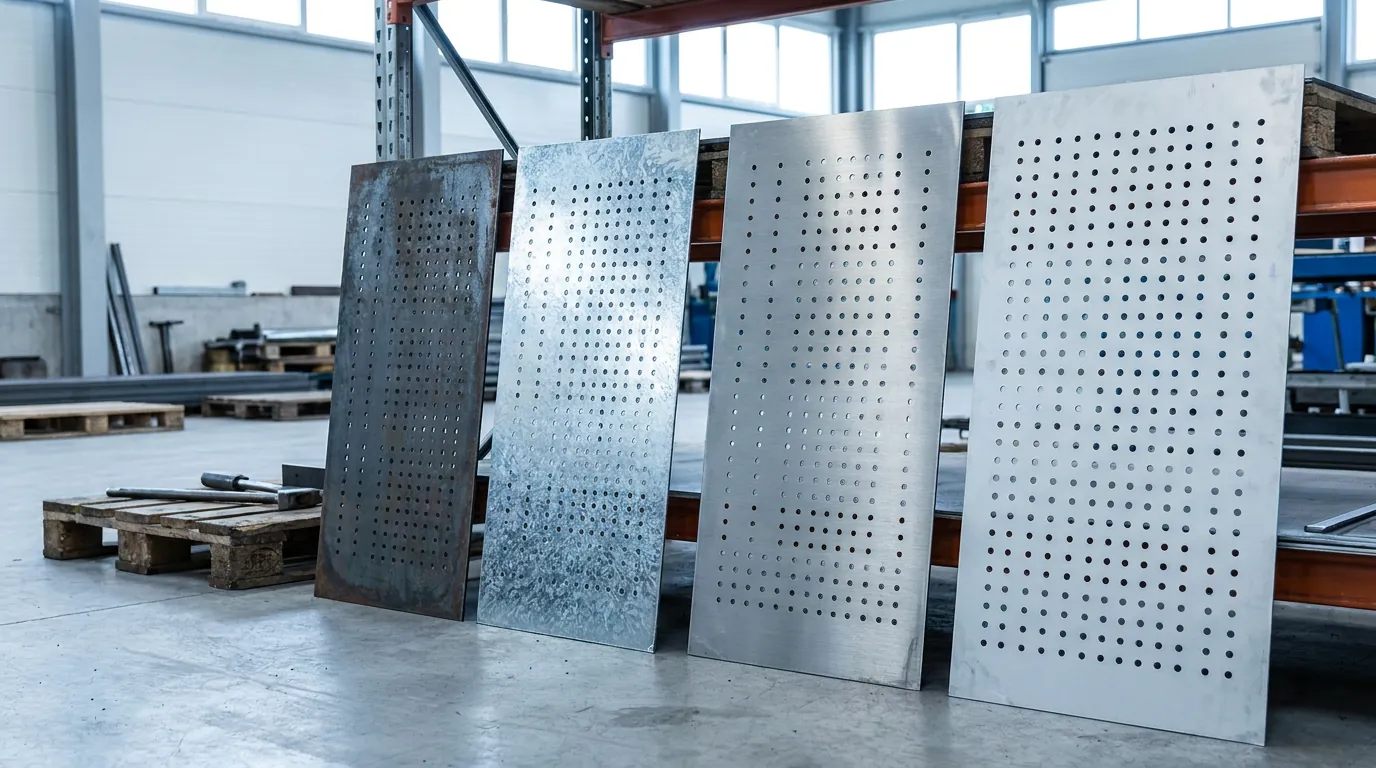


Perforated Sheet Thickness and Hole Size: Practical Limits
How hole diameter relates to sheet thickness when punching, plus bridge width, pitch, margins and flatness for perforated sheet designs.
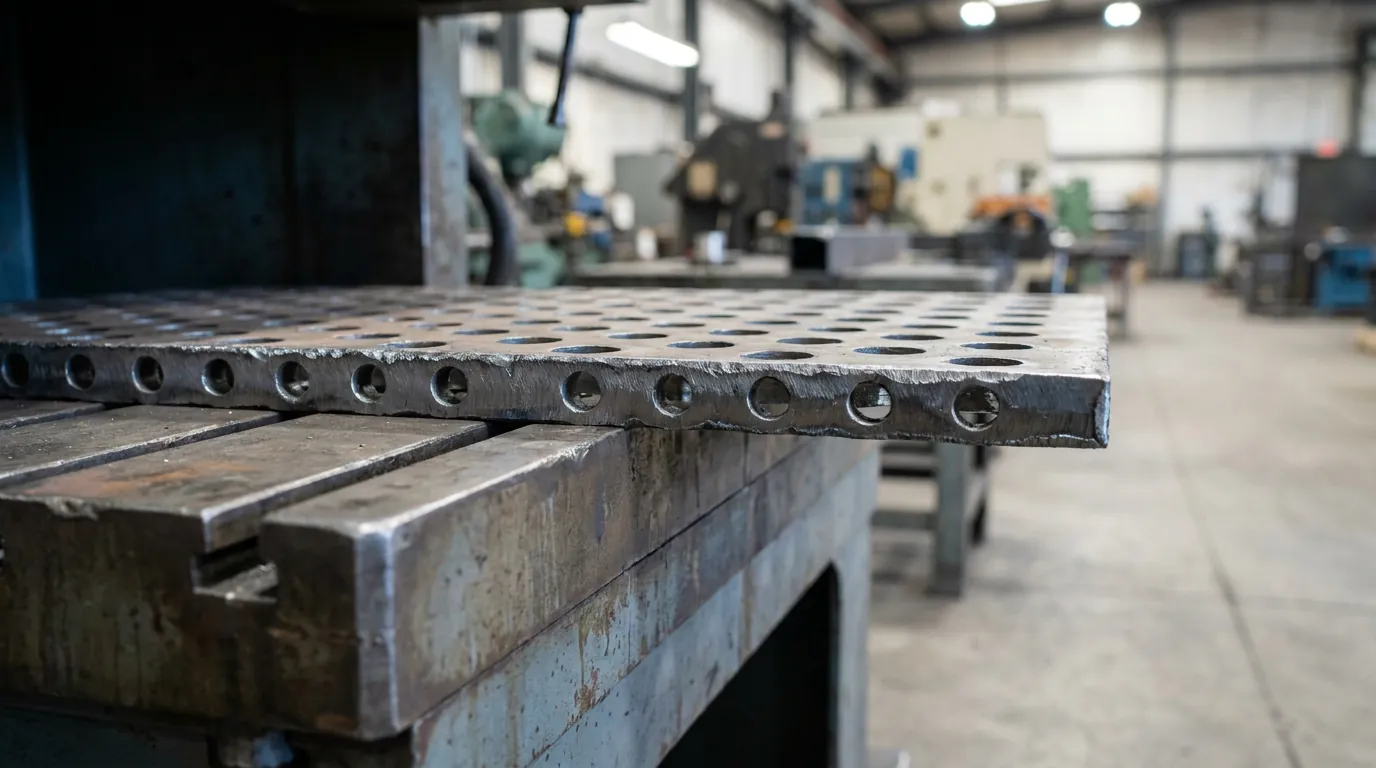
Drawings sometimes call for small holes in thick plate, or very thin bridges for maximum open area. Some of these cannot be punched, and some can be punched but will not stay flat or last in service. This guide covers the practical limits that decide whether a perforated sheet design works.
Hole size versus sheet thickness
In punching, the punch must shear through the full thickness of the sheet. If the punch is thin relative to the sheet, the force needed to shear the metal can exceed what the punch can carry, and it buckles or breaks. That gives the common guide:
- Mild steel and aluminium: hole diameter at least equal to sheet thickness. A 3 mm sheet takes holes of 3 mm and up.
- Stainless steel: more margin is needed because stainless is stronger and work hardens. Hole diameters of 1.5 to 2 times the thickness are a common starting point.
- Harder or high tensile grades: check with the supplier before fixing the design.
These are guides, not fixed rules. Tooling, press type and pattern all shift the limit. Where a design needs holes smaller than the thickness, ask early. Options include a thinner sheet, a different material, laser cutting or drilling, each with cost and speed trade offs.
Pitch and bridge width
Pitch is the centre to centre distance between neighbouring holes. Bridge (or bar) width is the metal left between them, which is pitch minus hole size for round holes on a 60° staggered or straight pattern measured between nearest neighbours.
Bridge width = Pitch - Hole diameter
Thin bridges raise open area but cause problems. They can tear during punching, distort the sheet, and wear through quickly in abrasive service. A useful rough guide is to keep the bridge at least equal to the sheet thickness, and wider for stainless and for screens carrying heavy or abrasive load. If you need more open area, it is usually better to move to a bigger hole at the same bridge than to thin the bridge. See open area calculation to test options.
Margins and blank areas
Margins are unperforated strips along the edges. They give metal for bolting, welding, folding or clamping, and they stiffen the sheet. State margins on all four sides on the drawing, with dimensions. If none is stated, a supplier may perforate edge to edge, leaving part holes on the edges.
- Side margins run along the sheet length; end margins run across the width. Give both.
- Blank areas inside the sheet, for fixing points or folds, should be shown with dimensions from a datum edge.
- Fold lines should run through solid metal or along a row of bridges, not through holes, or the fold will be uneven.
- Ask whether the pattern starts and finishes with full holes. Exact margins sometimes need small changes to pitch or sheet size.
Flatness
Punching stretches the metal around each hole. Across thousands of holes this builds stress that makes the sheet bow, twist or wave, and the effect is stronger with high open area, thin bridges, thin sheet and patterns that stop short of one edge. Perforated sheets are normally passed through a roller leveller after punching to bring them back to acceptable flatness.
If flatness matters, as it does for architectural panels, machine beds and screen decks that sit on supports, state the tolerance you need. Expect thin, high open area sheets to be harder to hold flat than thick sheets with moderate open area. Coating after perforation, especially hot-dip galvanising, can add distortion.
Checklist before ordering
- Hole diameter against thickness for the chosen material
- Bridge width at least equal to thickness as a starting point
- Margins on all sides, blank areas and fold lines dimensioned
- Flatness tolerance, if it matters
- Material grade and finish, checked against the relevant IS or ASTM standard
Gujarat Wire Nettings makes perforated sheets to drawing. Send your thickness, material, hole size, pitch and margins through the contact page and we will confirm whether the pattern can be punched or suggest the nearest workable one.