

Perforated Sheets in Architecture: Facades, Screens and Ceilings
How perforated metal is used in facades, sun screens, balustrades, ceilings and acoustic panels, with finishes and design points to check.
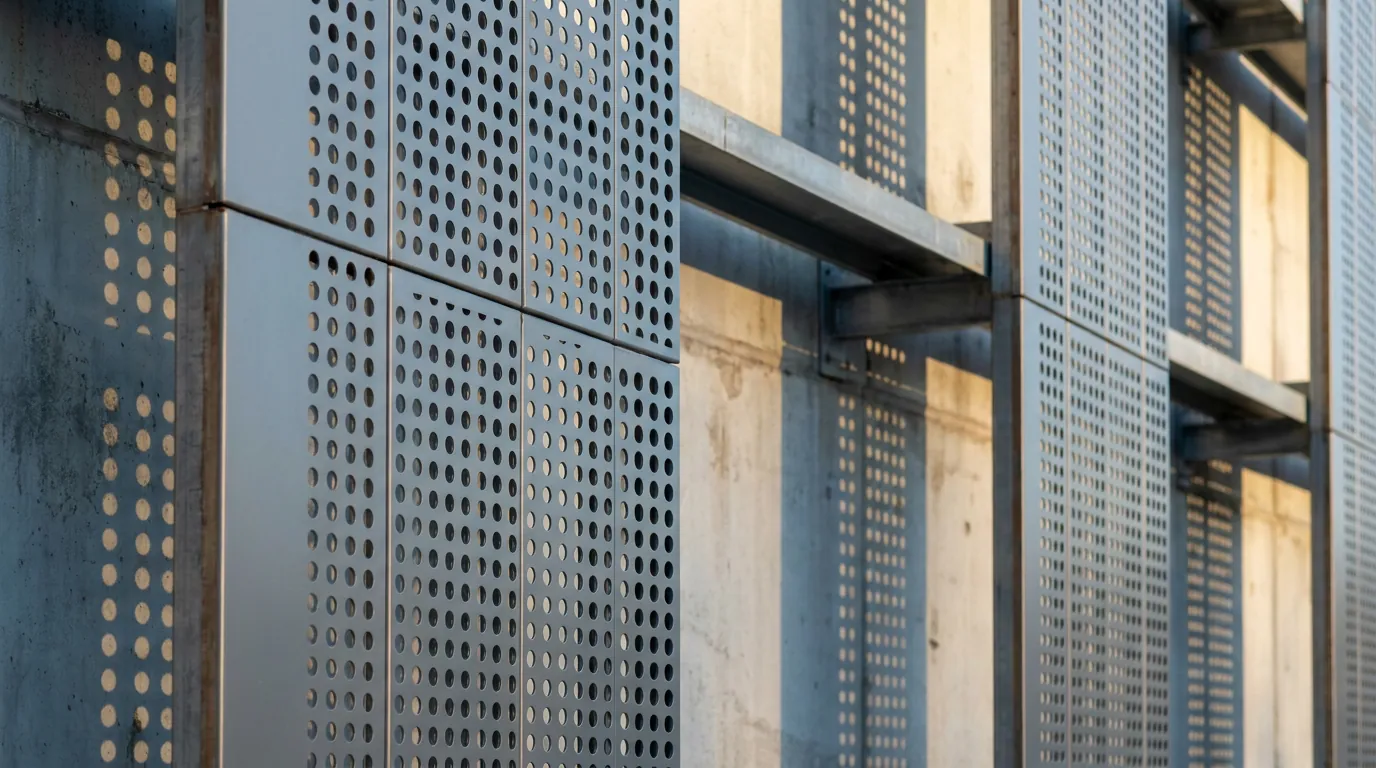
Perforated metal is used on buildings because it does several jobs at once. It shades, screens views, lets air through, hides services and controls sound, while still reading as a solid surface from a distance. The design choices that matter are the same as in industrial work: material, hole pattern, open area, thickness and finish, plus a few that are specific to buildings.
Where it is used
- Facades and cladding: a perforated skin over the main wall or glazing, hiding plant, parking structures or plain walls, often with a gap behind for ventilation.
- Sun screens and louvres: panels in front of glazing that cut solar gain and glare while keeping some view out. Open area sets the balance between shade and visibility.
- Balustrades and railing infill: perforated panels between posts on stairs, balconies and walkways.
- Ceilings: lay-in tiles and linear panels that hide services and allow air through for return plenums.
- Acoustic panels: perforated sheet backed by an absorbent layer to reduce echo in halls, offices, stations and auditoriums.
- Screens and gates: boundary screens, parking enclosures, equipment enclosures and decorative partitions.
Design points
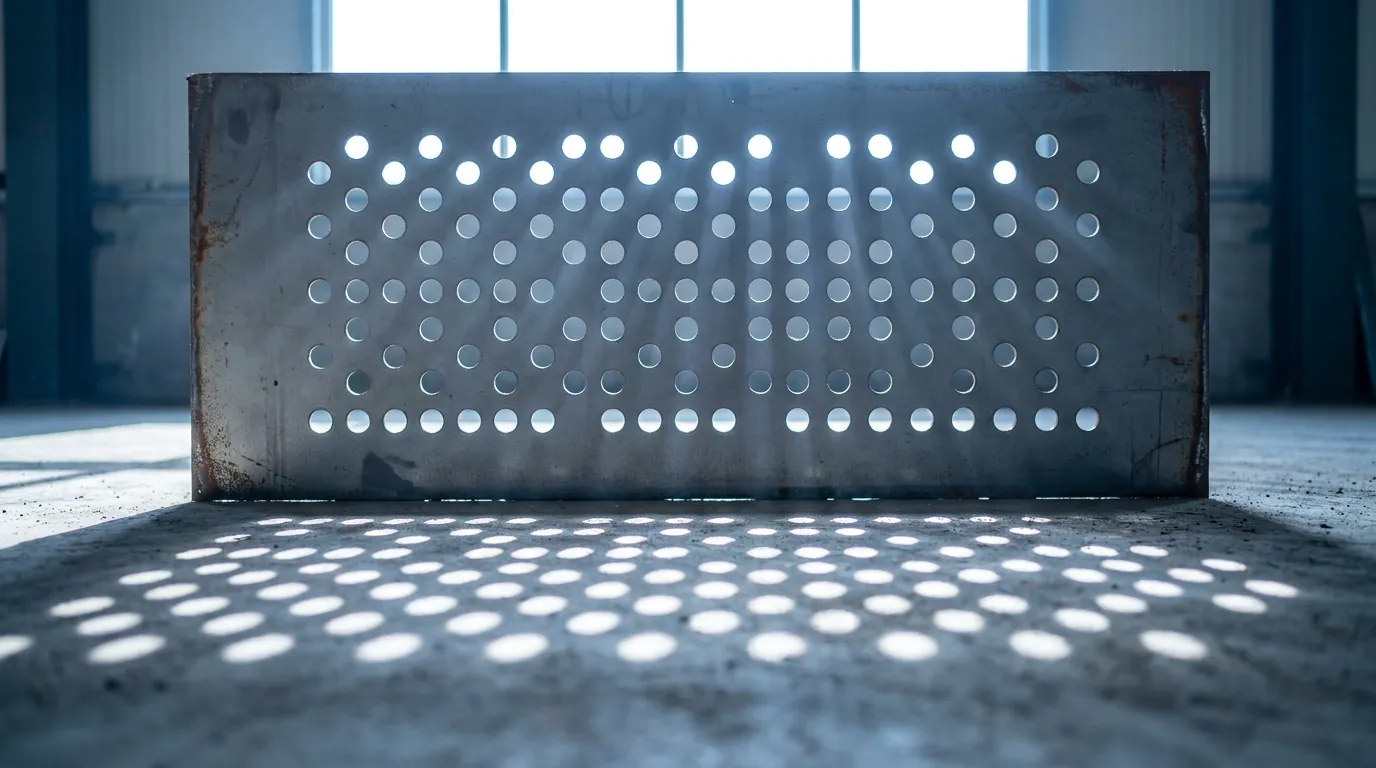
Open area and view. Low open area, around 20 to 30%, gives more privacy and shade. Higher open area gives more light, air and view out. From inside, small holes at close pitch look more transparent than large holes at wide pitch with the same open area. A full size sample viewed on site is worth more than any render. See open area calculation.
Wind load and spans. Facade panels act as sails, so panel thickness, folded edges, sub-frame spacing and fixings must be designed by the structural engineer for the site wind load. Perforation reduces stiffness, so a perforated panel needs closer supports than a solid one of the same thickness. Return edges and stiffeners help.
Thermal movement. Aluminium expands about twice as much as steel for the same temperature change. Slotted fixing holes and gaps between panels let it move without buckling or noise.
Balustrade safety. Infill must meet local building rules for load and maximum opening size, which aim to stop children climbing or passing through. Check the National Building Code of India and local authority rules for the project, and get the design checked.
Acoustics. For sound absorption the perforated face needs enough open area to let sound reach the absorbent behind it, typically small holes with open area in the range given by the acoustic consultant. Absorbent fleece bonded to the back, mineral wool infill and air gap depth all change performance. The sheet alone does little.
Materials and finishes
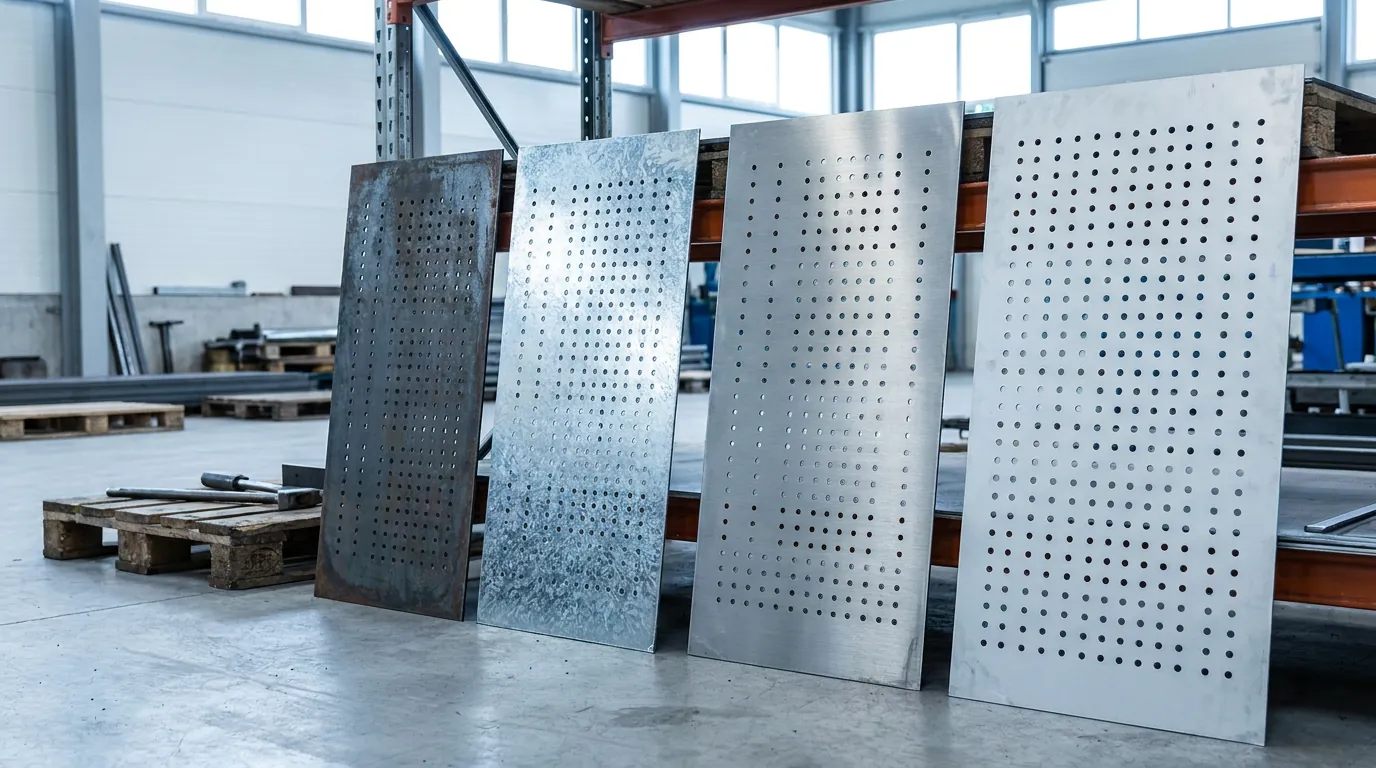
Aluminium is the usual facade and ceiling choice for its low weight and corrosion resistance. Stainless steel suits handrails, high wear areas and coastal sites, with 316 preferred near the sea. Galvanised steel is used for screens and enclosures, often powder coated on top. See perforated sheet materials for a comparison.
- Powder coating: wide colour range, applied after perforation and forming. Use an architectural grade for outdoor exposure. Coating can close very small holes slightly.
- PVDF coating: better colour and gloss retention outdoors, typically on aluminium.
- Anodising: for aluminium, a hard oxide finish that keeps a metallic look.
- Mill or brushed stainless: no coating needed, finish chosen for appearance and cleaning.
- Hot-dip galvanising: for steel screens, alone or under paint, with care on thin sheet to limit distortion.
Practical tips
- Perforate, then fold, then coat. Coating before fabrication gets damaged at folds and cut edges.
- Keep margins around fixing points and folds so they run through solid metal.
- Align patterns across neighbouring panels, and state the pattern direction on drawings, or joints will look mismatched.
- Order spare panels from the same batch for colour match in future repairs.
- Ask for deburred edges on anything people can touch, such as balustrades and low level screens.
Gujarat Wire Nettings makes perforated sheets in aluminium, stainless and galvanised steel to project drawings. Send your panel sizes, hole pattern, material and finish through the contact page and we will reply with what we can supply.