

Screen Blinding and Pegging: Causes and Practical Fixes
What blinding and pegging are on vibrating screens, why moisture, near-size particles and clay cause them, and the mesh and process fixes that work.
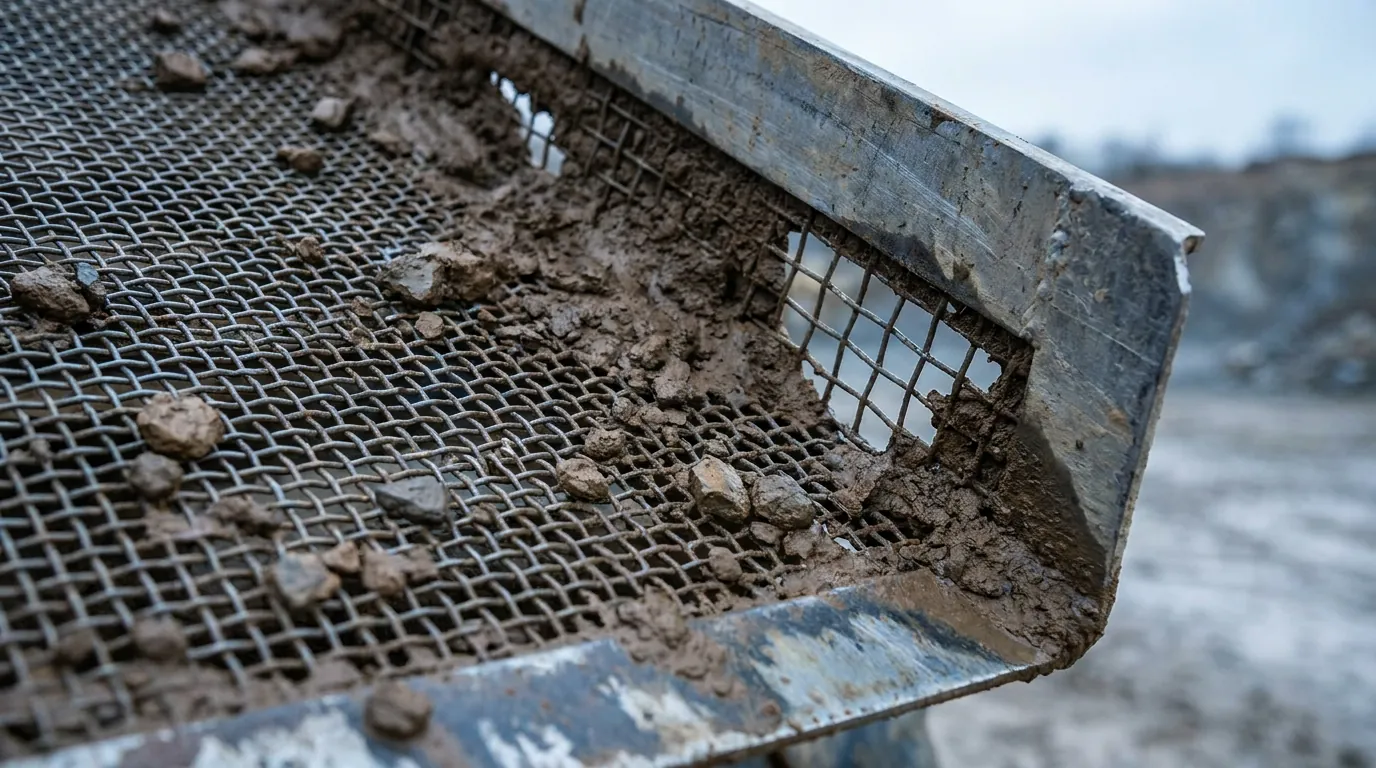
A screen that loses capacity over a shift, while the feed rate stays the same, is usually blinding or pegging. Both close off open area, so undersize is carried over the end of the deck and the product goes out of specification. They have different causes and need different fixes, so it pays to identify which one you have.
What blinding and pegging are
Blinding is when fine, damp or sticky material coats the wires and bridges across the openings. The deck looks plastered, often starting at the wire crossings and growing until whole areas are sealed. It is most common on smaller apertures.
Pegging, sometimes called plugging, is when individual particles close to the aperture size wedge into the openings and stay there. The deck looks studded with stones sitting in the holes. It is most common with near-size feed and with particle shapes that lock into square openings.
Common causes
- Surface moisture: a few percent of moisture in fines is often enough to make them stick to wire, especially on apertures below about 10 mm.
- Clay and silt: clay binds fine particles together and smears onto the wire.
- Near-size particles: a high share of feed just above and just below the aperture size leads to pegging.
- Particle shape: round or cubic stones can lock into square openings.
- Low stroke or speed: not enough energy to throw particles clear of the openings.
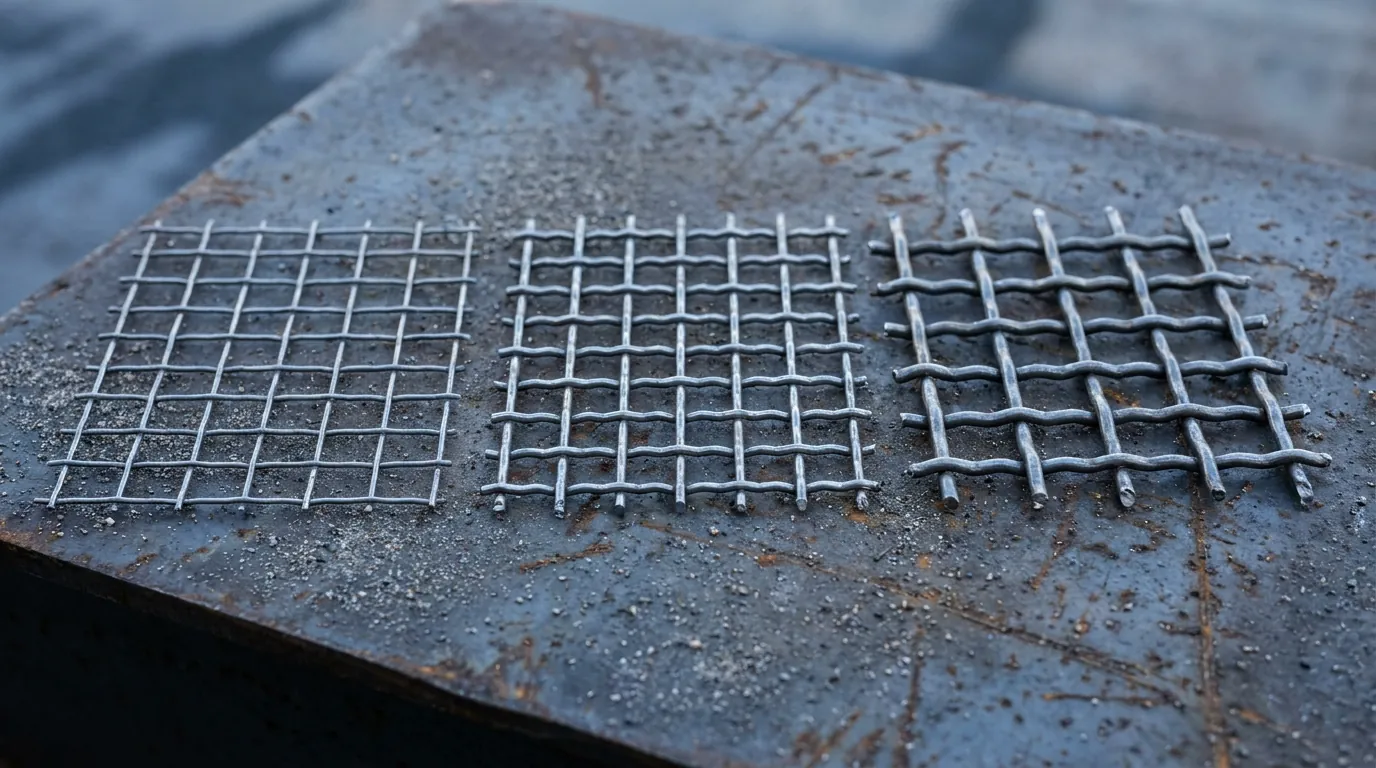
- Rigid media: thick wire and fixed openings do not flex to release trapped material.
Fixes on the screen media
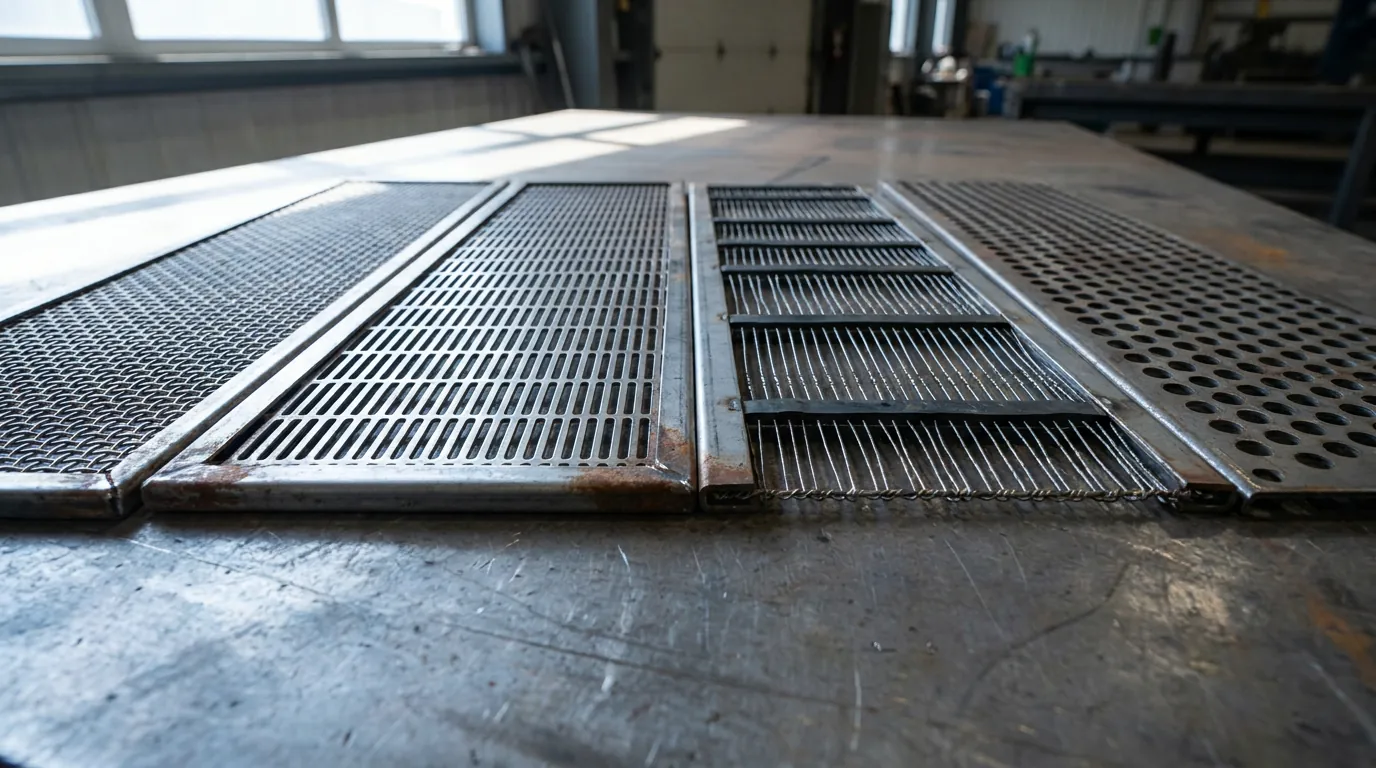
- Change aperture shape: slotted or rectangular openings give near-size particles less to lock against and give more open area. Check that slivers passing through the slot are acceptable.
- Use self-cleaning or harp screens: independent wires vibrate on their own and throw off both coatings and pegged stones. Usually the most effective media change for wet or clayey feed.
- Use thinner wire where life allows: thinner wire flexes more and has less surface for fines to build on.
- Try stainless steel wire: the smoother surface can reduce adhesion of sticky fines, and it does not rust, which also roughens the wire.
- Use polyurethane or rubber panels with openings that taper wider towards the underside, so a particle that enters the top of the hole falls through.
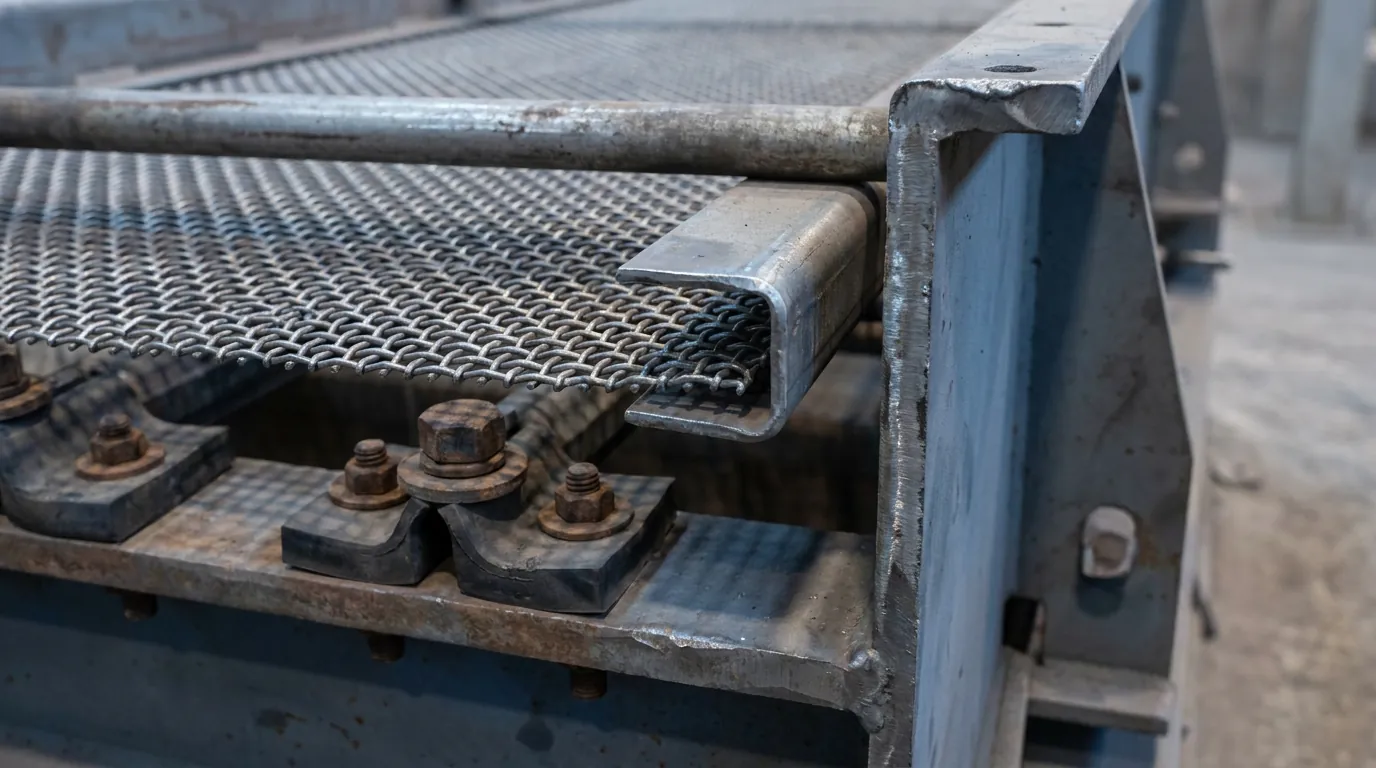
Media changes work best together with correct tension. A slack panel moves out of phase with the deck and loses the sharp action that clears openings. See vibrating screen mesh types for how each option compares.
Fixes in the process
- Water sprays: wet screening with spray bars washes fines through and keeps wire clean. It needs water supply and handling of the wet undersize.
- Ball decks: rubber balls in trays beneath the mesh bounce against its underside and knock out pegged particles and build-up. Used more on finer screens.
- Adjust stroke, speed or angle within the machine's design to give particles more energy.
- Reduce near-size material reaching the deck, for example by scalping or changing crusher settings upstream.
- Control moisture where possible: stockpile drainage and cover reduce surface water in the feed.
Electrically heated decks are also used for some fine dry screening duties, as warm wire reduces adhesion of damp fines. They need suitable power supply and insulation, so they are a specific engineering choice rather than a general fix.
Working out which fix to try first
Stop the screen and look at the deck. A smeared coating points to blinding, so focus on moisture, clay, wire flex and sprays. Stones wedged in the holes point to pegging, so focus on aperture shape, harp wire and near-size feed. Make one change at a time and measure carry-over of undersize before and after, so you can see what actually helped.
Gujarat Wire Nettings makes slotted, harp-type and stainless steel vibrating screens to your deck size. Send the aperture, current mesh, feed material and a photo of the blinded or pegged deck through the contact page, and we will suggest a mesh to try.