

SWG Wire Gauge Explained, with Values in mm
What SWG means, why a higher gauge is a thinner wire, SWG 8 to 22 in mm, how SWG differs from BWG and AWG, and why to specify wire in mm.
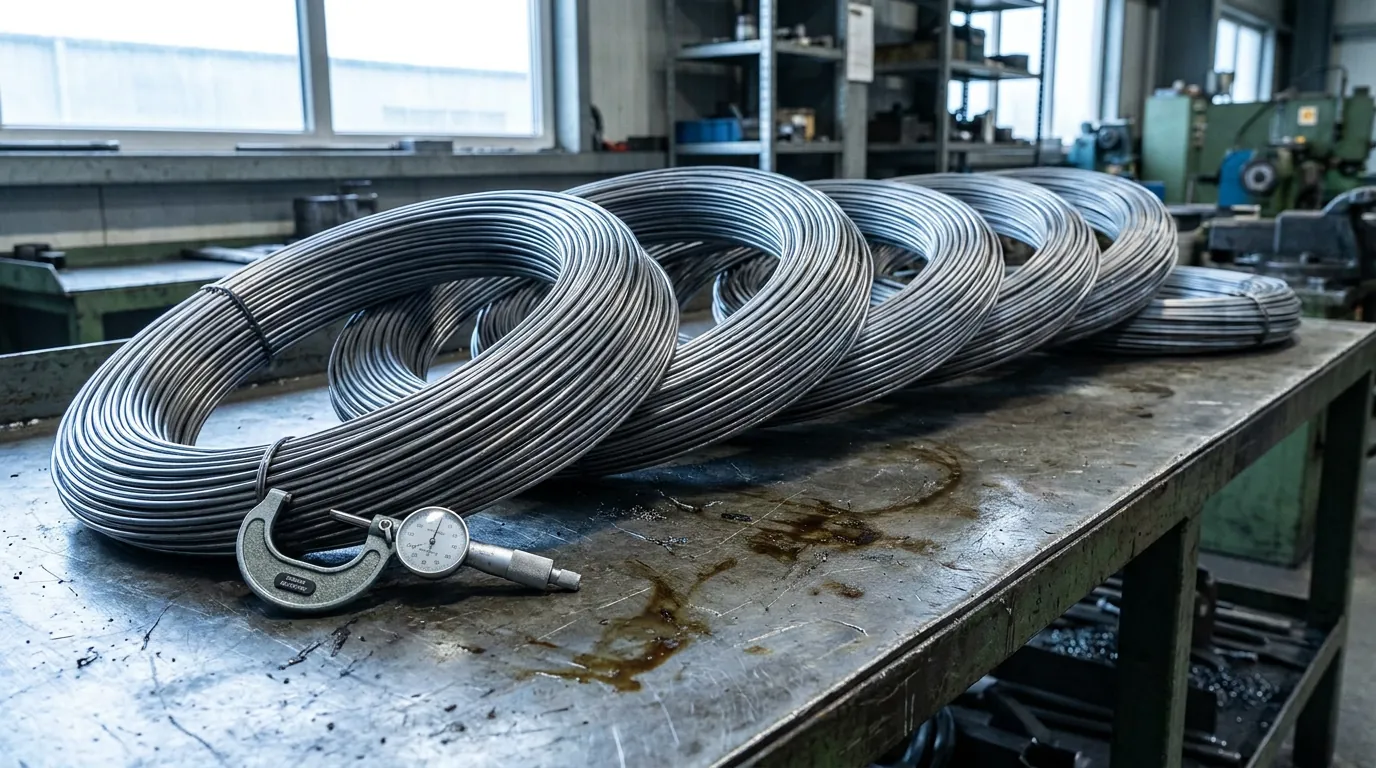
Wire and wire mesh in India are still often specified in SWG: "10 SWG", "14 gauge", "16 G". The number is shorthand for a wire diameter, and it is easy to misread. This post explains what SWG is, how it compares with other gauge systems, and why a diameter in mm is safer on a purchase order.
What SWG means
SWG stands for Standard Wire Gauge, also called the British Standard Wire Gauge or Imperial Wire Gauge. It was made a legal standard in Britain in the 1880s and was later covered by British Standard BS 3737. Each gauge number stands for a fixed diameter, originally defined in inches.
The key rule: the higher the gauge number, the thinner the wire. SWG 8 is a thick wire used for heavy screens and fencing. SWG 22 is a fine wire. The steps between gauges are not equal, so you cannot work out a diameter from the gauge number with a simple formula. You read it from a table.
| SWG | Diameter (mm) | Diameter (inch) |
|---|---|---|
| 8 | 4.064 | 0.160 |
| 10 | 3.251 | 0.128 |
| 12 | 2.642 | 0.104 |
| 14 | 2.032 | 0.080 |
| 16 | 1.626 | 0.064 |
| 18 | 1.219 | 0.048 |
| 20 | 0.914 | 0.036 |
| 22 | 0.711 | 0.028 |
For other gauges, use the SWG to mm converter.
SWG, BWG and AWG are different systems
Three gauge systems are in common use, and the same number gives three different diameters.
- SWG (Standard Wire Gauge): the British system, still widely used in India for steel wire, wire mesh and fencing.
- BWG (Birmingham Wire Gauge): an older British system, also called Stubs' Iron Wire Gauge, still seen for tube wall thickness and some steel wire.
- AWG (American Wire Gauge, also called Brown and Sharpe gauge): the US system, used mainly for electrical conductors such as copper wire.
Take gauge 10 as an example. SWG 10 is 3.251 mm, BWG 10 is 3.404 mm and AWG 10 is 2.588 mm. That is a spread of more than 0.8 mm for the same number. On a screen or a fence, that difference changes the weight, the strength and the open area.
The word "gauge" is also used for sheet thickness, with its own tables. Sheet gauge and wire gauge numbers do not match, so do not use a wire gauge table for perforated sheet or expanded metal.
Why specify in mm
- No confusion between systems. "12 gauge" on an overseas drawing may be AWG, not SWG.
- Not every wire size matches a gauge. Wire is often drawn to metric sizes such as 2.5 mm or 3 mm, which fall between gauge numbers.
- Tolerances are clear. A diameter with a tolerance, such as 3.15 mm ±0.05 mm, can be checked directly with a micrometer.
- Weight and open area calculations need the diameter anyway. See the wire mesh weight calculator.
- Coated wire needs a basis. For galvanised or PVC coated wire, state whether the size is before or after coating.
If an old drawing or order says SWG, convert it and write both, for example "3.25 mm (10 SWG)". That keeps the reference and removes doubt.
Measuring wire on site
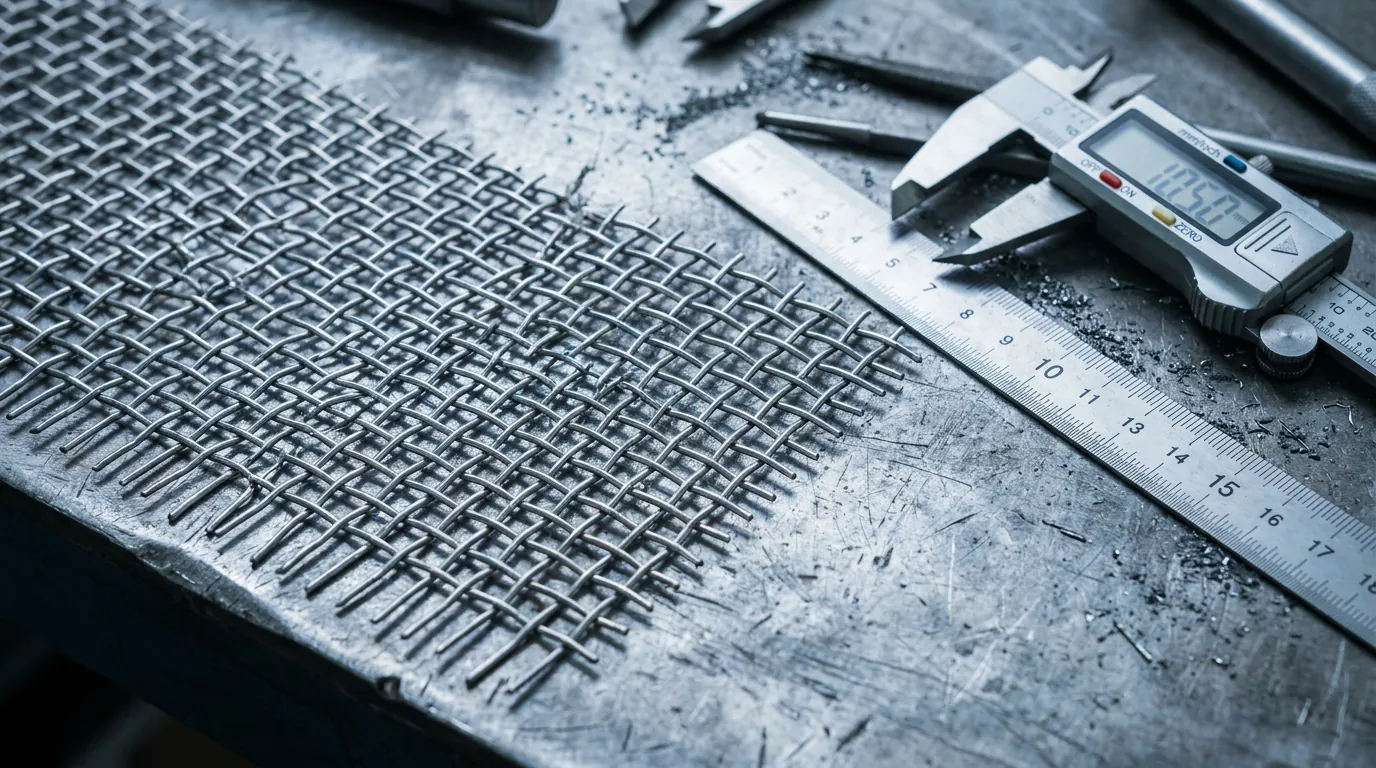
Use a micrometer or a vernier caliper, and measure in two directions across the wire, because drawn wire can be slightly oval. On worn screen cloth, measure an unworn part, such as near the hooks or under the side clamps, to get the original size. Then note the nearest gauge, or simply order the measured size in mm. For screens, see also vibrating screen wire diameter.
Gujarat Wire Nettings makes wire mesh, screens and fencing in the wire diameter you specify, in mm or SWG. Send the wire diameter, aperture, material and size through the contact page, and we will quote.