

Chain Link Fencing Guide: Mesh, Wire, Coating and Posts
How to specify chain link fencing: mesh size, wire gauge, galvanised or PVC coated, height, posts, line wire and tensioning, and where it fits best.
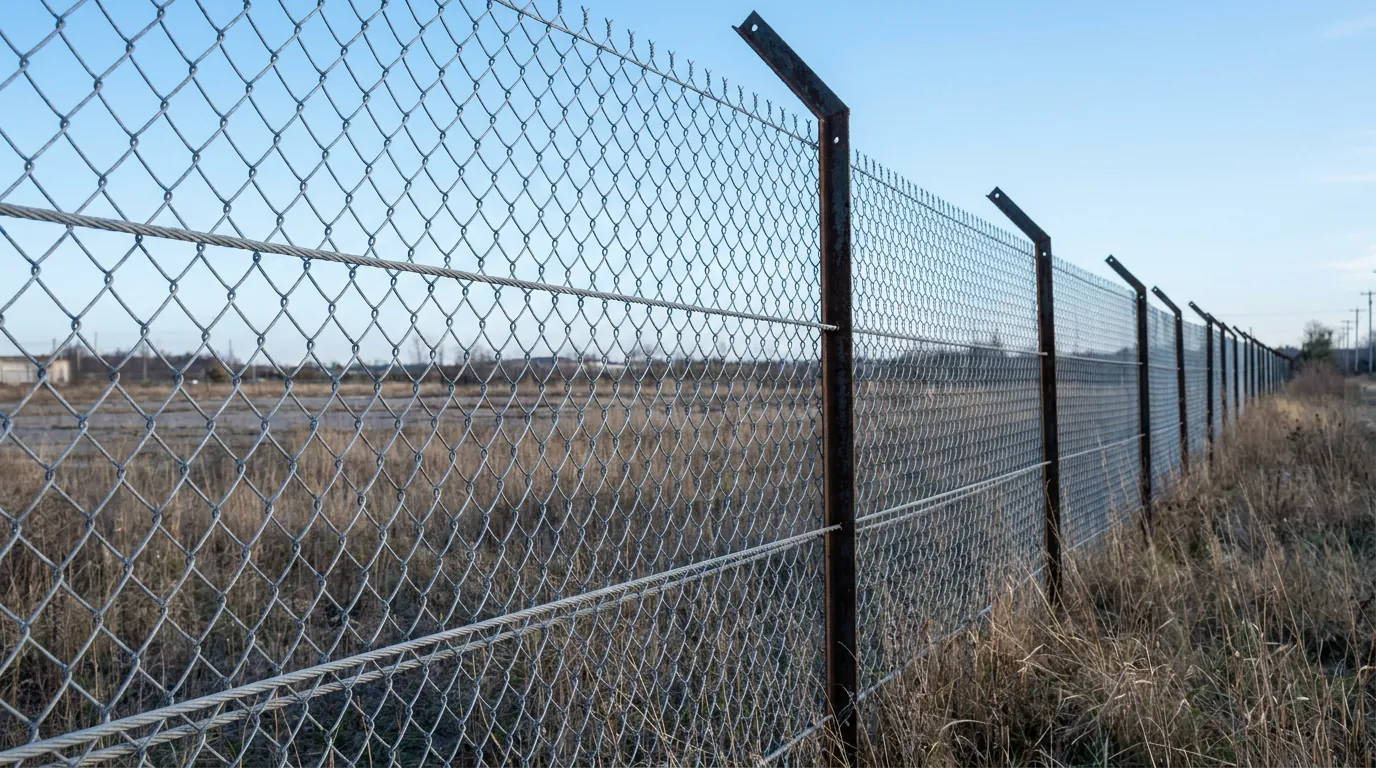
Chain link fencing is woven from a single wire bent into a zigzag and interlinked with the next one, forming a diamond pattern. It is quick to install, follows uneven ground, and is economical over long boundaries. It is common around factories, warehouses, sub stations, plots, schools and farms. Getting a good fence comes down to five choices: mesh size, wire gauge, coating, height and the post and tensioning system.
Mesh size and wire gauge
Mesh size is the distance across the diamond, measured between parallel wires. Openings around 50 mm are common for general boundary fencing. Smaller openings are harder to climb and keep out small animals, but use more wire per square metre and cost more.
Wire thickness is given as a gauge or in millimetres. A thicker wire makes a stronger, longer lasting fence that is harder to cut. Gauge numbers run in reverse, so a lower SWG means a thicker wire. If your drawing uses gauge, convert it with the SWG to mm table and quote the diameter in millimetres to avoid confusion. For PVC coated mesh, confirm whether the size refers to the core wire or the outside diameter over the coating.
Galvanised or PVC coated
- Galvanised: zinc coated steel wire. Hot dip galvanising gives a heavier coating than electro galvanising and lasts longer outdoors. Ask for the zinc coating mass if service life matters.
- PVC coated: galvanised core wire with a PVC layer, usually green or black. The coating adds a second barrier against corrosion and looks neater, but a cut or scraped coating exposes the core.
- Stainless steel: used where corrosion is severe, such as some coastal or chemical sites, at a higher cost.
Coastal air, fertiliser plants and areas with industrial fumes shorten the life of thin zinc coatings. See galvanised vs stainless steel for how to judge the trade off.
Height, posts and line wire
Typical fence heights run from about 1.2 m for light demarcation to 2.4 m or more for security, often with barbed wire or concertina coil on cranked arms at the top. Higher fences need stronger posts and closer spacing because wind and tension loads rise.
Posts are commonly angle iron, GI pipe or precast concrete. Intermediate posts are typically set a few metres apart, with heavier posts and struts at ends, corners and gates. The right spacing depends on height, wind exposure and soil, so follow the site drawing or the applicable IS code rather than a rule of thumb.
Line wire, also called tension wire, runs horizontally along the posts, usually at the top, middle and bottom of the mesh. The mesh is tied to it at regular intervals. Without line wire, chain link sags between posts and the bottom edge can be lifted to crawl under.
Tensioning and installation
- Set and concrete the end, corner and gate posts first, with struts, and let the concrete cure before applying tension.
- Fix and tighten the line wires using eye bolts or straining bolts at the end posts.
- Thread a tension bar or straining bar through the end of the mesh and fix it to the end post.
- Unroll the mesh, pull it tight with a fence stretcher and fix the other end, then tie it to the line wires and intermediate posts.
- Keep the bottom edge close to ground level, or bury it slightly if animals are a concern.
Where chain link fits
Chain link suits long runs where cost and speed matter, uneven ground, temporary or semi-permanent boundaries, and sports or animal enclosures. Where you need a stiff, anti-climb panel with a neat finish, welded mesh panels may be the better choice.
Gujarat Wire Nettings supplies chain link and other fencing in galvanised and PVC coated wire. Send the boundary length, height, mesh size, wire diameter and finish through the contact page, and we will work out the quantities with you.