

Welded vs Woven Wire Mesh: Which One Fits Your Job
How welded and woven wire mesh are made, how they differ in rigidity and opening accuracy, and which suits fencing, guards, screening or filtration.
Welded mesh and woven mesh can look similar from a distance: both are a grid of wires with square or rectangular openings. They are made differently, behave differently under load and suit different jobs. Picking the wrong one usually shows up as a guard that bends, a screen that loses its opening size, or money spent on precision that the application never needed.
How each is made
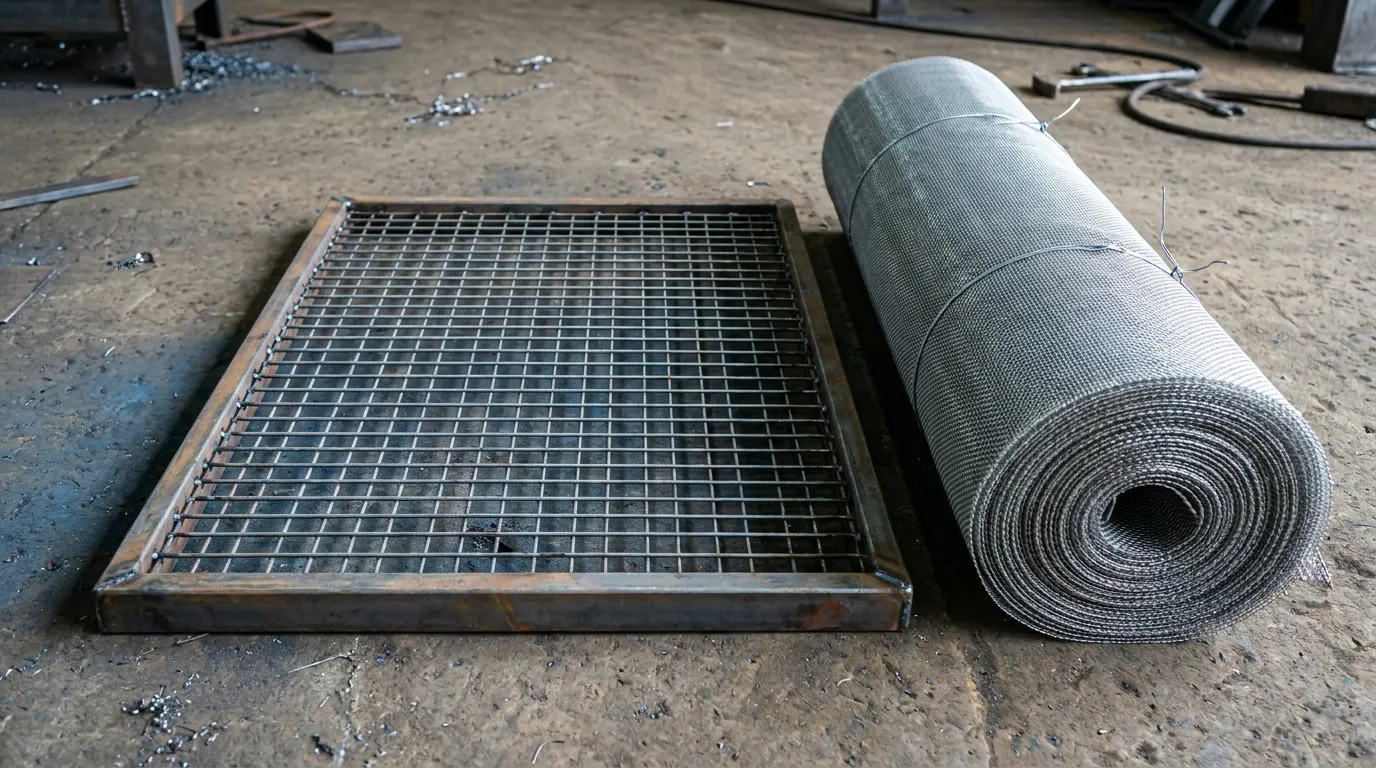
Welded mesh is made from straight line wires and cross wires laid at right angles. Each intersection is joined by electric resistance welding, so the wires stay in one plane and do not bend around each other. It can be made from bright wire and galvanised after welding, or welded from wire that is already galvanised. Stainless steel welded mesh is also made.
Woven mesh is made on a loom. Warp wires run the length of the roll and weft wires pass over and under them, in a plain weave, twill or another pattern. The wires are crimped, either by the weaving itself or by pre-crimping before weaving, and they hold each other in place by friction and shape rather than by welds. See plain, twill and Dutch weave for the common patterns.
Rigidity and strength
Welded mesh is stiffer for the same wire diameter because every joint is fixed. A welded panel holds its shape when lifted from one end and resists being pushed out of square. That makes it a natural choice for panels, cages and frames that must stand on their own.
Woven mesh is more flexible. It can be rolled, bent around a curve or tensioned onto a screen deck. Heavy woven mesh with thick wire and lock crimp is very strong, and it handles vibration and impact well because the wires can move slightly instead of cracking at a weld. Weld points can be a weak spot under constant vibration.
Opening accuracy
Woven mesh gives tighter control of the aperture, especially in fine sizes. It can be produced from coarse openings down to very fine meshes used for filtration, and the opening stays consistent across the roll. That is why woven mesh is the standard for sizing and separating material.
Welded mesh is generally made in larger openings, commonly from around 12 mm upward, and the opening is set by wire spacing on the machine. It is accurate enough for fencing and guarding but is not normally used where a particle size must be held to a tight tolerance.
Where each is used
| Application | Usual choice | Reason |
|---|---|---|
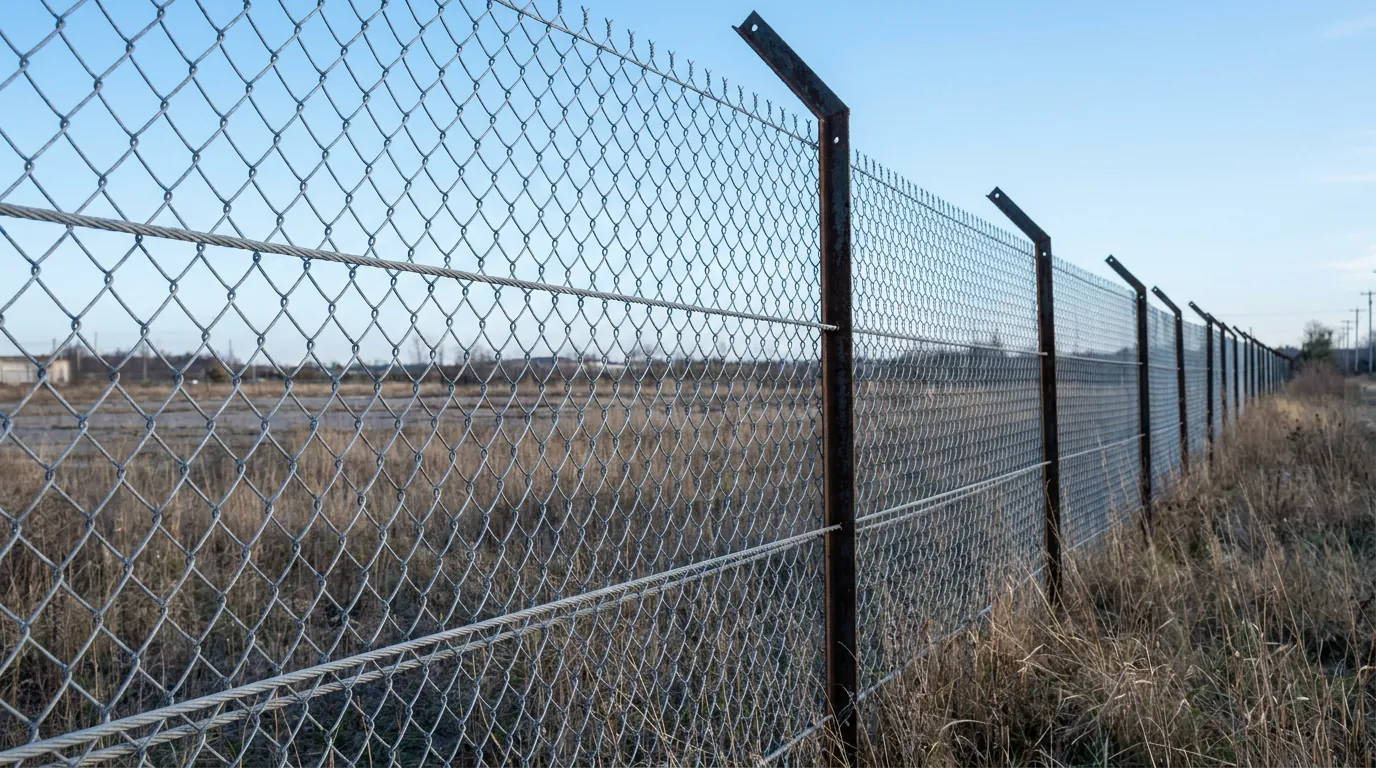
| Boundary and security fencing | Welded | Stiff panels, simple to fix to posts |
| Concrete reinforcement fabric | Welded | Fixed grid holds bar spacing (check IS 1566 for hard drawn wire fabric) |
| Machine guards and cages | Welded | Holds shape, easy to frame |
| Vibrating screens and sieving | Woven | Accurate aperture, tolerates vibration |
| Filtration and straining | Woven | Fine and Dutch weaves possible |
| Infill panels and partitions | Either | Depends on look and opening size |
How to choose
- If the mesh must separate or size material, start with woven.
- If the mesh must stand as a panel or carry load at fixed points, start with welded.
- If the opening is below about 10 mm, woven is usually the only practical option.
- For outdoor use, decide the finish first: galvanised, PVC coated or stainless. See galvanised vs stainless steel.
- Specify wire diameter, opening, material, panel or roll size and finish in writing, whichever type you choose.
Gujarat Wire Nettings makes both welded mesh and woven wire mesh. Tell us the application, opening, wire diameter and size you need through the contact page, and we will suggest which suits it.