

Why Vibrating Screens Need Rubber or PU Beading
What crown bar rubber and PU beading do under a vibrating screen, how rubber and polyurethane compare, and the signs that it needs replacing.
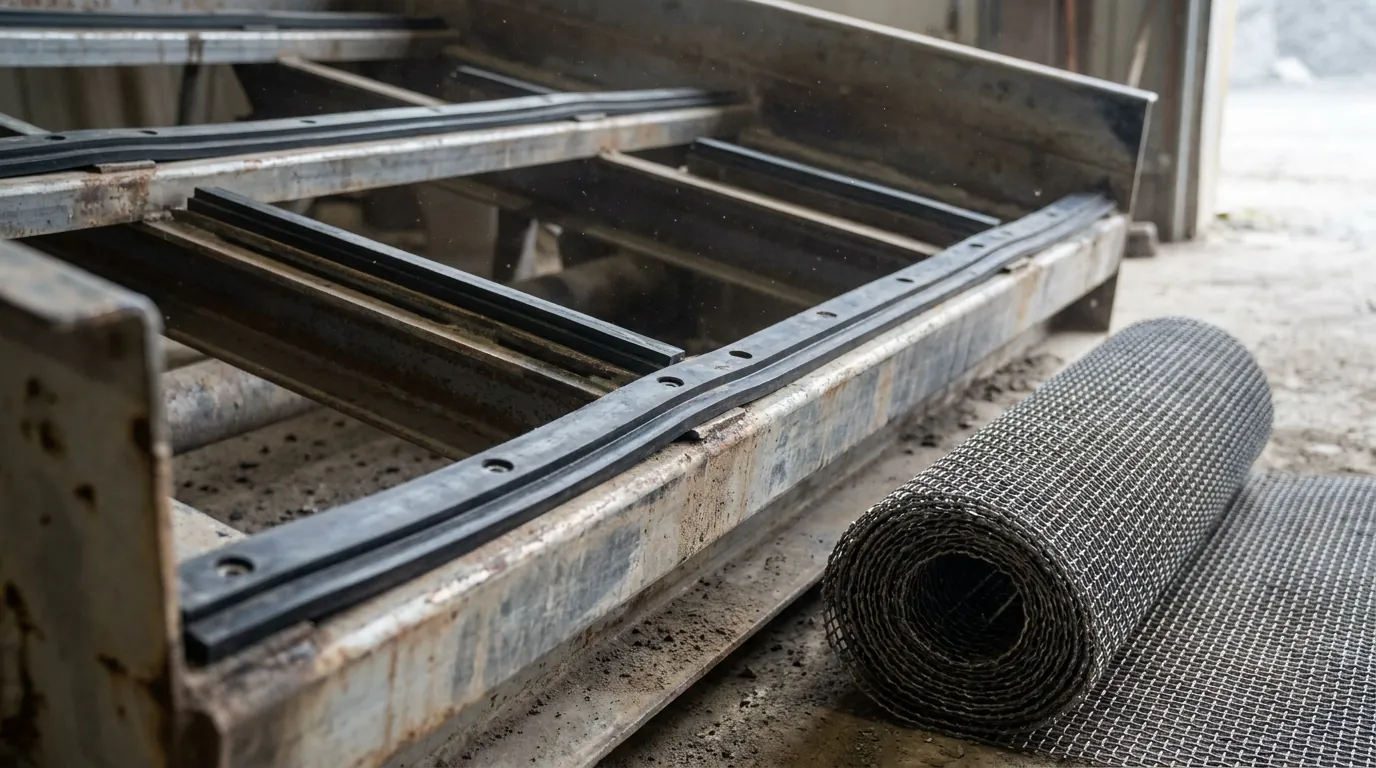
On most vibrating screens the screen cloth does not sit directly on steel. It sits on a strip of rubber or polyurethane fitted over the crown bars or stringer bars of the deck. This strip is called beading, crown bar rubber or stringer rubber. It is a small part, and when it is missing or worn the screen cloth usually fails early.
What the beading does
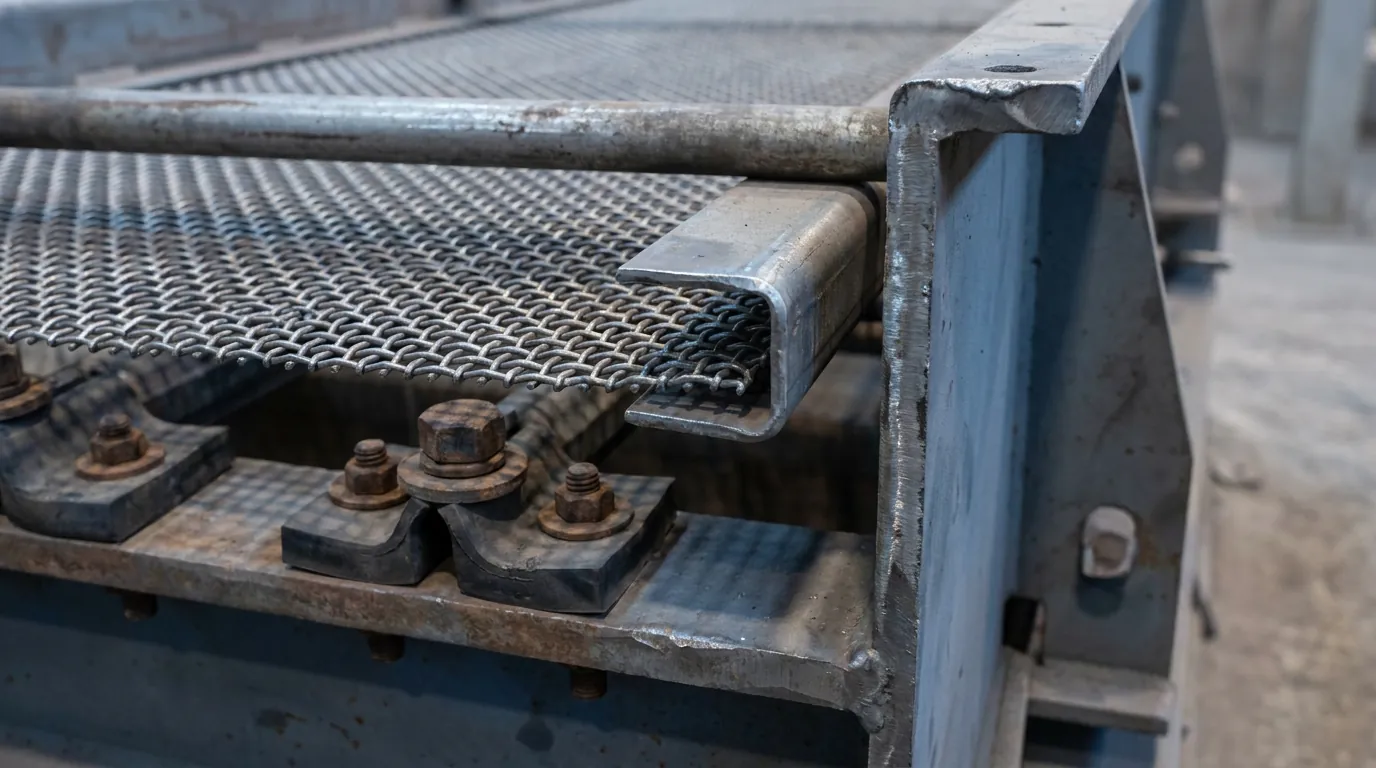
A side tensioned screen deck is cambered. The tension pulls the cloth down onto a row of longitudinal support bars, the crown bars, which carry the load of the material. Beading caps each bar and does four jobs.
- Seats the screen. The soft profile lets the cloth bed down evenly across the crown, so tension is shared by all the support bars instead of a few high spots.
- Stops metal on metal contact. Without it, the wire or plate rubs directly on the steel bar at every stroke. That wears both the cloth and the bar, and the cloth tends to break along the support line.
- Damps vibration and noise. Rubber and PU absorb some of the impact between cloth and frame, which cuts rattle and noise from the deck.
- Reduces fatigue. A cloth that is fully supported flexes less at each cycle, so wires crack later.
A well seated cloth is also easier to tension evenly. See vibrating screen hooks and tensioning.
Rubber or polyurethane
Both are used. The choice depends on load, abrasion, moisture and temperature.
| Property | Rubber beading | PU beading |
|---|---|---|
| Abrasion resistance | Good | Generally higher, especially against fine sharp particles |
| Impact and damping | Very good, soft and resilient | Good, firmer depending on hardness |
| Cut and tear resistance | Moderate | Usually higher |
| Oil resistance | Depends on compound; natural rubber is poor, nitrile is better | Generally good |
| Hot water or steam | Depends on compound | Some grades soften by hydrolysis; check the grade |
| Cost | Lower | Higher |
Hardness is usually stated in Shore A. A softer strip seats and damps better. A harder strip resists cutting and holds its shape under heavy loads. Typical values vary by supplier, so match the hardness to what your screen maker specifies, or to the strip that gave good life before.
Rubber is a sensible default for dry screening of aggregates and ores where impact is high. PU is often chosen where abrasion is the main cause of failure, in wet screening, or where the strip has to last through several cloth changes.
Getting the profile right
Beading comes as a shaped profile that has to fit the crown bar section on your deck: the width of the bar, the shape of any slot or channel, and the height that sets the camber. A strip that is too narrow can roll off. One that is too tall changes the deck camber, and the cloth will not tension properly. Send a cut sample or a section drawing with dimensions when ordering, along with the length per bar and the number of bars per deck.
When to replace it
Inspect the beading every time a screen cloth is changed. Replace it when you see any of these.
- Grooves worn into the top surface along the line where the wire or plate sits.
- Cuts, tears or missing pieces, especially at the feed end where impact is highest.
- Hardening, cracking or a glazed surface, which means the strip no longer damps.
- Strip that has shifted, lifted or rolled off the bar.
- Bright, polished marks on the crown bar steel, which show the cloth has been touching metal.
- Repeated cloth breaks along one support line.
Fitting a new cloth on worn beading wastes the cloth. Some plants replace beading at every second or third cloth change, and at every change on decks with heavy impact. Track the life you actually get on each deck and set the interval from that record. For other factors that shorten cloth life, see vibrating screen life.
Fitting tips
- Clean fines and old adhesive off the crown bars before fitting.
- Check bar heights along the deck. A bent or low bar leaves a gap that no strip can fix.
- Fit full lengths where possible and butt any joints tightly.
- Tension the cloth evenly after fitting, then recheck tension after the first few hours of running.
Gujarat Wire Nettings makes rubber and PU beading for vibrating screens, along with the screen cloth that sits on it. Send a sample or profile drawing, the length needed and the screen model through the contact page, and we will quote.